interview
Interview with Fabian Müller
September 30, 2026
"I like to practice at night in the dark, without turning on the light. The silence sounds..."






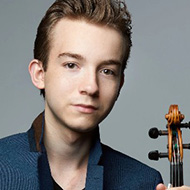
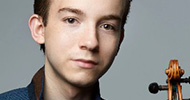
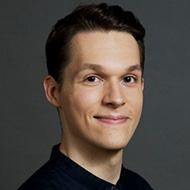
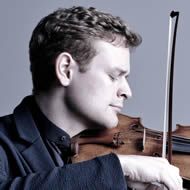
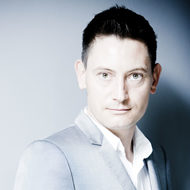
Born in 2004, Canadian violinist Jacques Forestier began playing the violin at the age of two. In 2024, he won the Joseph Joachim Violin Competition in Hanover together with Angela Chan and also received the audience prize. He studied at the Curtis Institute of Music in Philadelphia with Shmuel Ashkenasi and Pamela Frank. As a soloist, he has performed with orchestras including the NDR Radiophilharmonie, the Munich Chamber Orchestra, and the Edmonton Symphony Orchestra. He plays a Guadagnini violin from 1765, on loan from the Fritz Behrens Foundation.
You started playing the violin at the age of two. Do you remember when the violin became more than just an instrument for you?
I think it was always more than just an instrument for me because I come from a family of musicians. Music was closely interwoven with our lives, so it was only natural for me to make music myself. But I think a real turning point came in my early teens when I began to be exposed to very different ideas and musical experiences from all over the world.
What do you hope the audience feels when you step onto the stage?
I want the audience to hear more than just beautiful sounds – to truly perceive the expression and intention behind the music. At the same time, I want to convey authentically what the composer wrote and what we are privileged to bring to life.
When does an interpretation truly begin to feel like your own?
For me, how well I can perform a piece depends entirely on how deeply and comprehensively I understand the music. That's where my confidence comes from. Therefore, for me, an interpretation is only truly mature when I've explored the music from many different perspectives.
What did you learn about yourself at the International Joseph Joachim Violin Competition?
One of the most important insights was realizing what I am truly capable of. I sometimes struggle with self-doubt. But mastering so many diverse musical challenges and receiving recognition for them has shown me a great deal about my own abilities.
Has winning the competition in Hanover given you more freedom, or has it also created additional pressure?
A competition win doesn't automatically lead to a great career these days. It merely opens doors and brings you closer to the possibility of building such a career yourself. In a way, I would therefore say that the pressure has actually increased. Added to that is the expectation of living up to the high standards that the Joachim Competition and its previous winners represent.
What piece of advice from your teachers has most influenced you as a musician?
It's quite a concrete piece of advice: One of my teachers told me that if I feel insecure or nervous while playing, I should simply listen to someone else and remind myself how beautiful the music is. This way, I focus my attention on something outside myself, something bigger than me. It works wonders!
How has your relationship with your Guadagnini violin developed?
It's still evolving! For me, such instruments are practically living, breathing beings. This can be frustrating when working with them, but at the same time, it opens up limitless possibilities for exploring them and building a relationship with them. This particular Guadagnini, while beautiful, is also very temperamental. Therefore, I constantly have to figure out how best to adapt to her – and that's precisely my greatest weakness!
What experiences were you able to gain at a young age through your early musical career – and what did you have to give up?
Being able to earn a living doing what you love is surely one of life's greatest gifts. But it also has its downsides. Above all, it becomes difficult to find a balance between work and private life. That's why it's incredibly important to set clear boundaries so that these areas don't merge in a way that is detrimental.
Is there a piece you consciously wait to perform until you feel ready?
Generally, I enjoy playing a wide variety of music. However, it depends on the context of the concert. A piece like the Brahms Violin Concerto, for example, I might want to perform first in a less pressured environment before playing it at Carnegie Hall! I believe that if we don't allow ourselves to take risks and try things we don't yet feel ready for, we will never discover what we are truly capable of.
How would you like to be as a musician in ten years – regardless of awards and recognition?
I simply want to continue being as happy with my life and my work as I am today. And I want to share the music I love most with as many people as possible who want to listen. That sounds simple, but ultimately, that's exactly why I do what I do. :)
Interview by Florian Schär | Classicpoint.net | November 1, 2026
Image Copyright: Jacques Forestier
November 7, 2026 - Jacques Forestier (violin), Boris Kuznetsov (piano)
November 8, 2026 - Jacques Forestier (violin), Boris Kuznetsov (piano)
November 15, 2026 - Jacques Forestier (violin), Munich Symphony Orchestra, Swann Van Rechem (conductor)
November 18, 2026 - Jacques Forestier (violin)
November 25, 2026 - Jacques Forestier (violin), Duisburg Philharmonic Orchestra, Ariane Matiakh (conductor)




























































Do you want to attract more visitors to your concerts?
Find out more about the possibilities this portal offers.
With a concert search subscription, you will receive an email for your selected cantons/federal states as soon as a new concert is listed there. You can unsubscribe from the service at any time.
