

interview
Interview with Julia Lezhneva
August 31, 2026
“Analytical work allows for emotional freedom, while emotional discoveries…”










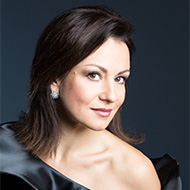
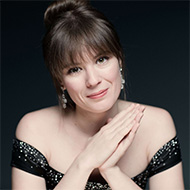
Latvian-born Marina Rebeka is one of the leading sopranos of our time and is considered one of the world's finest Violettas in Verdi's La Traviata. She has also established a reputation as one of the greatest Rossini and Mozart interpreters of our day. Since her international breakthrough at the Salzburg Festival in 2009 under the baton of Riccardo Muti, she has been a regular guest at the world's finest opera houses and concert halls, including the Metropolitan Opera and Carnegie Hall in New York, La Scala in Milan, the Royal Opera House Covent Garden in London, the Concertgebouw Amsterdam, the Bavarian State Opera in Munich, the Vienna State Opera, and the Zurich Opera House.
Classicpoint.net: You come from Latvia. This country has produced some very talented singers in recent years. Is there an explanation for this?
I believe the reason is the excellent musical education. In addition, our standards are based on recordings we found in libraries, not live recordings. As we all know, we are human, and a CD is the best an artist can achieve. The higher the standard, the higher our goal, which in turn raises our own standards.
You weren't really happy with your teachers. What advice do you have for young singers during their training?
I always say that the teacher shows you the way you should go. But you have to walk it yourself. No one else can do it for you. It's good to rely on the teacher, but the best thing is to know how to work with yourself and be independent. That way you always know what you've done well and badly, because the more you achieve, the fewer people there are around you to tell you the truth.
Which roles are you most familiar with, and which roles do you respect the most?
My favorite roles are Violetta, Norma, Juliette, and Thais. Perhaps I have the most respect for the technically demanding roles that require great stamina, such as Maria Stuarda or Elektra, or for small roles that are technically very challenging, where you only have five minutes to show everything, and that's your only chance. Examples of such roles are the Queen of the Night or the Italian Tenor in Capriccio.
Have you ever had problems with productions or directors' instructions that you didn't want to follow?
I always try to understand the directors and justify their ideas with my own. So far, I've never been in a situation where I withdrew from a production because of directorial instructions. But I have had difficulty understanding and implementing certain directions. Good directors always know that if an idea isn't embraced by the artist, it won't come across as authentic. That's why they will always seek discussion and try to find a solution together.
Are there any anecdotes from your career, from backstage or on stage, that you can share with us?
Most jokes revolve around tenors, like: THERE ARE 3 MALE REGISTERS - BASS REGISTER, BARITONE REGISTER, AND CASH REGISTER :)
What are your interests besides singing?
Horse riding, sauna, gardening, hiking, painting, books. I'd like to learn to dive someday.
What projects are you currently working on?
I'm mostly busy with CD recordings. This year I recorded a Rossini album, Clemenza di Tito in Baden-Baden, and the role of Luisa Miller in the entire opera. Besides recordings, I also have to learn new roles for the next season. I have three Verdi debuts: Luisa Miller, Simon Boccanegra, and Giovanna d'Arco. I'm really looking forward to them.
Which roles would you absolutely love to sing in the future?
Thais, Manon, Trovatore, and Rusalka. Then we'll see if my voice continues to develop.
Do you have any other wishes for the future?
I wish for more free time to spend with my daughter and to practice. I also wish for a few, but truly interesting projects with outstanding musicians.
Interview by Florian Schär | Classicpoint.net | January 1, 2018
© Photo: Jänis Deinats
December 16, 2026 - Christmas in Vienna;
March 16, 2027 - Jonas Kaufmann (tenor), Marina Rebeka (soprano), German State Philharmonic Orchestra of Rhineland-Palatinate, Jochen Rieder (conductor);
April 5, 2027 - Tutto Verdi;
2027 - Marina Rebeka (soprano), Jonas Kaufmann (tenor), German State Philharmonic Orchestra of Rhineland-Palatinate, Jochen Rieder (conductor);
April 9, 2027 - Tutto Verdi;
April 13, 2027 - Jonas Kaufmann (tenor), Marina Rebeka (soprano), German State Philharmonic Orchestra of Rhineland-Palatinate, Jochen Rieder (conductor)





























































Do you want to attract more visitors to your concerts?
Find out more about the possibilities this portal offers.
With a concert search subscription, you will receive an email for your selected cantons/federal states as soon as a new concert is listed there. You can unsubscribe from the service at any time.
