

interview
Interview with Julia Lezhneva
August 31, 2026
“Analytical work allows for emotional freedom, while emotional discoveries…”


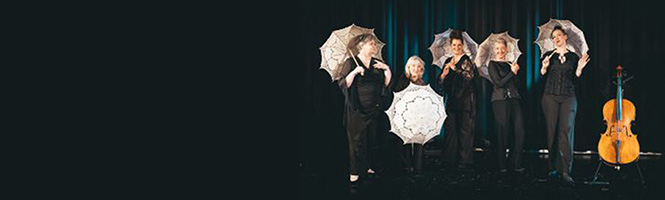


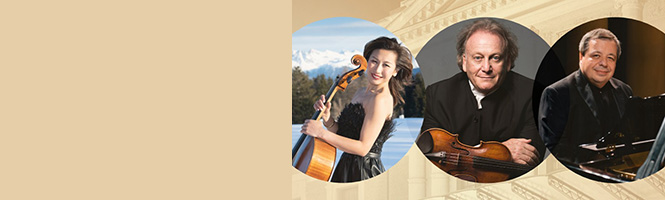


The Argentinian musician, born in 1981 and residing in Switzerland, is celebrated worldwide. Her international career was launched in 2004 when she won the prestigious Crédit Suisse Young Artists Award, one of the most lucrative prizes for young musicians. The prize-winner's concerts in autumn 2004 with the Vienna Philharmonic under the direction of Valery Gergiev opened numerous major doors for Sol Gabetta in the music world. Today, she can be found on all the world's leading stages. Since October 2005, she has been teaching as an assistant to Ivan Monighetti at the Basel Academy of Music. She is also the founder of the SOLsberg Chamber Music Festival in Olsberg, Switzerland.
Classicpoint.ch: You grew up in Argentina and now live in Switzerland. Where do you see the differences between the two countries with regard to classical music?
Classical music is simply more developed here in Europe than in Argentina. It receives more promotion and better support. I think that Germany has the greatest density of cultural offerings. It's a luxury for all musicians to live in Europe and discover and experience the diverse cultural histories, both musical and otherwise. That's simply much more difficult in Argentina. The geographical situation alone makes things more challenging. The distances between cultural centers are vast. In Europe, however, there's an incredible density of cultural centers within a relatively small area.
Do you sometimes miss your birth country, Argentina?
I miss the warmth of the people, the good food, and the climate in the south! My family has lived in Europe since I came here. That helps a lot in finding emotional stability alongside my concert life.
You are also half Russian. Do you have a special connection to the music of Russian composers?
I have a special connection to Russia and Russian culture. My grandparents are both 100% Russian, and we always ate Russian food as children. My grandparents also sang to me in Russian when I was little. After that, I studied for ten years with Ivan Monighetti . He was one of the last students of Rostropovich's class in Moscow and is Russian himself. After that, I studied for another five years in Berlin with David Geringas, who was also a student of Rostropovich. My whole life and studies have been shaped by Russian culture.
I love Russian composers, especially Shostakovich and Prokofiev, who portray a political revolution and the suffering of this people in their music. But Rodion Shchedrin is also a great composer whom I greatly admire and enjoy playing.
You studied with Ivan Monighetti and David Geringas. What characterizes these two teachers, and what distinguishes them?
Ivan Monighetti is my musical and cultural father and mentor. I still play for him occasionally. He not only gave me cello lessons but also general cultural instruction. With every piece I learned, he also introduced me to the composer's life and the history of the time. This gave me a valuable understanding of the pieces. It was always important to him that I got enough sleep, went for walks, and ate healthily so that I could find a balance between body and soul. Of course, he also challenged me a great deal. You hardly ever find this kind of teacher anymore. I was incredibly lucky to have met him when I was 10 years old.
I only came to David Geringas much later, after I had already completed all my diplomas in Basel. I was older and also somewhat more experienced in studying and interpreting a piece. Nevertheless, David Geringas taught me a great deal. That's why I studied with him in Berlin for five years. He listened to me and observed me without prejudice. He sensed my potential as a person and as a musician and fostered and strengthened my profile, always with the necessary freedom. I learned from him that I still have much to discover within myself. He broadened my horizons with perspectives that were completely new to me.
's assistant Ivan Monighetti. How would you describe your personal teaching style?
After 15 years of studying with such great teachers, you learn exactly what discipline and a strong will are. What today's young generation often lacks is the will to fight or work for something for a very long time. The world hasn't become any easier, but the information is usually available before you've even developed the desire, the will, and the energy to explore it. That's what I want to show my students from the very beginning. They don't play for me, not to please me, or just to pass exams. Those are momentary situations that can bring joy, but they don't foster significant personal development.
I try to guide my students on their own path, in search of something unique they can share in music, to experience the moment "in music" as an event.
The "moment" has a life, an emotion, a power and individuality, which, however, cannot be felt as "the moment" sooner or later and must be sought very deliberately and intensively in order to be able to feel it in the music and thus also to be able to transport the audience into another world.
When one sees you perform on the concert stage, your physical devotion to the music and your temperament are striking. What goes on in your mind during a concert? Are you always completely immersed in the music, or do you also think about the audience or things unrelated to the concert?
During a concert, I am no longer the physical person Sol Gabetta, even though my hands are playing and my mind is thinking. While this is very important, it is also secondary. Even more important is making the vibrancy, structure, and form of the piece being interpreted visible. This can happen in many different ways and can change daily. But the goal always remains the same.
What do you think should be done to make classical music accessible to a wider audience? How, in particular, can more young people be inspired by classical music?
Classical music, with its intensity and energy, inspires more young people than one might think. Many young people have never been to a classical concert, not because it's too expensive, but because they don't know it and don't need it like water needs water to drink. This starts with upbringing at home and in schools. There, the thirst for classical music must be awakened and nurtured so that it becomes a source of spiritual nourishment, something indispensable because it feels good and gives us energy, because it is, after all, life itself.
There's no magic formula for inspiring people with classical music, but there is a soul to be nourished in every person.
Six years ago, you founded your own festival, the Solsberg Festival. What makes this festival so special?
Solsberg is my brainchild. My friend Christoph Müller and I have been organizing this festival for six years. The freedom to choose our programs and artists is what makes it so appealing. The musicians only come if they feel like it. They play what they want to play, and the location is so idyllic, nestled in beautiful natural surroundings, which makes this festival truly unique. The audience goes for a hike, eats in the village, and enjoys the concert. It's the perfect blend of nature and music at its finest.
For the "Progetto Vivaldi," you strung your cello with gut strings. You founded the Capella Gabetta last year, and in this ensemble, you play exclusively Baroque music. How intensively do you engage with historical performance practice?
My new CD with "Progetto Vivaldi 2" will be released in September 2011. These projects give me great pleasure, especially the intensive collaboration with my brother, Andres Gabetta, who organizes and conducts the ensemble. We have two tours a year with me as soloist, a summer tour and a Christmas tour, but only every two years. This allows time to discover new repertoire, study the concert programs, and, if we feel like it and it's possible, make a CD recording.
Playing with gut strings and a Baroque bow is not only interesting for me, but also a development for me as a musician, a search for the source of the music and the instrument, a search for "less is more."
Interview by Florian Schär | Classicpoint.ch | July 21, 2011
September 16, 2026 - Sol Gabetta (cello), The Deutsche Kammerphilharmonie Bremen, Aurel Dawidiuk (conductor)
2026 - Opening Concert
- Storm and Longing | Sol Gabetta I
September 30, 2026 - From Darkness to Light | Sol Gabetta II
October 1, 2026 - Next Generation XI | Closing Concert of the Sol Gabetta Masterclass
October 2, 2026 - The Sweetness of Doing Nothing | Sol Gabetta III
07.11.2026 - Gianandrea Noseda & Sol Gabetta
17.11.2026 - Sol Gabetta (cello), Finnish Radio Symphony Orchestra, Nicholas Collon (conductor)
27.01.2027 - Sol Gabetta (cello), Bertrand Chamayou (piano)
28.01.2027 - Recital Sol Gabetta
18.02.2027 - Dvořák's Seventh Symphony
19.02.2027 - Dvořák's Seventh Symphony
04.03.2027 - Sol Gabetta (cello), Bamberg Symphony Orchestra, Jakub Hrůša (conductor)
05.03.2027 - Sol Gabetta (cello), Bamberg Symphony Orchestra, Jakub Hrůša (conductor)
March 7, 2027 - Sol Gabetta (cello), Bamberg Symphony Orchestra, Jakub Hrůša (conductor)
March 13, 2027 - Sol Gabetta & Bertrand Chamayou
15, 2027 - Firebird
Firebird
cello), Basel Chamber Orchestra, Giovanni Antonini (conductor)
May 7, 2027 - Sol Gabetta (cello), Basel Chamber Orchestra, Giovanni Antonini (conductor)
May 25, 2027 - Sol Gabetta (cello), Berlin State Opera Orchestra, Philippe Jordan (conductor)




























































Do you want to attract more visitors to your concerts?
Find out more about the possibilities this portal offers.
With a concert search subscription, you will receive an email for your selected cantons/federal states as soon as a new concert is listed there. You can unsubscribe from the service at any time.
