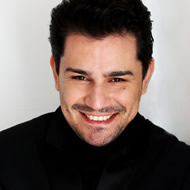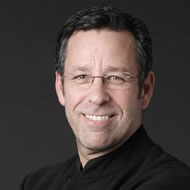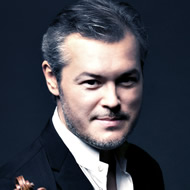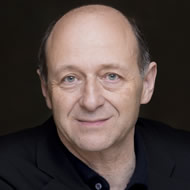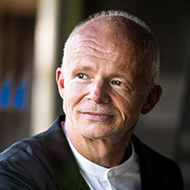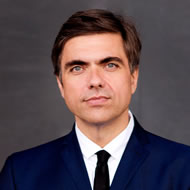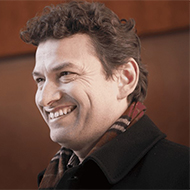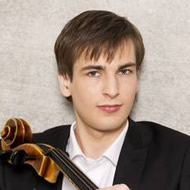
Iván Fischer in an interview

"Where speech ends, music begins."
The Hungarian Iván Fischer is one of the world's most visionary and successful conductors. He collaborates with numerous renowned orchestras worldwide and was opera director at the Opéra de Lyon and Kent Opera in Great Britain. In 1983, Fischer founded the Budapest Festival Orchestra in his homeland, where he remains music director. Since August 2012, he has been chief conductor of the Konzerthausorchester Berlin. More recently, Fischer has also been active as a composer.
Classicpoint.ch: You come from Hungary and live half the time there and half the time in Berlin. How do you perceive the cultural differences?
There are numerous ones: large country – small country, global language – isolated language, East – West, rationality – inspiration, etc. But there are also similarities. Both capital cities are full of foreigners and full of culture; art, in particular, is everywhere.
You worked with Harnoncourt. Where did you disagree with him?
I agreed with him that music is a means of communication—of ideas, thoughts, feelings. Music isn't a drug that just sounds beautiful. Harnoncourt used the term "sound rhetoric." I would like to go a step further and say that where speech ends, music begins. Because music also communicates something that we cannot express with words.
You founded the Budapest Festival Orchestra in 1983 and have shaped it into a top-tier orchestra. What distinguishes this orchestra from other top orchestras?
The most striking difference is its innovative approach, because the BFO is deeply engaged in exploring what the orchestra of the future will look like. The BFO possesses the highest quality, but a constant spirit of experimentation sets us apart from top orchestras that primarily focus on preserving tradition.
You've developed your own seating arrangement. Can you explain the advantages?
This is just one of many reforms. Using different heights, we compensate for volume differences, such as between woodwind and brass instruments. The woodwinds sound better and cleaner when they have the bass, and not the brass, positioned close to their necks. The double basses play and sound better side by side than in a cluster. The second violin is freed from being suppressed on my right side.
In Hungary, you have major problems with the minorities. You and your orchestra have developed aid projects. You've also organized refugee assistance, trucks, accommodation, food, blankets, etc. What is the current situation?
There are hardly any refugees there now. Instead, there are almost a million Sinti and Roma, most of whom are poor and have few opportunities.
You and your musicians perform in forgotten, taboo places. Can you tell us a little about them?
We regularly visit abandoned synagogues. They're mostly located in villages and towns that were once considered "Jew-free." We play for the local population, who know very little about the past. A rabbi tells them about their only Jewish neighbors and about the synagogue's function. Some have been beautifully restored with donations from emigrated Jews or with government support; others are ruins, storage rooms, or sports halls.
What is your main task as a conductor?
Music is my miracle cure. My purpose is to serve society. The orchestra is my family.
You've also been composing for 18 years. How would you describe your style?
I mix many styles; the result is somewhat eclectic. Nevertheless, my best friends say that my music has something personal about it. When I hear that, I'm pleased because I hope that the personal element lies not in the language, but in the content.
You once said in an interview that you don't feel obligated to perform contemporary music. What is your opinion of the quality of contemporary works?
Yes, I find "obligation" counterproductive. If things continue this way, a three-way relationship can develop in which the composer writes boring music, the audience gets bored, and the conductor programs it because of their obligation. I prefer to feel an obligation to the cultural needs of the audience.
As for quality, you can't generalize. There is beautiful music and ugly music. Tonality is slowly winning out over atonality. Atonality will probably go down in history, like other failed experiments of the twentieth century. But there are also wonderful atonal works.
at the Verbier Festival . What does Wagner's music mean to you in general?
He was one of the greatest geniuses of European culture. His creativity and originality are incredible. He created an entire world.
Could you perhaps tell us something personal about each of the individual works?
- The Mastersingers of Nuremberg, Overture: Here, two worlds collide: tradition and romantic melody. Both are fantastically beautiful.
- Parsifal, Good Friday Spell: Pure poetry. When Wagner is lyrical, he is very sensitive.
- Tristan and Isolde, Prelude and Liebestod: It is best to read Schopenhauer on this subject.
- Götterdämmerung: Sunrise, Siegfried's Rhine Journey, Siegfried's Death March and Strong Logs, Brünnhilde's Final Scene
Unfortunately, we can't perform the entire Ring cycle. Or perhaps we should?
Interview by Florian Schär | Classicpoint.ch | June 1, 2016
Next concerts
August 21, 2026 - Summer Festival: Budapest Festival Orchestra;
2026 - Summer Festival: In the Middle;
September 24, 2026 - Bartók: Concerto for Orchestra Sz 116;
- Patricia Kopatchinskaja (violin), Konzerthausorchester Berlin, Iván Fischer (conductor);
November 5, 2026 - Jonathan Kelly (oboe), Stefan Schweigert (bassoon), Noah Bendix-Balgley (violin), Bruno Delepelaire (cello), Berlin Philharmonic, Iván Fischer (conductor);
November 17, 2026 - Lisa Batiashvili (violin), Budapest Festival Orchestra, Iván Fischer (conductor);
January 21, 2027 - Kirill Gerstein (piano), Bavarian Radio Symphony Orchestra, Iván Fischer (Conductor)
March 4, 2027 - Schumann: Symphony No. 3 in E-flat major, Op. 97 "Rhenish"
March 5, 2027 - Konzerthausorchester Berlin, Iván Fischer (Conductor)
April 5, 2027 - Beethoven: Symphony No. 9
April 10, 2027 - Beethoven: Symphony No. 9 in D minor, Op. 125
April 30, 2027 - Vera-Lotte Boecker (Soprano), Konzerthausorchester Berlin, Iván Fischer (Conductor)
May 24, 2027 - Nicolas Altstaedt (Cello), Budapest Festival Orchestra, Iván Fischer (Conductor)
July 11, 2027 - Open-Air
More interviews
Interview with Barbara Hannigan
Interview with Elena Stikhina
Interview with Lukas Sternath
Interview with Tianwa Yang
Interview with Ilya Shmukler
Interview with Thomas Zehetmair
Interview with Gabriela Scherer
Interview with Sophie Pacini
Interview with Kartal Karagedik
Interview with Ariel Lanyi
Interview with Anton Mejias
Interview with Nathan Henninger
Interview with Adriana Gonzalez
Interview with Philippe Tondre
Interview with Konstantin Krimmel
Interview with Anna Sułkowska-Migoń
Interview with Hanni Liang
Interview with Seong-Jin Cho
Interview with Pablo Barragán
Interview with Katharina Konradi
Interview with Lena-Lisa Wüstendörfer
Interview with Erika Grimaldi
Interview with Sergei Babayan
Interview with David Fray
Interview with Jonathan Bloxham
Interview with Benjamin Zander
Interview with Eldbjørg Hemsing
Interview with Gwendolyn Masin
Interview with Moritz Eggert
Interview with Julia Hagen
Interview with Hannah Schlubeck
Interview with Andre Schoch
Interview with Nicholas Carter
Interview with Reed Tetzloff
Christiane Karg in an interview
Interview with Jens Lohmann
Sebastian Bohren in an interview
Michael Barenboim in an interview
Gil Shaham in an interview
Fabio Di Càsola in an interview
Daniel Dodds in an interview
Alexey Botvinov in an interview
Lucas and Arthur Jussen in an interview
Max Volbers in an interview
Dirk Joeres in an interview
Beatrice Rana in an interview
Alexander Bader in an interview
Irina Lungu in an interview
Anna Fedorova in an interview
René Jacobs in an interview
David Helfgott in an interview
Helena Winkelman in an interview
John Adams in an interview
Moritz Winkelmann in an interview
Emmanuel Pahud in an interview
Matthias Goerne in an interview
Nadège Rochat in an interview
Rafael Rosenfeld in an interview
Stanley Dodds in an interview
Kaspar Zehnder in an interview
Kim Bomsori in an interview
Daniel Behle in an interview
Gotthard Odermatt
Maximilian Hornung
Titus Engel in an interview
Renaud Capucon in an interview
Teo Gheorghiu in an interview
Chen Halevi in an interview
Alexander Melnikov in an interview
Sebastian Knauer in an interview
Alexandra Dariescu in an interview
Christian Knüsel in an interview
Patrick Demenga in an interview
Adrian Brendel in an interview
Ragnhild Hemsing in an interview
Markus Stenz in an interview
Elisabeth Fuchs in an interview
Giovanni Allevi in an interview
Maxim Vengerov in an interview
Alexander Krichel in an interview
Michael Francis in an interview
Manfred Honeck in an interview
SoRyang in an interview
Sebastian Klinger in an interview
Matthias Kirschnereit in an interview
Felix Klieser in an interview
Bertrand Chamayou in an interview
Amit Peled in an interview
Olga Scheps in an interview
Angela Gheorghiu in an interview
Ilker Arcayürek in an interview
Cédric Pescia in an interview
Max Emanuel Cencic in an interview
Franco Fagioli in an interview
Simon Höfele in an interview
Christoph Croisé in an interview
Piotr Anderszewski in an interview
Andreas Ottensamer in an interview
Midori in an interview
Philippe Herreweghe in an interview
Chen Reiss in an interview
Mario Venzago in an interview
Marina Rebeka in an interview
Saimir Pirgu in an interview
Elīna Garanča in an interview
Vadim Gluzman in an interview
Rolando Villazón in an interview
Maestro Long Yu in an interview
Leonard Elschenbroich in an interview
Evgeny Kissin in an interview
Corina Belcea in an interview
Regula Mühlemann in an interview
Danjulo Ishizaka in an interview
Kian Soltani in an interview
Francesco Piemontesi in an interview
Nigel Kennedy in an interview
Stefan Temmingh in an interview
Steven Sloane in an interview
Yulianna Avdeeva in an interview
Martin Jaggi in an interview
Franz Welser-Möst in an interview
Ivan Monighetti in an interview
Kent Nagano in an interview
Steven Isserlis in an interview
Herbert Schuch in an interview
Jan Lisiecki in an interview
Jörg Widmann in an interview
David Philip Hefti in an interview
Robert Groslot in an interview
Paul Meyer in an interview
Nicolas Altstaedt in an interview
Khatia Buniatishvili in an interview
Jean-Yves Thibaudet in an interview
Jan Vogler in an interview
Luca Pisaroni in an interview
Andreas Staier in an interview
Arabella Steinbacher in an interview
Julian Steckel in an interview
Lisa Batiashvili in an interview
Vadim Repin in an interview
Martin Stadtfeld in an interview
Piano duo Hans-Peter and Volker Stenzl in an interview
Teodoro Anzellotti in an interview
Martin Helmchen in an interview
Frank Bungarten in an interview
Mischa Maisky in an interview
Reinhold Friedrich in an interview
André Rieu in an interview
Simone Kermes in an interview
Jonas Kaufmann in an interview
Claudio Bohorquez in an interview
Ilya Gringolts in an interview
Antje Weithaas in an interview
Daniel Müller-Schott in an interview
Albrecht Mayer in an interview
Rudolf Kelterborn in an interview
Noëmi Nadelmann in an interview
David Garrett in an interview
Erwin Schrott in an interview
Pieter Wispelwey in an interview
Tabea Zimmermann in an interview
Johannes Moser in an interview
Isabelle van Keulen in an interview
Miklos Perényi in an interview
Patricia Kopatchinskaja in an interview
Howard Griffiths in an interview
Sabine Meyer in an interview
Xavier de Maistre in an interview
Thomas Demenga in an interview
Daniel Hope in an interview
Sir James Galway in an interview
Christian Poltéra in an interview
David Zinman in an interview
Günter Pichler in an interview
Rudolf Buchbinder in an interview
Kim Kashkashian in an interview
Rainer Schmidt from the Hagen Quartet in an interview
Julia Fischer in an interview
Maurice Steger in an interview
Sol Gabetta in an interview
Anne-Sophie Mutter in an interview
Vladimir Ashkenazy in an interview
Graziella Contratto in an interview
Newsletter
Interviews as a magazine
For event organizers
Do you want to attract more visitors to your concerts?
Find out more about the possibilities this portal offers.
Concert search subscription
With a concert search subscription, you will receive an email for your selected cantons/federal states as soon as a new concert is listed there. You can unsubscribe from the service at any time.