interview
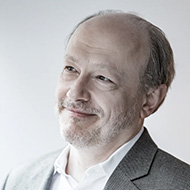
Interview with Marc-André Hamelin
July 31, 2026
“I consider composing an indispensable tool for performing musicians.”…




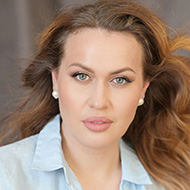
Hannah Schlubeck is considered one of the world's leading pan flute players and has made a name for herself, particularly in the interpretation of classical music on the pan flute.
Born Matthias Schlubeck in Wuppertal in 1973, she has lived as Hannah Schlubeck since 2020, in harmony with her body and emotions.
She is the first musician in Germany to hold a university degree in pan flute performance. She began her studies at the Wuppertal University of Music in 1991 as a junior student under Professor Manfredo Zimmermann and completed her studies there in 1998 with a concert diploma.
Alongside her university studies, Schlubeck also received instruction from Romanian pan flute legends such as Damian Luca and Gheorghe Zamfir.
She received her first pan flute lessons at the age of six from Erich zur Eck and grew up with this rarely played instrument. At the age of twelve, she was mentored by the French pan flute player Jean-Claude Mara and gave her first concerts at the age of fifteen.
Over the past 30 years, the pan flute virtuoso has given almost 2000 concerts in churches and concert halls. Concert tours have taken her to other European countries, the USA, Latin America and Australia.
You are the first graduate of a German music academy with a concert diploma in pan flute. How has the program changed since then, and have student numbers increased?
First, I'd like to briefly point out that we're talking about the Romanian style and tradition of the pan flute, which is the type I play. Different pan flute forms have developed largely independently of one another over millennia on various continents. Besides the Romanian pan flute, which became particularly well-known through the Romanian Gheorghe Zamfir in the 1970s, many people associate the pan flute with Latin American music and instruments that were commonly seen in pedestrian zones in Western Europe around the same time. These two pan flute traditions differ in construction, musical tradition, and playing technique, although there has been some overlap since then.
Unfortunately, there is currently no way to study music with a major in pan flute in Germany. At the Institute of Music at Osnabrück University of Applied Sciences, there was a Bachelor's program after 2010, where I, as a lecturer, supervised only one student.
I see the problem as the almost complete lack of foundational training from childhood. There are far too few pan flute teachers, and only a very few music schools offer lessons for interested people; there are almost no qualified teachers. This creates a vicious cycle, as there are very few potential students in Germany with a sufficient level of proficiency.
Furthermore, music academies are usually very much tied to their "standard" instruments. The pan flute is not an orchestral instrument, so there seems to be no demand from that quarter either.
A frequently cited argument is the lack of original literature for the pan flute. It is certainly true that there are almost no original works for the pan flute from earlier periods, but in recent decades, more and more original pieces have been composed.
I have made numerous attempts to introduce the pan flute into the university curriculum. Unfortunately, without success. Overall, the instrument still struggles with a poor image, ranging from street music to sentimental meditation and folk dances. The fact that the pan flute has undergone enormous development since the 1980s is largely ignored.
The situation is now better in other European countries. There, the potential of the pan flute has been recognized at several universities and conservatories. For example, there are degree programs in the Netherlands and, of course, Romania. In Austria, a postgraduate program has qualified pan flute teachers, leading to broader foundational work in music schools. A large demand for the pan flute seems to be developing in China. This also presents great potential for training competent teachers.
In Switzerland, a mass movement in the 1980s and 90s created a very large base of thousands of people learning the pan flute. Around the same time as my studies, several pioneering programs in Switzerland laid the foundation for outstanding pedagogical work with the pan flute. Today, several conservatories there offer programs, boast excellent instructors, and even have an association of professional pan flautists.
I hope that a similar program will be established in Germany in the future and that the pan flute will find its way into music school curricula here as well.
They have made a name for themselves, particularly in the field of interpreting classical music on the pan flute. What about original classical music literature for pan flute?
The pan flute is one of the oldest instruments in the world and has a tradition spanning millennia, from the simple pan-signal whistle to its modern form. What's fascinating about it is that the basic principle and simplicity of these instruments, which operate without any mechanical components, have remained unchanged. At the same time, the pan flute, in its fundamental principle, is the precursor to all flutes and also to the large church organ. Compared to the pan flute, the so-called "early music instruments" are mostly very recent.
Nevertheless, the pan flute has always had one problem: it was almost always an instrument of the common people, an instrument in a pastoral setting, and was primarily found where suitable materials for instrument making were readily available in nature. The quality of the instruments was then determined by the materials used.
Most composers of that era either didn't know the pan flute at all or didn't take the simple panpipes, often consisting of several tubes tied together, seriously.
In Mozart's Magic Flute, one can see in Papageno's (pan) flute what was considered possible for this instrument – just five ascending notes of a G major scale. However, these five notes represent the only "original composition" from Mozart's time that I know of.
Occasionally, suggestions arise that a shepherd's flute mentioned by Telemann might also have been a pan flute.
But the question for me is, why does the focus always remain on whether the pan flute has original literature from earlier times? The pan flute has developed tremendously in recent decades, both in terms of playing technique and the quality of the instruments, and there are increasingly more highly virtuosic performers playing this instrument.
I am absolutely certain that Bach, Mozart, or Telemann would have integrated the pan flute, with its modern capabilities, into their compositional universe.
The pan flute's versatility offers so many possibilities. A Mozart flute concerto, a Telemann suite, or even a double concerto opens up new sonic dimensions. At the same time, I am fascinated by the combination of sounds with period instruments and the pan flute.
I hope that in the future, composers will increasingly dedicate themselves to this instrument: as a solo instrument, but also as a timbre in ensembles. Incidentally, a pan flute ensemble also offers very exciting soundscapes.
The problem with the pan flute, I believe, is still the underestimation of its diverse possibilities…
You were born Matthias Schlubeck in Wuppertal in 1973. In 2020, you took a big step and began your metamorphosis from Matthias to Hannah. How did you experience this transition, and how did it affect your music-making?
In my personal experience, I've always been able to be more Hannah in my music than in any other area of my life. Having postponed this step for decades, I'm not a completely different or new person. But what represents the biggest change is the freedom to simply be ME. There's no more hiding, and so making music feels very liberating.
But this liberation also takes time, as I had to live and make music in a very controlled way for most of my life, within a social role that didn't suit me. I was also socialized "as a guy." Perhaps this perspective and position "between worlds" is also a kind of gift, because I'm no longer defined and can combine my experiences as Matthias with the new experiences as Hannah.
The long-held fear of taking this step towards metamorphosis has certainly influenced me greatly, especially the looming prospect of no longer being allowed to present my music publicly, of no longer being accepted. After the initial euphoria of liberation, despite the much goodwill I've received, I already see significant challenges. This is certainly also because I'm not willing to be pigeonholed from one role into another.
Recently, due to the evolving situation in society and politics, I've been experiencing a new fear for the future.
Whether disabled, queer, of a different background, or simply different – the pigeonholing and the increasingly rampant hatred are very dangerous.
Incidentally, I believe that there is far too much conformity, norms, and fear of the uncategorizable, especially within the classical music world, and that disabled people and certain groups of openly queer people are vastly underrepresented. I wish us all more courage and acceptance!
In this sense, I'm a complete outsider: pan flute player, severely disabled, and trans*…
You were also one of the most successful swimmers of your time, setting world records and winning gold medals at the Paralympics. What does swimming mean to you?
As a child, swimming was primarily a form of rehabilitation for me, and for a long time, I enjoyed it immensely as "fun swimming." At some point, I wanted to quit, but then my time was recorded and compared to my competition times. This led to me being placed in the competitive group and registered for my first competitions. From that point on, I won every competition in my specialty, breaststroke, and was catapulted to the Paralympics in no time. I participated three times and—very unsportsmanlike—stopped after my first non-winning race at the 1996 Paralympics in Atlanta (bronze).
Swimming has given me countless unforgettable moments, and I was able to see much of the world at a young age. Of course, being so successful in this field was incredibly empowering for my self-confidence as a disabled person. Although I always gave my all and participated in school sports, I was naturally one of those who were always last on the bench when teams were being selected for team sports. Swimming was different – even at school.
Where do you see similarities between swimming and music?
On the one hand, swimming has allowed me to develop good physical fitness. Controlled breathing and good lung capacity are essential in swimming, just as they are in playing the pan flute.
But discipline and focus on important moments, as well as pacing oneself, also play a major role for people with disabilities in all areas of life, not just in music.
You don't have forearms, how did you come to play the pan flute?
I was very fortunate to be taught by a very dedicated husband-and-wife team of teachers at a branch of the Bergische Musikschule (Bergisch Music School), at the Einern 13 Music Center. After early musical education, the other children started playing the recorder, which was naturally out of the question for me.
At this branch, the zur Eck couple had amassed a collection of musical instruments from all over the world, spread across several rooms. As a child, it was always an event to immerse myself in this collection, in another world. With plenty of time and patience, we spent a lot of time in this collection, trying out many instruments. Only a few remained as possibilities. The various pan flutes seemed perfect for me, and I was able to produce a sound immediately.
Erich zur Eck, himself a recorder player, then agreed to learn a few things beforehand so he could give me pan flute lessons. Later, he continued to guide me on my recorder journey.
Back then, it wasn't easy to get hold of high-quality teaching materials, sheet music, and instruments. Everyone around me helped. My mother, for example, painstakingly translated Gheorghe Zamfir's French pan flute method into German.
Even though I was fascinated by the pan flute music published at the time, especially traditional Romanian music, I've always grown up in a classical music environment. Recorder literature and early music in general had a profound influence on me, particularly in the beginning, and it remains my true passion. My professor at the music academy, Manfredo Zimmermann, a recorder and transverse flute player, is also a specialist in early music and performance practice.
It still bothers me, and I find it unfair, that I encounter so much resistance when I want to play my "heart's passion" in a professional setting.
The pan flute is simply my instrument—and I love it with all its possibilities. I will never accept being considered "not belonging."
Where do you get the strength to achieve so much despite your disability?
I've had tremendous support from my family from the very beginning. My early years were marked by countless traumatic hospital stays, operations, and examinations. But I always knew I was loved, and that my family, especially my mother during those years, was a rock in the storm. She was always there for me in crucial moments, supporting, holding, and guiding me. This is still true today, even during my period of personal growth.
In sports, it was my father who constantly accompanied me, driving me to competitions after concerts and performances, often at night, and who still steps in and helps out at concerts.
Furthermore, I've always had the opportunity to try new things, to test myself, and I've had many supportive people outside my family as well.
I was the first person with a disability to attend a regular kindergarten and primary school. Thanks to my parents' dedication, I also played a pioneering role in secondary school. Then, finally, the music academy and Professor Manfredo Zimmermann were willing to grant special permission not only to allow pan flute as the main subject, but also to accept voice as a second subject, thus waiving the otherwise mandatory harmony instrument.
This, along with many wonderful people, musicians, and moments in my life, has made me strong, for which I am very grateful.
But there are also recurring situations in which prejudice, discrimination, rules, and societal pigeonholing present almost insurmountable obstacles. Life as a disabled person is usually much more strenuous and energy-draining. Unfortunately, this is often overlooked, and much support is denied unless one constantly fights for it.
It is so important that people with less support and fewer opportunities also have a chance. In practice, this is often still not a given today, even though society likes to promote diversity and inclusion.
What are your goals and projects?
I would like to realize many more ideas in the field of early music, but also implement a wide range of exciting programs and projects.
My greatest wish at the moment, however, is to receive support and relief for future projects and ideas, as I am still struggling alone in the increasingly complex music world. Only then will I have the opportunity to fully dedicate myself to new projects on a musical level and not constantly get bogged down in the exhausting and energy-draining organizational work. Often, the risks of large projects rest solely on my shoulders. Without fitting into any established categories, it is, for example, very difficult to find an agency.
Several new programs are currently in preparation, focusing on early music, and a revival of Mozart concertos is also planned.
In February, my pianist Thorsten Schäffer and I will be performing the program "Colourful PANflute" at venues including the Laeiszhalle in Hamburg and the Gewandhaus in Leipzig. This is a wonderful opportunity to showcase the "colorful pan flute" across various musical styles and its possibilities – from Bach and Telemann to Donizetti, Schumann, Bartók, and Eben, as well as our own compositions, improvisation, a touch of jazz, and Romanian music.
I'm also really looking forward to a project in a completely different musical world. Together with the wonderful Hamburg-based Klezmer ensemble Mischpoke, we'll be presenting a program of world music and Klezmer. A very exciting project.
Do you have any other passions?
Music is, of course, my greatest passion. Towards the end of my school days, however, I also became very interested in sound engineering and computers. I've been able to integrate both into my professional life, for example by founding my own label and producing most of my own music.
A good way to unwind is by working on my old watermill, where I've lived for almost 15 years. There are always several major projects going on, which often have to wait far too long. But the hands-on work provides a welcome change of pace and time to simultaneously brainstorm new plans…
Interview by Florian Schär | Classicpoint.net | January 1, 2024
Photo: Bettina Osswald
September 20, 2026 - Hannah Schlubeck (pan flute), Joachim Neugart (organ)

























































Do you want to attract more visitors to your concerts?
Find out more about the possibilities this portal offers.
With a concert search subscription, you will receive an email for your selected cantons/federal states as soon as a new concert is listed there. You can unsubscribe from the service at any time.
