interview
Interview with Jacques Forestier
November 1, 2026
“I want to share the music I love most with as many people as possible…”






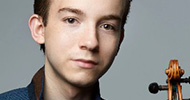
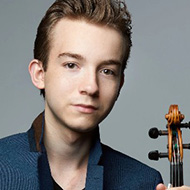
Among young pianists, Martin Helmchen stands out for his expressiveness, unpretentious playing, and profound musical interpretation. With two ECHO Klassik awards and the Credit Suisse Young Artist Award, he boasts significant accolades in the music world.
Classicpoint.ch: Your parents weren't musicians. How did they react when you decided to become a pianist as a child?
They were probably rather surprised, unlike some musician parents, who seem to feel a sense of relief... But I always experienced tremendous support without any undue pressure.
You attended the Bach Gymnasium in Berlin, where you focused on instrumental instruction. What was your school experience like?
It was a valuable time characterized by mutual motivation and enrichment. Beyond friendships, I still have regular professional contact with many of my schoolmates. There was real freedom to dedicate oneself intensively to music from an early age, made possible by a school curriculum that coordinated general education subjects and the junior student program. A unique concept, a product of three specialized music schools "surviving" from the GDR era, that doesn't exist anywhere else in the German-speaking world.
At this school, practically everyone wants to become a professional musician. Are there any students from your class or the entire school who have also been able to pursue successful solo careers?
I received inspiration and artistic impulses from many of my classmates, some of which have had a lasting impact on me, even from those who didn't become "soloists." Important friends and musical influences included the great pianist Yevgeny Sudbin and Dmitri Yurovsky, who started as a cellist and is now a conductor, like the rest of his family.
You had eight years of lessons with Ms. Hillenhagen Ivanzova. Was that the famous Russian school?
Probably, and certainly the best part! One could mention: very comprehensive, far-reaching sound concepts extending to dynamic extremes, also a melodic sound ideal derived from singing; a natural, perhaps holistic, technical awareness that can become very athletic, but is always conceived in complete unity with the music; vivid imagery; great emotional depth, even if that may sound clichéd.
You then switched to Arie Vardi. How did he influence you?
Very profoundly, both personally and musically. He conveys a generosity and nobility that are simply irresistible, both in personal interactions and in music. One acquires an appreciation and enthusiasm for both musicology and the simplest moments of primal musical bliss. Added to this is an enormous wealth of practical experience regarding performance and the pitfalls of an artist's life. And he has the gift of explaining music and sharing feelings and insights in such a way that one usually has the feeling of experiencing the greatest music of all (which is sometimes the case with the piano repertoire).
In the field of chamber music, you were taught by Boris Pergamenschikow and then also played with him. What was your experience of him and making music with him?
Pergamenschikow, like Heinrich Schiff later on, was just as important a mentor as my piano teachers. He was the one who ignited my love for chamber music. Without him, I would be a completely different musician, certainly with a much narrower horizon. Rehearsing with his students in lessons, and later playing with him as an equal, were unforgettable experiences. In him, one encountered a mixture of human warmth, humility, enthusiasm, and professionalism that I can only describe as a high ideal.
You now teach yourself as an Associate Professor of Chamber Music at the Kronberg Academy. What is important to you in your teaching?
Perhaps one could summarize by saying that it's about creating or sharpening awareness of meaning and expression in music, my own abilities and limitations, but also always about inner motivations. Why do I do something? Why do I use this particular musical device here and not there? And why do I make music at all?
Do you still take lessons yourself?
Very regularly. I intend to keep that up for the rest of my life. It's also a habit I first saw Boris Pergamenschikow do.
Besides your solo work, chamber music is also very important to you. Which partners do you particularly enjoy playing with and why?
With partners with whom I can share a certain fundamental attitude towards music. I think I've already mentioned the most important keywords in the description of my teachers' qualities and values. Furthermore, I've always been fortunate enough to be able to play chamber music with partners who were more advanced than me and to learn from them in a very natural way. A certain spontaneity on stage is also something very fulfilling.
You are married to the cellist Marie-Elisabeth Hecker and perform many chamber music concerts with her. You will soon be appearing with her at the Verbier Festival . What are the differences when you perform with your wife?
Primarily, of course, in the fact that we know each other inside and out, both personally and musically, and there is boundless trust. But as a married couple, you also have to consciously maintain a certain professionalism, for example, during rehearsals. Incidentally, she was already my favorite musician before we became a couple.
You are still very young. What plans and visions do you have for your future?
As a pianist, you always have a vast repertoire that you would love to play. A lifetime is hardly enough for that. Performing Bach and Schubert cycles in concert are medium-term goals I am working towards. And simply becoming a better communicator – both in the modern sense, related to the concert market, and in a more philosophical or spiritual sense.
Interview by Florian Schär | Classicpoint.ch | July 1, 2014
© Photo: Marco Borggreve
November 30, 2026 - Martin Helmchen (piano), Hong Kong Philharmonic Orchestra, Tarmo Peltokoski (conductor)
January 28, 2027 - Antje Weithaas (violin), Marie-Elisabeth Hecker (cello), Martin Helmchen (piano)
March 10, 2027 - Bochum Symphony Orchestra, Raphael Christ (conductor)
April 21, 2027 - Duisburg Philharmonic Orchestra, Stefan Blunier (conductor)
May 10, 2027 - Augustin Hadelich (violin), Marie-Elisabeth Hecker (cello), Martin Helmchen (piano)
May 18, 2027 - Julia Fischer (violin), Marie-Elisabeth Hecker (cello), Martin Helmchen (piano)




























































Do you want to attract more visitors to your concerts?
Find out more about the possibilities this portal offers.
With a concert search subscription, you will receive an email for your selected cantons/federal states as soon as a new concert is listed there. You can unsubscribe from the service at any time.
