
interview
Interview with Barbara Hannigan
July 1, 2026
"I rediscover every piece I sing, again and again, no matter how often I've already sung it..."




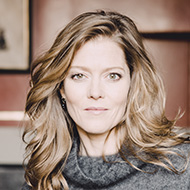
Russian pianist Yulianna Avdeeva became only the fourth woman to win the Chopin Piano Competition in 2010. The last woman to win before her was Martha Argerich in 1965. Today, Yulianna Avdeeva lives in Munich and performs in prestigious concert halls around the world.
Classicpoint.ch: Looking back, how do you assess your victory at the prestigious International Chopin Competition in 2010?
I am very proud and happy that I won this competition. My life became much more intense. It opened many doors for me. I have the opportunity to work with fantastic orchestras and excellent conductors, as well as to perform in major concert halls. I must also mention that the competition lasted three to four weeks back then. It was Chopin's 200th birthday, and there was an incredible atmosphere in Warsaw, the city where the competition took place. Experiencing the support of the audience, which helped shape the competition, is something I will never forget.
Are competition wins a must for a pianist's career today?
I don't think so. There are always individuals who can achieve a great career without winning a competition. Ultimately, it's also a matter of personality. Personally, I find it a good opportunity to be able to prepare for a specific moment with a particular program. It's important, however, not to participate in dozens of competitions with the same program simultaneously, but rather to prepare and focus skillfully and purposefully on one specific competition. The large number of people you can reach to increase your profile is also a significant advantage. I remember that when I won, it was the first Chopin Competition that could be followed live online in its entirety. A huge number of people, especially in Asia, followed the competition, so many interested parties already knew me when I was able to play my first concerts there.
Did you play differently at the competition than you would in a concert?
No, competitions aren't really any different from regular concerts for me.
And what about CD recordings?
There are, of course, other advantages. You can record different versions of a passage and see which one works best. However, this is also a curse, because if I like version 1 today, tomorrow I might find version 2 more suitable. Making a definitive, permanent decision can be quite difficult and exhausting, not least for the sound engineer.
Has your approach to Chopin's music and its significance for you changed since winning the prize?
Basically, I'm in a constant process. As a person, I experience something new every day. I'm also learning more and more about Chopin, having had the opportunity to visit the various places where he lived. Furthermore, I keep discovering new things in the scores Chopin left us, and so a more complete picture emerges. While I really dislike listening to my own recordings, I think that over time I've developed clearer ideas and strive to formulate the musical concepts even more clearly and precisely in every phrase.
You grew up in Moscow and live in Munich. What do you see as the main differences between the two cities?
For me, both cities are blessed with a rich cultural life. Moscow is practically non-stop; there's something going on 24/7. Munich offers me more peace and quiet. The nearby nature, especially the beautiful mountains, helps me find the necessary tranquility amidst my many travels.
You also perform many concerts in Asia. Do you notice differences in the audiences between Asia, America, and Europe?
Yes, there are definitely differences. I find it particularly fascinating, for example, how quiet people in Japan can be. Normally, there's always a background noise from people moving around, especially in large halls with several thousand attendees. But in Japan, the audience can sit for two and a half hours without moving. There are often children at the concerts, and they, too, are extremely quiet. Sometimes I wonder if I'm alone in the hall. Nevertheless, I can sense the audience and establish a connection.
You play relatively few concerts; is that intentional?
Yes, I deliberately build in breaks to learn new repertoire and recharge my batteries. I don't want a routine to develop where I travel from concert to concert and can no longer experience the joy and the special, unique moment of a concert.
You always play on the provided instrument. Do you influence the instrument in any way, for example, through the piano tuner?
The instrument is extremely important. Grand pianos have very different characters, and each one has a soul. With some, you immediately feel a connection; you sense it. The piano then helps you, it understands what you want and are looking for. Then there are grand pianos that aren't so easy to master. A good piano tuner can optimize an incredible amount. A good relationship with the piano technician is therefore very important to me, especially when I keep coming back and playing in the same places. We get to know each other, and the technician knows what's important to me, what my ideal sound is.
Are you friends with other well-known pianists?
As a pianist, you can be quite lonely, so artistic and personal exchange with great artists is very important.
Do you also dream about the pieces you play/practice?
Yes, I dream about pieces very often. I also find it fascinating that I find solutions to all sorts of problems in my sleep. When you let the music play only in your head, it's free from any manual influences and therefore, in essence, purest in its conception.
Do you have any other passions besides music?
Music is always there. I'm a curious person with many interests, but I can't imagine sharing the place that music holds for me with any other hobby.
Interview by Florian Schär | Classicpoint.ch | September 1, 2016
© Photo: Christine Schneider
09/02/2026 - Yulianna Avdeeva (piano)
09/18/2026 - Yulianna Avdeeva (piano), WDR Symphony Orchestra, Marie Jacquot (conductor)
10/21/2026 - Yulianna Avdeeva
10/22/2026 - Yulianna Avdeeva
10/23/2026 - Masterclass piano Yulianna Avdeeva
11/02/2026 - Vadim Gluzman (violin), Yulianna Avdeeva (piano)
11/12/2026 - Yulianna Avdeeva (piano)
01/12/2027 - Yulianna Avdeeva (piano)
02/26/2027 - Yulianna Avdeeva (piano), Camerata Salzburg, Afanasy Chupin (violin & direction)
March 11, 2027 - Julia Fischer (violin), Yulianna Avdeeva (piano)
June 2, 2027 - Yulianna Avdeeva (piano), Munich Philharmonic, Marie Jacquot (conductor), Malte Arkona (moderator)
June 13, 2027 - J.S. Bach: The Well-Tempered Clavier BWV 846–869


































































Do you want to attract more visitors to your concerts?
Find out more about the possibilities this portal offers.
With a concert search subscription, you will receive an email for your selected cantons/federal states as soon as a new concert is listed there. You can unsubscribe from the service at any time.
