interview
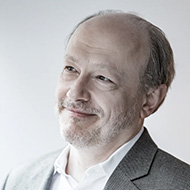
Interview with Marc-André Hamelin
July 31, 2026
“I consider composing an indispensable tool for performing musicians.”…




German tenor Jonas Kaufmann is currently one of the world's most renowned singers. He is equally at home on the world's great stages as a concert and opera singer. Numerous awards and honors attest to his success.
Classicpoint.ch: You came into contact with opera at a very young age. What were these first encounters like?
Extremely positive and formative. My key experience with opera was a performance of Puccini's "Butterfly" at the National Theatre in Munich, a Sunday afternoon show for children. If I remember correctly, it must have been in my first or second year of primary school, so I was six or seven. I sat next to my sister in the first row, right in the middle, directly behind the conductor, and was completely captivated. The enormous space, the velvet upholstery of the seats, the sets, the costumes, the music… And suddenly the woman who had just stabbed herself was standing in front of the curtain and was alive again! I simply couldn't grasp it. For me, opera was authentic, genuine, and serious. That's how I felt, and in a way, that hasn't changed to this day. And I firmly believe that opera can still have this magical effect on today's children and young people, despite everything that television and the internet offer.
You received your first individual singing lessons more or less by chance because of your advanced music course. How did that come about?
At our high school, there were two choirs: the junior choir for younger beginners and the chamber choir for more advanced singers, and I always enjoyed singing in a choir. At least two class periods a week were reserved for choir rehearsals, and before major concerts, we worked on the program up to three times a week. And these were quite demanding programs, with cantatas and motets, and apparently my voice must have already been noticed back then, because at some point, the choir director gave me the tenor solos. Then one day I saw a newspaper ad: Singers wanted for the extra chorus of the Staatstheater am Gärtnerplatz! So I signed up for an audition and, at 17, became the youngest member of the extra chorus.
When it came time to choose my advanced courses, I had actually planned to take mathematics and physics. Then I was told that they were only one person short of the minimum number of participants needed for an advanced music course. But that would have meant practicing piano for hours every day again to fulfill the required instrumental performance requirement, and I really didn't want to do that. What if they accepted singing as an alternative? So they sent me to the music academy for an audition. There, they confirmed in writing that I had proper control of my vocal cords, thus approving the ministry's special permit: singing as a music subject for my A-levels – on the condition that I took regular professional singing lessons. And so I went to Christof Schuppler at the music academy twice a week.
After graduating from high school, you began studying mathematics. Was studying singing already a possibility back then?
Not initially. With my high school diploma in hand, I followed my parents' advice in 1988 and enrolled in mathematics at the University of Munich. I wanted something "solid," something that would guarantee me a secure job later on, like my father, who had a decent income and could provide for his family. Because I wanted a family too, and I was also aware that singing professionally was quite a risky undertaking. Besides, I had already met several choir singers who would have loved to become solo artists, but it hadn't worked out for them. I had all of that in mind when I decided to study mathematics.
What ultimately led you to abandon your mathematics studies and begin vocal studies?
During my mathematics studies, it became increasingly clear to me that I wasn't cut out for office work. At some point, the pressure became so intense that I finally registered for the entrance exam at the University of Music for vocal performance. And I passed on my first try. After that, it took a considerable amount of courage to give up the seemingly secure field of mathematics.
After graduating, you immediately landed a job at the Saarbrücken State Theatre. After your first season, however, you increasingly had problems with your voice. What exactly was going on?
My body simply wasn't trained enough to handle the demanding daily routine of a beginner in the theatre. When you come straight from university, you have no idea what to expect in your first engagement. I was completely taken aback, and it got to the point of my voice giving out entirely. That was during a performance of "Parsifal"; I was singing the part of the Third Squire, a so-called "Wurze." All around me were Wagnerian voices, and of course, I didn't want to sound like a mosquito next to them. So I gave it my all – and after just a few phrases, I was completely hoarse. I opened my mouth, and only hot air came out; my voice simply disappeared. The conductor looked at me in utter disbelief. For a singer, that's a nightmare, of course. That was the first time I thought about quitting: "If this is what being a singer is all about, if you have to go on stage every night with this kind of stress, then I'll do something else, I'm not putting myself through this." Today I know what the problem was: I was holding my voice too tightly, I wasn't letting it flow freely, because I was trained for this "German sound." Fortunately, this crisis led to one of the most positive experiences of my professional life, namely meeting my teacher Michael Rohdes. With him, I learned to use my own voice instead of trying to sound like the "lyric tenor" they imagined at the music academy to sound like.
A few years later, Alexander Pereira brought you to Zurich with a permanent position. What was your time at the Zurich Opera House like?
Wonderful. Zurich was a safe haven—and at the same time, the mothership from which my international career began. When Alexander Pereira offered me a permanent contract, I hesitated at first. A permanent contract felt like a straitjacket to me. But then I spoke with my Zurich colleague, Oliver Widmer, and he explained to me that a permanent contract in Zurich meant something completely different from what I was used to. And he was right: it simply meant a certain number of performances; I wasn't tied down for the entire season and could also have a say in what I sang and what I didn't. And of course, the prospect of living in Zurich with my family and being at the theater in just a few minutes was very appealing. It's quite a difference whether you're a singer traveling virtually alone in the wilderness, living out of a suitcase, or whether you're singing at a theater where you truly feel at home. You know every technician, every orchestral musician, every choir singer, and of course all your colleagues; you can even try out roles you might not be entirely convinced about. And that's why I truly felt at home at the Zurich Opera.
After performances in America and at the Salzburg Festival, you made your debut at the Metropolitan Opera in New York. What was that like for you personally?
An unforgettable day, what you might call "the big break." And I really hadn't expected it. The audience had come to Angela Gheorghiu as Traviata, and I was known to maybe a few insiders in New York. So the audience's reaction when my solo curtain fell hit me all the harder: people jumped out of their seats and went wild. I simply couldn't believe it; it literally knocked me off my feet. All I remember is dropping to my knees and thinking, "Are they really talking about me?" That sounds like that cliché you get from the Oscars, but that's really how I felt that moment—because I never would have expected such a reaction. I had sung the role of Alfredo several times before, in Stuttgart and Chicago, and people had thought it was very nice. But the fact that an entire house is turned upside down because of this, that people who don't even know me are shouting "Bravo!", I couldn't grasp that at first.
Which roles have you not yet sung that you would like to sing?
There are quite a few! At the top of my wish list are Verdi's Otello and Wagner's Tannhäuser, then of course Hoffmann. My next role debut is planned for June 2014 in London as Des Grieux in Puccini's "Manon Lescaut".
What is the most important thing in vocal training, what advice would you give to young singers?
Always stay true to yourself, trust your instincts, learn to distinguish between good and bad advice, and ensure that body, mind, and soul remain in balance.
What are your wishes for the future?
To stay healthy and spend more time with my family.
Interview by Florian Schär | Classicpoint.ch | January 4, 2014
Photo: Dietmar Scholz
September 24, 2026 - Jonas Kaufmann (tenor), Helmut Deutsch (piano)
January 26, 2027 - Jonas Kaufmann (tenor), Helmut Deutsch (piano)
March 16, 2027 - Jonas Kaufmann (tenor), Marina Rebeka (soprano), German State Philharmonic Orchestra of Rhineland-Palatinate, Jochen Rieder (conductor)
April 9, 2027 - Tutto Verdi
April 13, 2027 - Jonas Kaufmann (tenor), Marina Rebeka (soprano), German State Philharmonic Orchestra of Rhineland-Palatinate, Jochen Rieder (conductor) July
19, 2027 - Jonas Kaufmann (tenor), Helmut Deutsch (piano)



























































Do you want to attract more visitors to your concerts?
Find out more about the possibilities this portal offers.
With a concert search subscription, you will receive an email for your selected cantons/federal states as soon as a new concert is listed there. You can unsubscribe from the service at any time.
