
interview
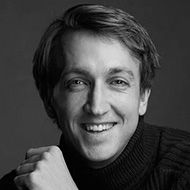
Interview with Fabian Müller
September 30, 2026
"I like to practice at night in the dark, without turning on the light. The silence sounds..."






Alexander Melnikov completed his studies at the Moscow Conservatory under Lev Naumov.
Among his most formative musical experiences were his encounters with Sviatoslav Richter, who regularly invited him to his festivals in Russia and France. He is a prize winner of prestigious competitions such as the International Robert Schumann Competition (1989) and the Queen Elisabeth Competition in Brussels (1991).
His musical and programmatic choices are often unconventional.
Alexander Melnikov began exploring historical performance practice at a very early age. He received significant inspiration from Andreas Staier and Alexei Lubimov, with whom he has collaborated on numerous projects. He regularly performs with renowned early music ensembles such as the Freiburg Baroque Orchestra, Musica Aeterna, the Academy for Ancient Music Berlin, and the Orchestre des Champs-Élysées.
You first learned to play the French horn and only later became enthusiastic about the piano. Why did you change your mind?
I first heard the sound of a horn shortly after my conception — about seven months before my birth. Being a keen follower of Sigmund Freud's concepts at the time, I was immediately captivated by the instrument's round shape, which evoked all sorts of connotations — some of which would be out of place in this interview. The second crucial factor came when I was three years old and saw a postman. In the Soviet Union, the postal service was forbidden from using a horn in its logo — Freud didn't get along well with communist ideology —so every postman and postwoman had to carry their own horns with them at all times. Naturally, the horns were primarily used as vessels for vodka, but sometimes they drank the brittle liquid instead — you simply HAD to hear how wonderful it sounded — those days are indeed gone.
Last but not least, it has always been my dream to play Beethoven's wonderful 23rd Horn Concerto and especially the fantastic horn solo in Debussy's "Moldavian Overture".
You are considered a virtuoso Shostakovich interpreter. What do this music and this composer mean to you?
It's completely impossible to answer this in a way that would make sense... I've been engaged with his music for a long time, and my perspective has changed several times, but always towards greater appreciation. He was a figure who will always be a subject of debate. Too many musical, social, human, and philosophical layers intertwine and sometimes contradict each other. All I know is that he was someone I loved very much and an absolutely essential part of my being. As for the rest — I can't say anything outside of playing or listening to his music itself.
You became involved with historically informed performance practice very early on. What fascinates you about it?
It's true, I've been influenced and fascinated by old instruments for a very long time. I'm by no means a specialist in early music – but I do study old pianos quite intensively, and of course I play them too. It has also led me to see the phenomena of the "modern" piano in its historical context – that changes things...
You recorded a CD this year with Isabelle Faust, reviving Mozart's "Sonatas for Piano with Violin Accompaniment." Can you tell us something about it?
Well, that was already CD number 3... What can I say? That this music is as good as Mozart's music can get, often even more fascinating to me than the solo piano sonatas, and that I have the incredible luck to play it with Isabelle. It's also one of the most difficult projects I've ever undertaken – partly because there are too many occasions where you can no longer ignore or avoid the questions of ornamentation and improvisation, and whatever you do in this music – you destroy the perfection. This isn't a hypothetical or spiritual observation, but purely practical. Try to imagine a Rembrandt painting where he would leave some parts blank so that we could complete it – good luck with that.
You are currently working on your project "Many Pianos". Can you tell us about it?
Well, I have two different versions of this program. One – recorded on the CD – consists of four highly virtuosic works, all symbolic of a certain period, played on a contemporary instrument. The idea is to place them in a sonic context more likely to highlight certain aspects of this music that are often lost.
Another version is the study of the genre "Fantasia". This aims to show how the musical language gradually developed and how closely it was linked to the development of the medium – the instrument .
How have you experienced the current COVID period?
Just like with the mortality rate, we won't be able to answer these questions until the pandemic is over. Unfortunately, the end isn't in sight for now. What is certain is that things are changing. If we manage to turn some of these changes around for the better, we'll be very happy. But I'm not overly optimistic.
What are your hopes for the future?
That's very personal. But I would be very happy if our civilization were to develop a little better. But even here, I'm not too optimistic.
What was your funniest experience as a musician?
Many years ago, I observed, just in the 8 bars of the second movement of Ravel's violin sonata "Blues", how many things can go wrong.
Do you ever feel afraid as a musician?
Yes, very often before concerts. But not always.
You have a second great passion. You're a (hobby) pilot. How did that come about, and where/why do you fly?
Well, strictly speaking, it's no longer a hobby. But I can say with certainty that I haven't diversified successfully – the demand for pilots is now the same as the demand for performing musicians – more or less zero.
Interview by Florian Schär | Classicpoint.net | October 22, 2020
October 24, 2026 - CAMERATA BERN | "Departure"
October 25, 2026 - CAMERATA BERN | "Departure"
November 8, 2026 - Elena Bashkirova (piano), Alexander Melnikov (piano)
November 12, 2026 - Ervis Gega (violin), Marc Bouchkov (violin), David Aaron Carpenter (viola), Edgar Moreau (cello), Alexander Melnikov (piano), Villa Musica scholarship recipients, Malte Arkona (moderator)
March 6, 2027 - Alexander Melnikov (piano), Munich Philharmonic, Pablo Heras-Casado (conductor)
May 2, 2027 - Isabelle Faust (violin), Jean-Guihen Queyras (cello), Alexander Melnikov (fortepiano)




























































Do you want to attract more visitors to your concerts?
Find out more about the possibilities this portal offers.
With a concert search subscription, you will receive an email for your selected cantons/federal states as soon as a new concert is listed there. You can unsubscribe from the service at any time.
