
interview
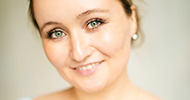
Interview with Julia Lezhneva
August 31, 2026
“Analytical work allows for emotional freedom, while emotional discoveries…”




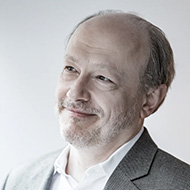
The son of Jewish emigrants from Germany, Zander received composition and cello lessons from a young age. Compositions by the nine-year-old aroused the interest of Benjamin Britten, who invited him and his family to his home in Aldeburgh for three summers. There, he received instruction in music theory and composition from Britten's assistant, Imogen Holst, the daughter of Gustav Holst. From 1954 to 1959, he studied cello in Florence with Gaspar Cassadó, whom he also accompanied on concert tours. He continued his studies at University College London until 1964. From 1967, he taught at the New England Conservatory in Boston, where he led the interpretation classes and conducted the New England Conservatory Youth Philharmonic Orchestra. Over 32 years, he undertook thirteen international concert tours with the orchestra, recorded five commercial albums, and produced several television documentaries for the Public Broadcasting Service. Since 1979, Zander has been the conductor of the Boston Philharmonic Orchestra. In addition to his musical career, Zander gives international lectures on team leadership, including several at the World Economic Forum in Davos. With his wife, psychotherapist Rosamund Zander, he published the book *The Art of Possibility*, which has been translated into sixteen languages. In 2002, he was honored as a "Caring Citizen of the Humanities" by the International Council for Caring Communities (ICCC).
As a child, you had composition and cello lessons. Your compositions at the age of nine caught the attention of Benjamin Britten, who then invited you and your family to his home and gave you composition lessons. Do you remember that time, and what did you learn from him?
The experience with Benjamin Britten during the three summers I spent with my family in Aldeburgh was very formative. I was very young—between 10 and 13—and he was very kind and encouraging. His warm, resonant voice is still a constant companion in my mind. He was lighthearted and fun-loving. We children spent a lot of time with him, driving around in his Rolls Royce or going out to sea in a small boat with a boatman like Albert Herring. He had a playful, childlike quality that I have rarely encountered in a very famous person. One day I asked him, "How come you always have time for us?" He replied with a serious twinkle in his eye: “I compose every morning from 6 to 10, and then I have time to play with my friends!” It was as if he were speaking from one child to another. I think that was the beginning of my journey working with children and young people. It was Ben who first made me realize that making music spreads joy and enthusiasm. He also taught me to fall in love with the connection between poetry and music. I think that in his mastery of setting words to music, he is almost Schubert's equal. I have retained this passion for the relationship between words and music to this day.”
Since then, I haven't composed a single note.
You also studied cello with Gaspar Cassadó and accompanied him on his concert tours. What were your experiences with him?
Cassadó is my absolute favorite cellist. Listen to this magical interpretation of Chopin's Nocturne in E-flat (4 minutes). Hear the trills, the left-hand runs, the glorious sound (on gut strings), the amazing portamentos (gliding between notes) like a singer, the intimate phrasing, as if he were whispering in your ear. The great Spanish soprano Victoria de los Angeles said to me when I was studying with Cassadó in Spain: "Pay close attention! Everything I know about singing, I learned from Gaspar Cassadó." When I conduct an orchestra, I listen to Cassadó's sound. When I was recording Mahler's Second with the Philharmonia Orchestra, I played his Chopin recording for the entire orchestra before we recorded the second movement. Suddenly, the whole orchestra was transformed—the sound, the timing, the rubato, everything! That's how we learn from one generation to the next; it's an endless process.
Cassadó taught me for five years and never charged my parents a penny. "If I charged you for my lessons," he told my father, "you'd never be able to afford them, so I don't charge you anything. Imagine that!" Since then, I've never charged for a lesson. How could I? That's called "passing it on." What an incredible gift that great man gave me!
Do you still play the cello today?
Unfortunately, only occasionally, to demonstrate something. I miss that "practical" experience of making music. But the cello is at the heart of my music-making. People often say that the cello section of every orchestra I conduct shines with a special brilliance.
You have been the conductor of the Boston Philharmonic Orchestra since 1979. What makes this orchestra so special?
The musicians of the BPO play with an incredible sense of daring, spontaneity, and a willingness to take risks. I encourage them to "go all in"—everyone thinks beyond the bar lines in what I call "ONE BUTTOCK PLAYING." The players in the Boston Philharmonic Youth Orchestra are the same—they are filled with awe and wonder as they tackle one major work of the repertoire after another, each for the very first time. After a four-hour rehearsal on Saturday afternoon, they are as fresh and engaged as when they started. Some of them travel from afar to attend rehearsals. One child is driven by his mother five hours each way from New Jersey! Imagine how excited they will be when they come to Basel and Prague. Hamburg, Vienna, and Berlin!
In addition to your musical work, you give international lectures on team leadership, for example, several times at the World Economic Forum in Davos. How did that come about?
I've found that leading an orchestra is similar to leading a company. The conductor doesn't play a note himself, but derives his power from his ability to empower others. His task is to awaken potential in others. This is a great model for any kind of leadership. Together with my former wife, the psychotherapist Rosamund Zander, we therefore developed a set of practices for keeping potential alive at all times and under all circumstances. We wrote the book *The Art of Possibility*, which has been translated into 26 languages and is used worldwide as a handbook for leaders.
How did it become so successful?
Many people are disillusioned with the old hierarchical, male-dominated leadership style that has prevailed for the last 75,000 years. Winning and losing, success and failure, comparisons and measurements can only get us so far. Mandela and Martin Luther King, Gandhi and Jane Goodall were motivated by the vision of a better world for everyone, including animals and the environment. I've incorporated the Practices of the Possible into the training of the Boston Philharmonic Youth Orchestra so that audiences at their concerts would hear and see energy, generosity, inclusivity, enthusiasm, vitality, and love.
There's a powerful TED Talk you gave about the transformative power of classical music. Why are you so certain that classical music won't die out?
I'm not certain, but it's a better story than the one about everything going to hell in a handbasket.
Where do you get the strength and energy for your work?
From the desire to share what I love and have discovered in my long life.
Interview by Florian Schär | Classicpoint.net | June 1, 2024



























































Do you want to attract more visitors to your concerts?
Find out more about the possibilities this portal offers.
With a concert search subscription, you will receive an email for your selected cantons/federal states as soon as a new concert is listed there. You can unsubscribe from the service at any time.
