

interview
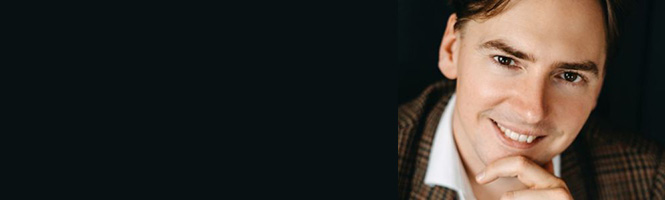
Interview with Julia Lezhneva
August 31, 2026
“Analytical work allows for emotional freedom, while emotional discoveries…”









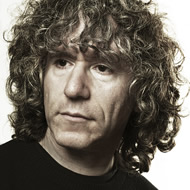
Steven Isserlis is a world-renowned British cellist and author. His grandfather was the Russian composer Julius Isserlis, and his family tree can be traced back to Felix Mendelssohn, Karl Marx, and Helena Rubinstein. In 1998, he was awarded the title of Commander of the Order of the British Empire (CBE) for his services.
Classicpoint.ch: You are the author of several children's books, all of which have a connection to classical music. How did you get into writing?
I've always enjoyed writing. When I was 20, I started writing more and more articles and cover notes. As my son Gabriel grew up, I wanted to tell him about the lives of the composers whose music I was playing for him. I couldn't find a suitable book that presented the real life stories of the great composers in a humorous and child-friendly way. So I started writing such books myself.
Could you briefly describe each of your books?
The first book is called "WHY BEETHOVEN THREW THE STEW" and describes the life stories of Bach, Mozart, Beethoven, Schumann, Brahms, and Stravinsky. It also includes short descriptions of their music.
The second book is a bit longer and more detailed. It's called "WHY HANDEL WAGGLED HIS WIG" and is about Handel, Haydn, Schubert, Tchaikovsky, Dvořák, and Fauré. I had the most fun writing about Dvořák. He was such a funny man! But they were all completely fascinating characters.
Now I've written a third book. But this book is very different from the others. It's called "ADVICE FOR YOUNG MUSICIANS," based on Schumann's book of the same name. It will be published by Faber & Faber in September.
Your family tree can be traced back to Felix Mendelssohn, Karl Marx, and Helena Rubinstein. Has that influenced your music-making in any way?
No, but I like to boast about it. My grandfather, the pianist and composer Julius Isserlis, certainly had a great influence on my music. He was probably the reason I became a musician.
You play a Stradivarius cello. What is your relationship to your instrument?
I love it, or rather, him. It's a being with a soul!
If the cello didn't exist, would you have studied a different instrument or done something completely different with your life?
I wouldn't be unhappy as a pianist with 32 Beethoven sonatas, 27 Mozart concertos, etc.
When you think back to your childhood, what were your first special experiences with classical music?
I can't remember a time without music. My father played the violin, my mother the piano, and, as far back as I can remember, my sister played both the violin and the piano. Even our dog sang. Now my sister Annette is a violist and my other sister Rachel is a violinist.
Which are your favorite works or composers?
Oh, that's impossible to say. It changes constantly and depends on what I'm currently playing and listening to.
What are your plans for upcoming projects?
After the concerts in Lucerne, I will be teaching a seminar in Cornwall with Thomas Ades, where I am the artistic director and attend every two years. After that, I will be traveling a lot. One of the most interesting projects is a recital with András Schiff on fortepiano at the Beethoven House in Bonn, where I will be playing Beethoven's cello, which has not been played publicly for over 50 years.
What interests you besides music?
Primarily books, but also films, theatre, art (although I know far too little of it), comedy and food – I love food!
Interview by Florian Schär | Classicpoint.ch | March 2, 2016
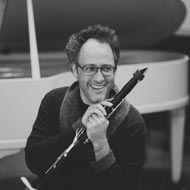
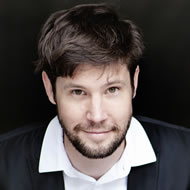
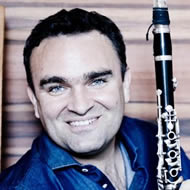
September 28, 2026 - Pierre Genisson (clarinet), Irène Duval (violin), Sào Soulez Larivière (viola), Steven Isserlis (cello), Anna Han (piano)
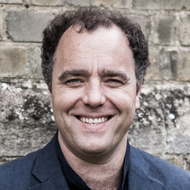
June 12, 2027 - CAMERATA BERN | «Mmmm...» | Steven Isserlis
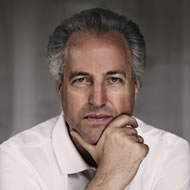
June 13, 2027 - Stretta Concerts: CLOSING CONCERT WITH THE CAMERATA BERN
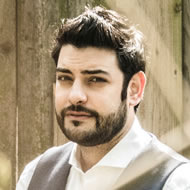
June 18, 2027 - Steven Isserlis (cello), Düsseldorf Symphony Orchestra, Alexandre Bloch (conductor)



































































Do you want to attract more visitors to your concerts?
Find out more about the possibilities this portal offers.
With a concert search subscription, you will receive an email for your selected cantons/federal states as soon as a new concert is listed there. You can unsubscribe from the service at any time.
