interview
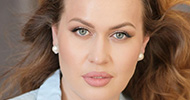
Interview with Elena Stikhina
June 1, 2026
“The Zurich Opera House has a very special meaning for me.” Elena Stikhina is…


Franz Welser-Möst is one of Austria's most renowned and successful conductors. Numerous guest conducting engagements have taken him around the world with major orchestras. From 1995 to 2002, he was Music Director of the Zurich Opera House, where he also served as General Music Director from September 2005 to summer 2008. Since 2002, he has been Chief Conductor of the Cleveland Orchestra.
Classicpoint.ch: You originally studied violin and composition. However, after a serious car accident in 1978, you had to abandon your plans to pursue a career as a violinist. From then on, you devoted yourself entirely to conducting. Would you want to trade places with a solo violinist today?
No, one shouldn't look back, but rather make something of what one has.
Your first engagements as a conductor of a professional orchestra took you to Switzerland, to Winterthur and Lausanne. How do you remember that time?
Winterthur was a wonderful time: the Musikkollegium had placed their trust in someone not yet 30 and gave me free rein in programming and training the orchestra. I remember the truly wonderful atmosphere of optimism in this historic city, so steeped in tradition and yet so open to modernity. Many of my first musical encounters with contemporary music date back to that time. In Lausanne, I was "only" the principal guest conductor, and I remember many exciting rehearsals and performances.
Where, when, and with which programs can you be heard again in Switzerland?
This summer with my Cleveland Orchestra performing Béla Bartók and the Sinfonia eroica at the Lucerne Festival.
You were the general director of the Zurich Opera House and later also of the Vienna State Opera. Where do you see the differences between these two opera houses?
In Pereira's time, Zurich was a house of musical innovation and diversity. He attracted the stars of the era to make it their artistic home. In the 43 premieres and countless performances, I had the opportunity to work with legends of opera history such as Mirella Freni, Nicolai Ghiaurov, and Alfredo Kraus, to name just three "immortals."
Vienna has far fewer premieres, fewer rehearsals, and a larger repertoire. To succeed as a conductor in this environment, one must already possess considerable experience.
You have been the principal conductor of the Cleveland Orchestra since 2002. What is so special about this orchestra?
It always starts with the attitude. I know of no other orchestra where every single musician arrives at the first rehearsal so fantastically prepared. The New York Times named us the best orchestra in America last year. The orchestra displays incredible pride in its work but has no arrogance. It has a chamber music-like approach and was described, among other things, as an "orchestra of angels" by a leading European music journalist last year, on the occasion of a performance of Strauss's "Daphne."
Which instrument in the orchestra best suits your personality and why?
I have no idea, but perhaps the cello. I've never really thought about it, though.
Is the conductor Franz Welser-Möst different from the private Franz Welser-Möst?
Yes. There's a reason why private life is called that.
How do you, as a conductor, establish your authority with the orchestra?
Through a strong desire to shape the music, and extensive knowledge of both the details and the whole.
What do you consider the most important prerequisites for optimal collaboration within an orchestra?
Again, the right attitude towards music and our profession, instrumental proficiency, and the will and readiness to rediscover a work.
Where do you find balance besides music?
My wife, friends, daily yoga, Thai massage, books, art and – very importantly – nature (especially in the form of mountaineering and snowshoeing).
Interview by Florian Schär | Classicpoint.ch | July 1, 2016
© Photo: Satoshi Aoyagi




























































Do you want to attract more visitors to your concerts?
Find out more about the possibilities this portal offers.
With a concert search subscription, you will receive an email for your selected cantons/federal states as soon as a new concert is listed there. You can unsubscribe from the service at any time.
