
interview
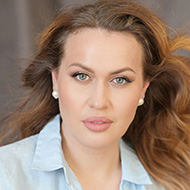
Interview with Elena Stikhina
June 1, 2026
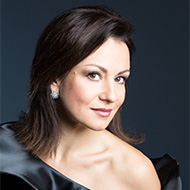
“The Zurich Opera House has a very special meaning for me.” Elena Stikhina is…


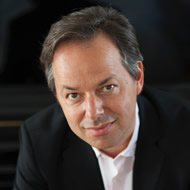
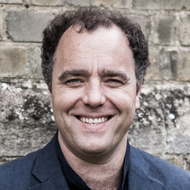
Christian Knüsel has been the artistic director and conductor of the New Basel Orchestra (NOB) since 2012. Following his studies in Switzerland, the Netherlands, and the USA, where he earned teaching, concert, and soloist diplomas, he studied conducting, musicology, and philosophy. He was recently selected by the Moravian Philharmonic as Principal Guest Conductor to further develop one of the Czech Republic's most prestigious orchestras, beginning with the 2020/21 season.
In 2018, the Dienemann Foundation awarded him a prestigious special prize for his work as a conductor, his sophisticated concert programs, and his innovative formats. On September 2, 2020, he will conduct the NOB in a special concert in Basel, marking the reopening of the Stadtcasino Basel's important concert hall after four years of renovations.
In the following interview, Christian Knüsel talks about the reopening of the Basel City Casino, the special program for the reopening, and his time with the Moravian Philharmonic.
Classicpoint.net: How did the idea for this concert evening on "Music & Architecture" come about?
The reopening of the Stadtcasino is a major event, and the concert hall is renowned worldwide for its acoustics. It seemed natural to put the hall at the center of the program. Concerts shouldn't take place in an ivory tower. As a listener, I feel more directly engaged when a program has a distinctive character and, for example, relates to a social event.
The program is tailored to this location and the moment of reopening. Are such cross-connections an opportunity for more diverse concert programs?
Absolutely. Well-known pieces of music are considered masterpieces; they are placed on a pedestal, appearing untouchable. But behind the music is a composer with their life and ideas; every work has its own story. If we succeed in bringing the context to life, the works are perceived differently. That's why we at the NOB chose "Connecting Worlds" as the season's theme and are creating cross-references to other disciplines in our concerts, such as architecture, as in this case.
As at the opening of the concert hall in 1876, Mozart's Magic Flute Overture and Beethoven's Ninth Symphony will be performed. Furthermore, the audience will gain exclusive insights into the development of the "Basel City Casino Extension" project. What correspondences exist between architecture and music?
Indeed, there are significant parallels, starting with the terminology. Many musical terms are borrowed from architecture; in music, too, we speak of form and material, of motifs and colors. Musicians and architects both work with historical material and interpret it in the here and now. The architects Herzog & de Meuron placed the 1876 concert hall at the center of their project as an independent structure. Therefore, we also wanted to musically reference the era of its creation, and thus the opening concert of 1876.
How did the exchange with the architects work in developing this program?
The conversations and discussions with Andreas Fries, the responsible partner at Herzog & de Meuron, were very inspiring. I gained further insights during tours of the construction site. From all these impressions, I tried to develop a coherent concert program that playfully explores the parallels between architecture and music while simultaneously allowing each discipline its own space.
Commissioned by the NOB, the renowned Swiss composer Daniel Schnyder, who lives in New York, is writing a musical commentary on Beethoven's visionary work for this occasion. How did this come about?
Beethoven's Ninth Symphony has been more formative for music history than almost any other work. To put it somewhat dramatically, one could say that all subsequent composers of symphonic works have had to face the decision of either building upon it or finding their own concept, essentially writing against the Ninth. The significance of Beethoven's work extends beyond the musical; the Ninth is also a fervent manifesto of ideals that unite humanity. It has become a veritable brand, a label: as the official European anthem, as part of the UNESCO World Heritage, and as the preferred piece of music for important ceremonies such as the fall of the Berlin Wall. All the more reason, then, for us to believe that Schnyder's work should also provide a space for a contemporary, even tongue-in-cheek, commentary.
Did the NOB influence the composition process?
It was important to me that the familiar image of the Ninth Symphony wasn't cemented, but rather that lesser-known aspects were brought to light. The Ninth is full of remarkable passages, for example, when Beethoven, in the development section of the first movement, suddenly introduces plucked double bass offbeats into a static, tension-filled soundscape, creating unexpected drive and groove. Therefore, it was important to me to find a composer like Daniel Schnyder, who is equally at home in classical and jazz music.
Does Schnyder make direct reference to the Ninth Symphony in his composition?
Yes, Schnyder's work reflects the symphony with numerous allusions; for example, his piece also follows the progression from D minor to D major. My central concern, however, was that Schnyder's work should provide a lighthearted, cheerful counterpoint to the weighty reception of the Ninth. And that the composer should orient himself toward the architects' approach. As one can see at first glance, Herzog & de Meuron adopt the language of the existing building. It seemed appealing to me that Schnyder should also incorporate motifs and techniques from Beethoven in his piece, specifically in the way the architects dealt with motifs from the historical building fabric.
Not an easy starting point. How did Schnyder react to these requirements?
With great interest and a good sense of humor. Daniel is very experienced in dealing with such tasks, so that despite all the cross-references, a completely independent work emerged. That was the idea from the very beginning.
It will be interesting to see how these different musical worlds interact in the newly opened concert hall.
Different worlds are part of the Stadtcasino concert hall's DNA. It is not only famous for its outstanding acoustics, but also for its eventful history: 100 years ago, the first Swiss Trade Fair was held here, as were masked balls and boxing matches; indeed, even the foundation stone for the founding of the State of Israel was laid in Basel's concert hall.
What is your own relationship to the hall? What personal experiences do you associate with this place?
As an orchestral musician, I've played several concerts there, and I've performed as a soloist three times in the concert hall, most recently with the army band. I remember it vividly; it was on a particularly hot early summer day with tropical temperatures in the hall. It's good that those times will hopefully soon be over thanks to modern air conditioning.
The need for renovation isn't limited to concert halls; the classical music scene also needs a breath of fresh air. How can sustainable renewal be achieved?
Tradition must be constantly re-examined if it is to remain vibrant. Equally important is trust in the works themselves. What possesses quality and substance remains relevant. Numerous works by Beethoven were initially rejected, much like the Eiffel Tower, to continue the parallels between architecture and music. Innovation is important—new works, new venues, new forms of presentation—but what matters most is what happens in the minds and hearts of the musicians. Passion and dedication are contagious, especially when a new unity can emerge from the highly developed interplay of classical music. The question for a vibrant music scene, therefore, is: How can music-making be sustainably anchored in society?
What are your conclusions?
It seems to me that our music scene can learn a great deal from other fields and from earlier times. I'm working with the NOB on launching a large-scale project on this topic. If one wishes, one could also relate this initiative back to the Ninth Symphony, to the ideal of development and fulfillment through music, and to Beethoven's utopia of music that connects people.
You were selected by the Moravian Philharmonic, where Gustav Mahler once conducted, for the position of Principal Guest Conductor. Did your expertise in innovative concert programs play a role in this two-year selection process among international guest conductors?
Perhaps for the initial invitation, but not subsequently. I accepted a program proposal from the artistic director and conducted two concerts with the orchestra. Conceptual considerations take a back seat when working with the musicians; direct interaction is what counts. It's like love: if you're lucky, the spark ignites.
Interview by Florian Schär | Classicpoint.net | August 1, 2020





























































Do you want to attract more visitors to your concerts?
Find out more about the possibilities this portal offers.
With a concert search subscription, you will receive an email for your selected cantons/federal states as soon as a new concert is listed there. You can unsubscribe from the service at any time.
