interview
Interview with Elena Stikhina
June 1, 2026
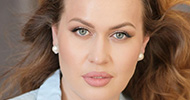
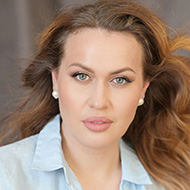
“The Zurich Opera House has a very special meaning for me.” Elena Stikhina is…


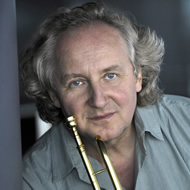
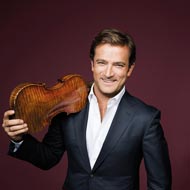
Since his success at the ARD Competition in 1986, Reinhold Friedrich has been a regular guest on all the world's major concert stages. In addition to his concert career, he is a professor of trumpet at the Karlsruhe University of Music, an honorary professor at the Royal Academy of Music in London, and a visiting professor at the Royal Academy of Music in Aarhus, Denmark, and at the Elisabethen College of Music in Hiroshima, Japan.
Classicpoint.ch: When and why did you begin learning the trumpet?
I was seven years old and came home sweaty from playing cowboys and Indians with my best friend. He showed me a new "disc" (meaning a small record, formerly called a single) with the Brandenburg Concerto. I was so fascinated by it that when I got home, I simply told my parents that I needed a trumpet because I was now a trumpet player. The next birthday was the big day. I had my first "borrowed" trumpet in my hands and was overjoyed!
You are active worldwide as a soloist, orchestral musician, and chamber musician. Yet you place your professorship at the center of your life. What is it about teaching that inspires your passion?
Many, many years ago, the great Celibidache wrote in my autograph book: "The noblest and most important, but also the most difficult task in life is teaching." Today, I receive the fruits of my labor so often that, in retrospect, I must say: I am the one who has been gifted. What could be more beautiful than helping to give young people a future? One person plays the Zimmermann Concerto, another plays the Baroque trumpet with fantastic ensembles, or secures one of the rare professorships for trumpet.
You play not only the modern trumpet but also the Baroque trumpet. How does the playing differ?
There are instruments like the trombone or violin, or think of singing, where the overlap between the new and the old is quite high? In those cases, the transition is easier. With the Baroque trumpet, the difference is enormous, which makes focusing on this one aspect worthwhile. There are, of course, people who are a bit smarter than me. They only play Baroque or only modern music. I constantly try to bridge the gap between these extremes. It requires a different mouthpiece, a different playing technique, articulation, style, etc. This is a thin and dangerous ice. Sometimes you get this feeling of elation: "That's exactly how it should be!" That's why I do it. Meanwhile, it's also become part of a contemporary requirement in everyday teaching. We professors have to continue our education and work, not just the students...
As a special skill, you also play the keyed trumpet. Can you explain the peculiarities of this instrument to us?
Well, you're certainly using strong language. WHO really masters this instrument? The keyed trumpet is and remains a BASTARD. Felix Mendelssohn-Bartholdy from Italy wrote in a letter to Fanny: "I am here in Italy and I hear these keyed trumpets. They sound like women with beards or men with breasts!" By the way, since we're on the subject and the Olympics are just over: Greetings to Sochi to Mr. Putin (When will the gay brass players come out? The footballers started it – are the last bastion of machismo!)
How do German and American trumpet models actually differ?
German with rotary valves (seated – meaning: played horizontally): softer, more blended, better fundamental intonation, more air.
American/French with piston valves (upright – meaning: played straight or upright): more soloistic, more present, more agile, bolder.
Besides Baroque music, you are also very interested in contemporary music. You have performed numerous premieres and first performances of works by Wolfgang Rihm, Sir Peter Maxwell Davies, Rebecca Saunders, Hans Werner Henze, Nicolaus A. Huber, and Adriana Hölszky. Did you have contact with the composers during the rehearsal process for these compositions?
Not to forget: the new Basel professor Johannes Caspar Walter, Herbert Willi – the Mozart of Vorarlberg, Luca Lombardi – BA Zimmermann's last student along with Peter Eötvös, Christian Wolff from New York, Benedict Mason from London, and the recently deceased Theo Brandmüller. The creative processes were so diverse and varied; I would need a separate installment of your interview series to cover them all...
Did you also exert any influence on the composition of certain works?
Hopefully not too much (laughs). As a self-confessed hands-on person, I have a negative influence on the creativity and spontaneity of the "artists." But sometimes it can't be avoided. After all, the composers also ask one or two questions about feasibility and the artist's capabilities. What often comes out of it completely turns the question on its head. For example, the question: How high can you play? Answer (RF): Well, up to g```, a```. Then comes the composition with a B``` or even higher. Among these people, there are certainly one or two eccentrics, sonic terrorists, musical provocateurs. But that's precisely what drives things forward. People who are willing to break taboos – to push boundaries.
You were awarded the ECHO Klassik Prize for your recording of the solo concerto "Nobody Knows the Trouble I See" by Bernd Alois Zimmermann. What fascinates you about this work?
It's one of the most beautiful, if not the most beautiful and significant concertos for our instrument, and at 70 years old, it's prettier and younger than Heidi Klum!
You have been the principal trumpet of the Lucerne Festival Orchestra under the direction of Claudio Abbado since its founding year. In your opinion, how has the orchestra developed over the last 10 years?
It's difficult to talk about it today, so soon after his death, especially since this orchestra was created with him and will disappear with him. We'll have to see what comes next. The world keeps turning, and we can't remain in mourning forever. But right now, the tears are still wet, and the void he leaves behind is so vast that I can't even begin to imagine how things will go on. Of course, over the past ten years, we've grown closer and more intensely connected, experiencing those moments of flow that every artist longs for. But those moments were also sustained by our mutual love, esteem, and respect, which we owed and still owe to the music itself.
Besides the trumpet, do you have time for other interests?
Did you mean giving interviews for newspapers, radio, or television, or did you mean answering emails, texts, answering machines, and dealing with mail, or serving on committees like the German Music Competition, or writing programs for youth music festivals? When I'm driving through the woods, for example between Erfurt and the Kirchheim interchange towards Frankfurt, it can happen that something like my right foot slams on the brakes and a minute later I have a small collection of porcini mushrooms on my back seat. I almost never have time for mushrooms, or even for cooking them afterwards: a nice cauliflower mushroom with a little salt, pepper, and some good pasta... mmm, my mouth is watering. So, mushroom picking, cooking, drinking wine, reading books, sitting with friends. My Pavoni espresso machine and a good cup of coffee are as important as my small wine cellar. Citrus fruits, by the way, are also essential: blood oranges, grapefruit, lemons, etc. I have no problem with lemon-biting listeners in the front row; contrary to popular opinion, it doesn't bother me at all – I love lemons!
Interview by Florian Schär | Classicpoint.ch | April 1, 2014
Photo: Rosa Frank
August 19, 2026 - Summer Festival: Lucerne Festival Orchestra 4



























































Do you want to attract more visitors to your concerts?
Find out more about the possibilities this portal offers.
With a concert search subscription, you will receive an email for your selected cantons/federal states as soon as a new concert is listed there. You can unsubscribe from the service at any time.
