
interview
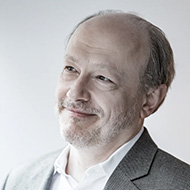
Interview with Marc-André Hamelin
July 31, 2026
“I consider composing an indispensable tool for performing musicians.”…


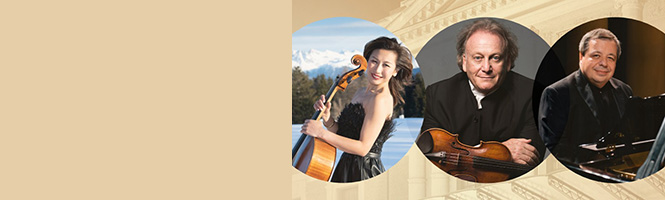


The Independent called Maurice Steger "The world's leading recorder virtuoso." Indeed, with his worldwide concert tours and numerous CD recordings, some of which have won top awards, the artist has succeeded in establishing himself as one of the most popular soloists in the field of early music. Thanks to his vibrant personality and his playing style, which is both spontaneous and technically brilliant, Maurice Steger has also succeeded in elevating the recorder as an instrument and repositioning it within the music world.
Classicpoint.ch: There are many different recorders, which vary in pitch and size. How many instruments do you have that you play regularly?
Yes, that's true. A violinist only needs one fantastic instrument, but we recorder players need many different recorders, which also differ in construction and tuning. If I categorize my instruments, they are modern recorders, historical instruments in a wide variety of styles and reconstructed from originals, as well as custom-made instruments – in total, probably a little over 70 recorders, all in excellent condition and ready to play at a high level.
You are a globally sought-after specialist in early music. How did you acquire this knowledge?
Firstly, I studied early music, focusing not only on wind instrument methods but also venturing beyond the garden fence to explore strings. I read countless scores, later studied continuo, and only then, with my papers in hand (mine are in the attic of my parents' house), did the real work begin. I was incredibly fortunate to grow up playing with renowned early music ensembles, and learning about German music with Reinhard Goebel was equally invaluable. Learning the Italian style of performance was a wonderful experience. Later, I studied conducting, and in recent years, I've also worked with English orchestras. Through Europa Galante, Musica Antiqua Köln, the Academy for Ancient Music Berlin, I Barocchisti, and The English Concert, I've embarked on a European Baroque journey, gaining countless impressions, learning experiences, and approaches – arguably better than any formal learning environment.
The recorder is considered a good entry-level instrument before learning a "real" instrument. How did you come to play the recorder and stick with it?
I had a lot of trouble with the instrument at first; my fine motor skills were really quite poor. So I had to put the recorder away in my closet for a few years and only started learning it when I was 10. I really fell in love with it when I was 13, and by 15, there was nothing else in my life. That love has matured, but it's still as fresh as ever.
With the Tino Flautino project, you're reaching out to schoolchildren. Can you tell us something about the project and what you find so appealing about it?
With our first Tino Flautino project, featuring music by older composers, we reached a great many children, and we experienced our mission to give the youngest among us something wonderful and valuable to take with them on their journey through life. The great success motivated us to develop a sequel to the story with music that the young French-Swiss composer Rodolphe Schacher wrote especially for it. As with the first fairy tale, we started with evocative imagery that is important to children and tried to depict elements of nature, human emotions, and scenes using textual and musical means, weaving them together into a complete work of art that tells an exciting story and features catchy music. Children are a fantastic, honest, and direct audience. They can tell if something is genuine. That's a great training ground for us musicians! And even after perhaps 200 children's concerts, I'm still fascinated by playing for children. In the spring of 2011, I also conducted the world premiere of Victor Fortin's 'Pinocchio and the Flute Player' and invited some outstanding young people as soloists to create a bridge to the little ones – that was lovely!
You also conduct. As an expert in early music, you are often invited to conduct by modern orchestras that lack extensive experience with historically informed performance practice. How open are these orchestral musicians to new perspectives?
In Germany, these perspectives are no longer new; orchestras are constantly evolving, and the question now is what a conductor must do with and when conducting early music. The actual conducting—telling a grand story, as a good conductor should do with a Beethoven symphony—is largely absent when conducting Baroque music. Rather, this work focuses on conveying technical skills, realizing musical ideas and executing them with the best possible craftsmanship, fostering the motivation to make great music, and recognizing the wit, the language, even the dialect of a piece of music, playing with it, and not feeling constrained simply because the usual vibrato or heavy bow pressure is absent. This is a wonderful task that ignites new energies in every orchestra and enhances the sensual experience of early music – and fulfills me.
You work with the ZKO. What exactly is your role?
I have a very long-standing collaboration with the ZKO. Even as a student, I had the opportunity to play my first solo concerto there. Later, I was repeatedly invited to perform with the orchestra. I was involved in developing the children's concerts and, for the last two seasons, I served as the orchestra's Baroque Director. In this role, I made the Baroque concerts a popular and well-received event, featuring very illustrious and inspiring guests, a clear concept, and a great deal of excellent music . During this time, I experienced many wonderful concerts with the ZKO, both as a conductor and as a member of the audience. The Baroque subscription series has now become well-established, and my contract ends this summer. Roger Norrington, who has extensive experience with Baroque music, will be taking over the orchestra.
Do you sometimes feel restricted and limited by the repertoire?
No. Restrictions usually have to do with the people and not the music itself.
How do you see the relationship between knowledge gained from source studies and an artist's interpretive freedom?
The art lies in feeling free within the constraints of established rules and customs. In a sense, I am a serious musician who, based on a solid knowledge of repertoire and sources, knows what the freedom of a performing musician should look and sound like. Optimally exploring these freedoms is an art. I believe that this range of freedom is somewhat broader today than it was then, given our familiarity with so many styles and eras. Performance practices, the size of concert halls, and orchestral compositions are also quite different. It's about the wonderful blend of emotionally charged music-making—stylistically aware, authentic, modern, and adapted to today's circumstances—while simultaneously inviting the listener to immerse themselves in Baroque worlds.
As a soloist, how do you experience collaborating with leading early music ensembles? Is there a certain consensus in performance practice, or are there still significant differences in approach?
We all have the same information, yet we all interpret it differently. What a wonderful observation! Most of the surviving sources are written in German, and these are read, pronounced, and interpreted differently by a Berliner than by a Frenchman who understands the content but translates it. The same applies to Italian instructions, French rule descriptions, or English treatises. Furthermore, a musician's origin is inherently defined by their mother tongue. A North German, even as a child, perfectly understands how to construct long sentences, accentuate them clearly, and thereby create a precise definition of what is being spoken. The same is true in music: read Bach or Telemann, and you quickly realize that this constructed music makes perfect sense through its accentuations and articulation. The Italians, for example, are quite different. The language sings, it avoids accents, which are clearly articulated; otherwise, it sounds like an educated lady from Hanover ordering lunch in a hotel in Rome: it sounds defined, the consonants are articulated, the speech is perfect, yet the Italian waiter stifles a laugh, because that would distort his language; it's less about definition and more about sound. And it's exactly the same in music. Of course, we've all learned to understand our neighbors, to integrate, but — long live the different cultures — it's still the case that when I listen to a Bach suite with the Academy for Ancient Music Berlin, I not only understand everything, but I also feel dialectal nuances down to the smallest detail, and the listening experience conveys information to me. And when I listen to a Baroque opera in Naples, I feel the same way; I'm overwhelmed by the sound of the language.
Audience numbers at classical concerts are declining. Is classical music becoming obsolete?
No, I don't think so. Classical music is a genre that appeals to only a small segment of the population, albeit at a high level. This has been the case for a long time. New hybrid forms are constantly emerging, blending classical, folk, pop, and popular music. This development builds bridges between styles and attracts a wider audience. Pure classical music remains the preserve of connoisseurs.
Personally, I am extremely pleased that my concerts are consistently very well attended, whether with familiar repertoire or with special pieces from the house. I recently performed a concert by an unknown composer, Mr. Graupner, in the sold-out Cologne Philharmonic Hall: it couldn't have been more outlandish – people came in droves, even for this music, which represents a further specialization within Baroque music! My CD of early Baroque music from around 1625 has also been a welcome addition to many homes since its release. The music and its composers are unknown even to classical music aficionados. Likewise, our chamber music ensemble with recorder, viola da gamba, and lute – three forgotten instruments – the most successful group with which I perform in the largest concert halls in Europe. This shows me that it's about substance, about enthusiasm for music, about interpretations, and about the joy of new things. That makes me happy.
Interview by Florian Schär | Classicpoint.ch | August 22, 2011
Photo: Marco Borggreve
September 21, 2026 - Affetti & Plaisirs | 30 Years of Baroque Musicians
22, 2026 - Bordei – Centovalli | Musica e piacere – Music & Pleasure
Bordei – Centovalli | Musica e piacere – Music & Pleasure
September 26, 2026 - Next Generation V | Ascona Baroque Academy – Final Concert I
September 27, 2026 - Next Generation VII | Ascona Baroque Academy – Final Concert II
October 31, 2026 - Tino Flautin and Leo the Cat
November 14, 2026 - Church Concert
January 1, 2027 - Stretta Concerts: New Year's Concert



























































Do you want to attract more visitors to your concerts?
Find out more about the possibilities this portal offers.
With a concert search subscription, you will receive an email for your selected cantons/federal states as soon as a new concert is listed there. You can unsubscribe from the service at any time.
