

interview
Interview with Julia Lezhneva
August 31, 2026
“Analytical work allows for emotional freedom, while emotional discoveries…”






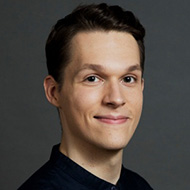
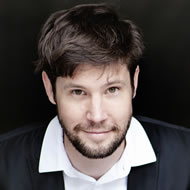
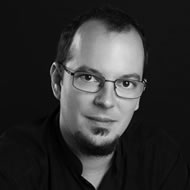
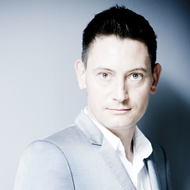
Max Volbers, a recorder player, harpsichordist, and increasingly also an ensemble leader, is one of the most versatile young musicians in the field of early music. In keeping with the sound worlds of the 17th and 18th centuries, where musicians routinely mastered multiple instruments, he illuminates the early music repertoire from a wide range of perspectives as a multi-instrumentalist. A major focus for him is exploring new repertoire, whether through paraphrases, pastiches, or transcriptions. He also regularly engages with contemporary music and collaborates with composers on commissioned works. He studied at the Mozarteum University Salzburg with Dorothee Oberlinger, Walter van Hauwe, Reinhard Goebel, and Florian Birsak.
When and where was your interest in early music sparked?
That was certainly with my first recorder teacher, Brigitte Meier-Sprinz; a very capable musician and educator who understood how important it is to ignite a spark of enthusiasm in children. I didn't only play early music with her, but of course a large part of the recorder repertoire lies precisely in that genre. She quickly took the six-year-old, underchallenged, unbearable child that I was out of group lessons, gave me private lessons, and provided me with plenty of "food for thought." Later came the piano, and at eleven (a school organist was needed) the organ, school choir, orchestra, and so on.
In my youth, I therefore played pretty much everything I could get my hands on, from medieval music to Brahms, Bartók, French Romantic organ music, and pop music. But my great love, where I've always felt truly at home, remains early music.
You perform as a recorder player, harpsichordist, and ensemble leader. Do you do this consciously because the musicians of the 17th and 18th centuries were also multi-instrumentalists?
No, historically informed performance practice means understanding, not blind imitation. In my case, it simply happened automatically: I played piano ambitiously in school, and one day my recorder teacher had a harpsichord—in retrospect, not a very great instrument at all, but somehow it completely fascinated me. I do what interests me—and it just so happened that, in addition to playing the recorder as a soloist, I also perform as a harpsichordist and ensemble leader from the harpsichord.
If anything, it's the other way around: The repertoire of the 17th and 18th centuries is designed for musicians who could generally play several instruments—and, by the way, you absolutely had to be able to compose well if you wanted to be taken seriously. In the 18th century, there was a subtle distinction between "Musikus" and "Musikant" (musician); those who could "only" play were held in lower esteem. The idea that one had to commit to either composing OR playing, and then only on one instrument, came later, and at the same time, the repertoire changed. The pieces became so technically demanding that musicians hardly had any other choice but to specialize in one instrument. This doesn't mean that Baroque music is easier than Classical and Romantic music, but it functions differently, more holistically. I consider it a great advantage that I can intensely perceive the music I play from three different perspectives.
You enjoy exploring new repertoire and working with paraphrases, pastiches, or transcriptions. What are you looking for?
The recorder has an incredibly beautiful original repertoire, which I always enjoy performing in concert. Nevertheless, I love searching for new repertoire for my instrument. The ideal I strive for is that the result never sounds cobbled together, or that you never think, "Oh, what a shame, he had to play an octave because the flute's range ended there—well, that's when you realize it's actually a violin piece." A good arrangement is always recognizable by the fact that the piece sounds as if it was originally intended to be composed exactly that way. It's not uncommon for me to start arranging a piece and then put it aside at some point because I realize: This will always sound contrived. Incidentally, I'm always looking for something that feels, at least in spirit, "mine." I'm often asked for sheet music of transcriptions, but I never give them out. My transcriptions are definitely never the final word on the matter...
In short: I look for new pieces in early music that weren't originally composed that way, but could have been!
You just won the prestigious German Music Competition. Has much changed since then?
Oh yes, one has to say that the German Music Council's music competition is certainly one of the competitions with the best follow-up support. What's impressive is what happens after the competition: concert bookings and promotion, intensive career guidance, networking – and of course, the CD.
You're also very interested in contemporary music. What fascinates you about it?
During my studies, I resisted contemporary music for a long time – to be honest, simply because I find it much harder to learn the pieces. I can learn a difficult Baroque concerto in two days if I have to, but with pieces like Berio's "Gesti," I just wanted to throw my flute at the wall during practice in the first few semesters! My teacher, Dorothee Oberlinger, eventually gave me the piece "nah, auseinander" by Mathias Spahlinger as a "radical cure" – it's so incredibly difficult! The second part consists of a rapid succession of closely spaced sixteenth notes, so you first have to learn several new, numbered fingerings and assign each fingering to the correct number. If you move just one finger incorrectly, you're guaranteed to produce a note completely outside the narrowly defined tonal range—and you immediately hear: That was wrong.
I cursed so much! But eventually, it "clicked." Later, I had the opportunity to work with composers on new pieces, and this collaborative exploration, giving feedback, and experimentation are things we don't have in early music. When you play so much music that's 270 years old or more, it's quite nice to work with living composers for a change.
Where do you see the parallels between early and contemporary music?
I should preface this by saying that I'm not particularly fond of this terminology. Old and new music are terms that sound as contradictory and suggest something like "yin and yang," "left and right," "good and bad," "organic waste, residual waste." Music history is much more complicated, more fluid. And if they weren't defined by conventions, what would old and new music even be? Anything written more than two weeks, three years, or ten years ago could be called old. Besides, "old" has this negative connotation of being dusty, musty, and cumbersome.
But to the question: I don't know if one can definitively establish general parallels, but I constantly encounter such parallels in specific instances. For example, musical forms play a major role in both old and new music—in the case of new music, for instance, through the breaking down of all forms. Another commonality is improvisational elements. And for me, of course, the greatest parallel: both the flute and the harpsichord have their repertoire in precisely these two worlds because they were forgotten in the intervening eras and only truly rediscovered in the 20th century.
Where do you see your path leading, what are your visions?
I naturally have projects in mind that I want to realize, and anyone who says they don't absolutely want to perform in the famous Hall X with world-class Orchestra Y is lying. But I try not to focus on that too much. I prefer to have my thoughts on the next concert and not too much on the one after the next. That's not easy, of course, because you can't get anywhere without long-term plans and ideas. Therefore, I have plans and visions, but I try to keep them mentally tucked away and dedicate time to them when I actually have the time and attention for them.
If you had one wish regarding your music career, what would it be?
That I always manage to remain as independent as possible in artistic matters and maintain artistic control over myself. For that, you need people around you—be they colleagues, label staff, agents, etc.—who trust you and believe in you, even if you come up with an idea that might sound totally outlandish, difficult to market, old-fashioned, cerebral, or whatever at first glance.
How do you prepare for concerts immediately before going on stage ?I
don't really have any rituals and I'm rarely nervous before concerts—instead, I tend to get tired. So, between rehearsal and the concert, you'll usually find me in the nearest café refueling with caffeine. Right before the concert, I put my phone away and check and tune my instruments. Oh yes, I do have one small ritual: At concerts where I play the flute, I obsessively check whether the winding on the foot joints is properly secured. In sixth grade, during a school concert, my foot fell off the flute right in the middle of a piece, in front of the whole school – I wanted to disappear into the ground...
What passions do you have besides music?
I'm very passionate about cooking, preferably with my wife (I'm not a bad cook, but she's better – don't tell her that!), I bake bread, and I love cycling up the Salzburg mountains (though I don't do it nearly often enough at the moment). Okay, the descent is usually more fun, I admit! Given the current situation, I really need to check if there's a suitable child trailer for my gravel bike before my next ride – so things certainly never get boring...
Interview by Florian Schär | Classicpoint.net | December 1, 2022.
Image copyright: Theresa Pewal
September 29, 2026 - Lady Madrigala and her Renaissance Affairs
February 27, 2027 - Maurice Steger (recorder), Max Volbers (recorder), Stephan Schultz (cello), Alexander von Heissen (harpsichord)





























































Do you want to attract more visitors to your concerts?
Find out more about the possibilities this portal offers.
With a concert search subscription, you will receive an email for your selected cantons/federal states as soon as a new concert is listed there. You can unsubscribe from the service at any time.
