
interview
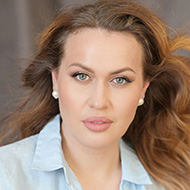
Interview with Elena Stikhina
June 1, 2026
“The Zurich Opera House has a very special meaning for me.” Elena Stikhina is…


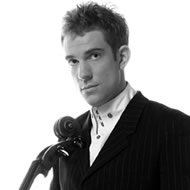
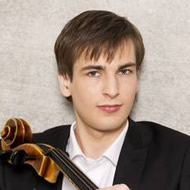
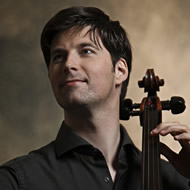
Despite his young age, the German cellist Johannes Moser already belongs to the cello elite. His commitment to contemporary music, his connection with young audiences, and his occasional use of the electric cello, along with all his awards and competition prizes, make him particularly interesting. Since October 2012, Moser has held a professorship for cello at the Cologne University of Music and Dance.
Classicpoint.ch: As the son of professional musicians, you practiced 4-5 hours a day from a very young age. How did you motivate yourself to do that?
Quite simply – I wanted to! I don't believe in forcing children to do something that requires such intensity and dedication as learning an instrument. When I had my first crisis and didn't want to play anymore (at age 9), my father told me: "You can stop right now, no problem at all! But if you continue, you'll have to take responsibility." This responsibility motivated me immensely.
You studied with David Geringas in Berlin. What comes to mind when you think back to your studies?
The memories resurface especially around the time I started teaching myself. I was particularly inspired by the fact that you can always keep searching. Music never stops – that's both a blessing and a curse.
Since this autumn, you've been teaching at the Cologne University of Music. What do you want to do differently compared to your own experience as a student?
I want to be 100% present when I teach. I find disinterest, even if calculated, completely unnecessary and out of step with our times. Furthermore, I require my students to record every lesson. This allows them to review the material during my absence and actively process the wealth of information. I expect students to be active and not just passively absorbed by me. I can't tolerate passivity.
You combine almost every concert engagement with a school visit or a masterclass. During these school visits, you take your cello to secondary school classes. How exactly does that work?
It's completely open-ended; often, only two wrong sentences separate great success from total disaster... That's what makes it so exciting! I have no problem with rejection; in fact, I secretly enjoy it when I encounter resistance. That allows for discussion, an exchange. I consider it a real failure when the reaction I receive is indifference. That's very difficult.
In 2010, you toured the USA with the American toy pianist Phyllis Chen, giving concerts and workshops at universities focusing on contemporary music. How did the students react?
The connection between technology and music sparks great interest among young people and students. That's why we tried to transform consumer electronics like a Nintendo Wii Remote into a musical controller. In this way, a familiar interface becomes a tool and a starting point for improvisation.
You also play the electric cello, with which you've already premiered works. Is the electric cello more of a fun diversion for you, or do you aspire to explore new musical horizons with it?
The electric cello is still in its infancy. What you hear played on the electric cello these days sounds like bad electric guitars, and that's precisely where I don't want to go: The electric cello has its own unique soul, and I find it exciting to uncover that through contemporary compositions. I don't see the electric cello as an alternative to the regular cello, but rather as a completely new avenue for artistic expression. My last premiere, Chapela's electric cello concerto with the Los Angeles Philharmonic and Gustavo Dudamel, was a great success. I especially appreciate the unpretentiousness of this contemporary music. Donaueschingen bores me!
Are there many composers interested in writing music for the electric cello?
There are, but I'm careful not to commission works exclusively for that instrument. I still try to have compositions written for the regular cello as well; it's a good balance. I have the privilege of performing at least one world premiere every year and working with composers. This allows me to expand the repertoire and keeps my work fresh. And — after a world premiere, I look forward to seeing my friends Dvořák, Elgar, and Haydn again, who seem fresh and new after a new work. That's fun!
You originally wanted to be an orchestral musician. Then, when you won the Tchaikovsky Competition in 2002, that marked the beginning of your solo career. Are there moments when you'd like to trade places with an orchestral musician?
I have the luxury of being able to listen to the second half of every concert (the cello concerto is usually performed in the first half). So I hear a great deal of symphonic repertoire. I don't enjoy listening to CDs; I like the vibrancy of a live concert.
But I'm happy to travel alone, to work alone, and to be responsible for my own artistic decisions. That's only possible to a limited extent in an orchestra.
There are quite a few very well-known cellists your age at the moment. Do you know each other personally and exchange ideas?
I just attended my first cello festival in Amsterdam, and after avoiding these kinds of events in recent years, I was very pleasantly surprised by how enjoyable it was. There is definitely an exchange among the cellists, and it's refreshing to see that everyone is just human. Of course, there's competition, but you don't win it over by fighting each other; you win it over by striving to be the best version of yourself. It can only benefit the music world, and therefore all of us, that there are currently so many fantastic cellists. I certainly don't envy them!
Interview by Florian Schär | Classicpoint.ch | January 3, 2013
© Photo: Manfred Esser


























































Do you want to attract more visitors to your concerts?
Find out more about the possibilities this portal offers.
With a concert search subscription, you will receive an email for your selected cantons/federal states as soon as a new concert is listed there. You can unsubscribe from the service at any time.
