interview
Interview with Fabian Müller
September 30, 2026
"I like to practice at night in the dark, without turning on the light. The silence sounds..."


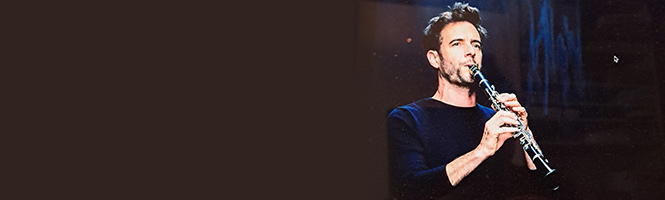


Born in Helsinki in 2001, the Finnish-Cuban pianist Anton Mejias has been described by the Finnish newspaper Aamulehti as a pianist whose “most exquisite quality… is his ability to immerse himself in the music and create his own unique sound world.” He made his recital debut at the age of eight and has been praised by both the press and public for his performances in piano recitals and with orchestras worldwide.
From a young age, Anton Mejias was inspired and fascinated by the music of J.S. Bach. At the age of ten, he learned the entire Well-Tempered Clavier, Book I. Since then, he has added the complete French and English Suites, all six Partitas, and the Well-Tempered Clavier, Book II, to his repertoire.
You were born in Helsinki and have Cuban roots. What does home mean to you?
For me, Helsinki is home. There was a time when I studied at the Curtis Institute of Music in Philadelphia, and I began to feel at home there too. But now Helsinki is definitely my home. I would like to move to Germany someday, and I hope that in ten years I can call another city home. I have Cuban roots on my mother's side—her father is a Cuban engineer and worked in the Soviet Union in the 1960s, where he met my grandmother. My mother was born in Minsk, and then they moved back to Havana together. One of my dreams is to perform in Havana one day! Later, my mother went to Russia to study, and from there she came to Finland and met my father.
How did you begin playing the piano?
My parents are both musicians; my mother is a pianist and my father a jazz saxophonist. Music was therefore an integral part of our family life, and so it was quite natural for me to start playing. I showed great interest in playing the piano very early on, especially Bach – I was five years old when I started lessons. Polyphony has always deeply moved me.
At the age of 10, you learned the entire Well-Tempered Clavier, Book I. What does Bach's music mean to you?
Bach's music means everything to me. And when I say everything, I mean everything. For an almost mystical reason, I feel incredibly drawn to his music. Somehow, he evokes the deepest emotions in me, emotions I don't otherwise feel. Only through his music are these deep corners of my personal humanity activated. When I was little, I also sang in a boys' choir. The choir is called Cantores Minores. With CM, we performed all these great works by Bach: the St. Matthew Passion, the Christmas Oratorio, the St. John Passion, and the Mass in B Minor. I also believe that singing these works and physically resonating with the music through singing greatly shaped my inner voice. I am firmly convinced that singing played a crucial role in my development as a musician.
What would you ask J.S. Bach if he were still alive?
If he were still alive? He is very much alive! His soul lives on in his music, and his soul resonates in countless artists who play his music. Every time you absorb his music, he comes alive again!
I don't actually think I would have a question I would want to ask him. I doubt that his genius can be expressed in words. I would simply like to follow him and see how he lived his life. Of course, I would like to follow his compositional process, but I would also be very interested in the "meaningless," everyday things he did in his life.
You've just released your debut solo album on Deutsche Grammophon, which includes the world premiere of Philip Lasser's "Twelve Preludes: The Art of Memory," a counterpart to the second book of J.S. Bach's "The Well-Tempered Clavier." It's a bold live recording. Why did you choose to record live?
Actually, it wasn't my decision to record the album live; I would have preferred the studio. But I quickly came to appreciate the idea of a live recording, and there are so many wonderful things about live recordings. It's a unique concert experience captured on tape. You can feel the energy of the audience flowing through me into the music. That's something that's often missing in studio recordings. Of course, I was apprehensive about recording live, but now I'd probably prefer to record live rather than in a studio. My experience with live recordings has been truly wonderful. Also, I was very expressive on stage; every note was a matter of life and death, since it was a live recording. I doubt that this would have been the case with a studio recording.
How did you come up with the idea of combining these two composers?
It was actually my (very unusual) manager, Tanja Dorn, who first suggested it. I trusted her judgment and met Philip in Philadelphia when I was still studying at Curtis. Philip's music is otherworldly, and he also greatly influenced me as a Bach interpreter. It wasn't just his own wonderful music that convinced me, but also his profound understanding of Bach. He gave me very original ideas for almost every prelude and fugue from the Well-Tempered Clavier, Part II, which deepened my understanding of Bach even further. Philip and I speak the same musical language. I knew that his music wouldn't detract from Bach's music; quite the opposite. It complements Bach's music in a very unique way and somehow (I don't know how) makes Bach a little more alive.
Were you involved in any way in the creation of Lasser's work?
Very little. Philip was so inspired by his own work that some of his preludes, in my opinion, became a bit too long to complement Bach. However, he was very flexible (which is rather unusual for composers), and we reached an agreement very quickly. I had absolutely nothing to do with the musical content, though.
Can you tell us something about Lasser's compositional technique?
Philip has a very keen sense of structure and beauty in music. He understands Bach's works like no other. And that is evident in his music. His compositions not only evoke harmonic memories of Bach himself, but the structures of his preludes also complement Bach's structures.
You're still young, what are your plans for the future?
Well, I have some wonderful concerts planned for the autumn, for example, Bach's French Suites at the Tonhalle Zurich and Brahms' Piano Concerto No. 1 in Toulouse. These are just a few highlights of the upcoming season. As for the more distant future, I simply want to continue working with music; that makes me happy. It's that simple.
What are your passions besides music?
I love to read. I especially love Hermann Hesse, and I'm also very interested in Carl Gustav Jung. Lately, I've been reading Gardiner's "Music in the Castle of Heaven" (I haven't finished it yet), and it's a very interesting book. I also like sports, for example, swimming and football. I've recently started playing tennis and I enjoy every second of it. I'm not very good at it yet, but I have all the time in the world to get better.
Interview by Florian Schär | Classicpoint.net | September 1, 2025
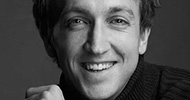
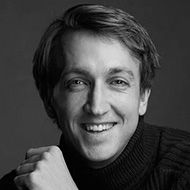
© Image: Jiyang Chen
October 24th, 2026 - Piano District: 1st subscription concert with Anton Mejias




























































Do you want to attract more visitors to your concerts?
Find out more about the possibilities this portal offers.
With a concert search subscription, you will receive an email for your selected cantons/federal states as soon as a new concert is listed there. You can unsubscribe from the service at any time.
