

interview
Interview with Julia Lezhneva
August 31, 2026
“Analytical work allows for emotional freedom, while emotional discoveries…”


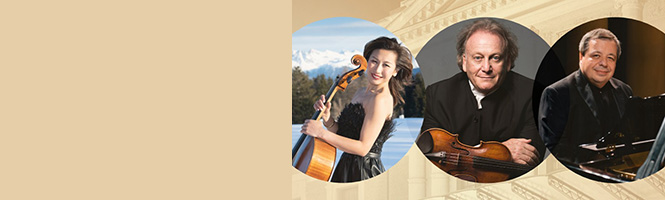


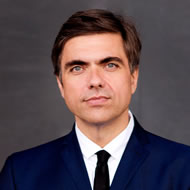
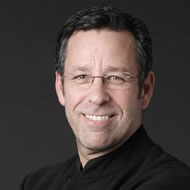
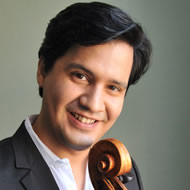
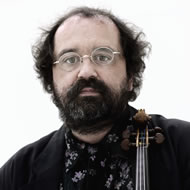
As a chamber musician, Rafael Rosenfeld has performed at numerous festivals, including the Ittingen Pentecost Concerts, the Davos Young Concert Artists, the Lucerne Festival, the Menuhin Festival Gstaad, the Open Chamber Music Festival Prussia Cove, and the Leicester International Music Festival. He has collaborated with chamber musicians such as András Schiff, Heinz Holliger, Joshua Bell, Tabea Zimmermann, Gábor Tákacs-Nagy, and Daniel Phillips. In 2002, he co-founded the Merel Quartet. Since autumn 2005, he has led a training and concert class for cello at the Basel Academy of Music.
At just 22 years old, you became principal cellist of the Tonhalle Orchestra Zurich. How has the orchestra developed over the years?
When I joined the Tonhalle Orchestra in 1995, it was undergoing a period of change. During those years, many positions in the orchestra were filled by young musicians who were highly motivated and full of enthusiasm. My first season also marked the beginning of the David Zinman. There was a real sense of optimism – much like the feeling we have now with the appointment of Paavo Järvi as chief conductor and the reopening of the old Tonhalle concert hall.
From my perspective, the orchestra is even more stable today, the level of the individual players is perhaps even more balanced than 20 years ago, and thankfully we have been able to maintain our hunger for making music. Järvi is an absolute stroke of luck; he brings an unparalleled blend of vision and ideas, but also calm and confidence, which allows us to play at our highest level.
For me personally, it is not easy that my long-time partner and friend Thomas Grossenbacher has decided to leave the orchestra in favor of his teaching activities and other projects. We are currently working on finding his successor; there will certainly be a very good solution, but it is still difficult to imagine how this wonderful musician and person could be replaced.
You are a member of the Merel String Quartet. What characterizes the quartet, and what are its main focuses?
Chamber music, and string quartet in particular, has always been my greatest passion. The repertoire is so incredibly rich and exciting, and I feel most at home in this small, well-rehearsed ensemble. At the heart of our work is the shared quest to understand and experience these masterpieces. They are so profound that one always feels one can only grasp a small part of them, but through years of working with them, one (hopefully) gradually makes progress. Our task in concert is to make these works tangible and accessible to the audience.
We play a very broad repertoire, ranging from early to contemporary music. However, there is a core group of composers such as Haydn, Mozart, Beethoven, Schubert, Schumann, Mendelssohn, Brahms, Dvorak, Bartok (who am I forgetting here?), who could be described as the golden age of the string quartet, and to whom we dedicate ourselves most.
You have been teaching at the Basel Academy of Music since 2005. What do you enjoy about teaching, and what do you find frustrating?
Working with young musicians brings me great joy. It's incredibly stimulating and thought-provoking; you have to re-examine and re-evaluate patterns you've followed for years or even decades. I also always try to listen to the pieces I teach anew and consider different approaches.
One of the biggest challenges is helping students reach their full potential. Becoming a truly great cellist and musician requires tremendous dedication and perseverance. The young people we accept into the school certainly possess a great deal of talent; otherwise, they wouldn't have passed the entrance exams. What they then make of it, however, depends on many factors, but above all on those mentioned above.
What do you look for in the entrance exams of young cellists? Do you have any tips for our students who are reading along?
It's always an overall impression, made up of various aspects. We try, above all, to sense what kind of potential someone has, both technically and artistically. What helps enormously is if you've already had the chance to work with someone; you can then assess them much better. So I would recommend that young students contact several potential teachers early on, either to attend courses or to request an audition.
Do you have any rituals yourself?
Probably, but I'm not very aware of them. What has helped me the most in terms of dealing with stage fright or nervousness is the Alexander Technique. I studied it intensively for a while; if someone can teach it well, it's invaluable.
You are the artistic director of the Zwischentöne Chamber Music Festival in Engelberg. In what way does this festival differ from other classical music festivals?
Zwischentöne is created with a great deal of personal love and dedication. My wife, Mary Ellen Woodside, puts together a program each year that has coherent internal and external connections. Both the works we program and the guest artists we invite are very close to our hearts.
What is also particularly nice is that in Engelberg, with its magnificent mountain scenery, we are close to the audience, there are many opportunities for exchange and a real "chamber music atmosphere" prevails.
The festival is in just two weeks, from October 15th to 17th, and I'm really looking forward to it; it's always a highlight of my year.
What are the festival's future plans?
Since last year, we've held most of our concerts in the newly renovated Kursaal, which has a wonderful atmosphere and is actually the perfect size for such an event. We already have many program ideas and contacts with artists whom we plan to invite in the coming years.
What's new is a chamber music series in the other half of the year, the Merel Chamber Series, which we will launch in Lucerne and Zurich in spring 2022. Another platform where we will present our favorite programs to our audience.
You are very active in many different areas, with orchestras, teaching, chamber music, and solo performances. Are there still daily, recurring tasks in your workday that have become rituals?
Perhaps the process of constantly adapting to different situations and tasks is itself a ritual. Of course, there are many recurring tasks, sometimes very administrative, which I could sometimes gladly do without.
What I always find to be a kind of "wellness" are the quartet rehearsals, which we usually begin with slow pieces. Tuning into the music and listening to each other is one of the most enjoyable parts of my work.
What are your passions besides music?
One is watching films and series, as a way to relax. These days we've bought tickets for a few films at the Zurich Film Festival, partly to force ourselves to take a breather before the final preparations for Zwischentöne begin. We've already seen three very good ones.
My absolute favorite series is "Breaking Bad," a masterpiece of story, acting, cinematography, and music. We've watched it at least four, if not five times, and we're still discovering new details. I also listened to the "Insider Podcast," which explains a lot about how the whole thing is made—which I find very informative for our own collaborations.
Is there anything you'd still like to do but haven't gotten around to yet?
Not never, but too rarely: really long holidays or breaks; usually the year is too packed. Ideally, I'd like to take six weeks or so off at a time, but that almost never works out.
Interview by Florian Schär | Classicpoint.net | September 30, 2021




























































Do you want to attract more visitors to your concerts?
Find out more about the possibilities this portal offers.
With a concert search subscription, you will receive an email for your selected cantons/federal states as soon as a new concert is listed there. You can unsubscribe from the service at any time.
