

interview
Interview with Julia Lezhneva
August 31, 2026
“Analytical work allows for emotional freedom, while emotional discoveries…”



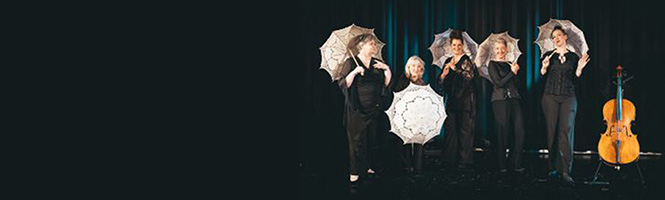


Hanni Liang was born in Bielefeld in 1993 and comes from a non-musical family. She received her first piano lessons at the age of eight and, after rapid progress, was accepted as a junior student into the piano class of Prof. Barbara Szczepanska. Hanni completed her Bachelor's degree in Music and an additional degree in Media Management at the Robert Schumann University of Music and the Hanover University of Music, Drama and Media, where she was significantly influenced by Bernd Goetzke. Since 2016, she has been studying with Prof. Matthias Kirschnereit. Her concert tours have taken her to Russia, Austria, China, Spain, Italy, and Poland, where she has performed at the International Chopin Festival in Warsaw, the Mariinsky Theatre, the Trans-Siberian Art Festival, the Forbidden City Concert Hall, and the Tianjin Piano Festival.
In 2010, she was named a Young Steinway Artist and received the Steinway Advancement Award. She has also received scholarships from, among others, the Dörken Foundation, the Society for Westphalian Cultural Work, C. Bechstein, and the Richard Wagner Foundation. Since 2017, she has been a scholarship recipient of the German National Academic Foundation.
Since 2013, she has been a successful TONALi musician and therefore possesses excellent skills in music education and communication. TONALi has been formative for her further career development and has had a significant influence on her current artistic persona as well as on her musical commitment to inspiring more young listeners to classical music and to promoting cultural education. In this context, the non-profit project TONALiSTEN was also founded, which Hanni Liang now manages.
Their close collaboration with the renowned German composer Manfred Trojahn developed not only into a close friendship through the premiere of his work “Leise Gondeln”, but also into a recording of his “Six Préludes” in 2015 and the premiere of his melodramas at the Ruhr Piano Festival.
She also received further musical influences from Maria João Pires, Homero Francesch, John Perry, Jacques Rouvier and Michel Beroff.
How did you get into music as a child?
It was actually more by chance. A friend in elementary school suddenly wanted to learn piano, and then I wanted to too. That's just how it is with kids. In the end, I got hooked and couldn't tear myself away from the instrument. Neither of my parents are musicians, so there have been lots of piano books in our house ever since. My mother immediately bought a book called "Piano for Dummies."
As an artist, you develop new concert formats yourself. You want to rethink and expand the "concert" format in order to draw attention to social issues. Can you tell us more about that?
After my debut at the Elbphilharmonie with the Deutsche Kammerphilharmonie Bremen, the question that arose for me was: Why? Why am I a musician, why do I make music? And ultimately, what can music/the concert be, and what does it mean to engage with art in these times? This search for "why" led to the answer I carry within me today: to foster a more humane coexistence through music and in my concerts. To ask questions, to challenge ourselves, to engage with perspectives that may not be part of our everyday lives, to discover through dialogue what unites us in our diversity and holds us together as a society.
In the so-called concert format, I question traditional roles such as "artist" or "audience," or the separation between hall and stage. However, I always start with the music, because it is and remains the nucleus from which bridges and contextualizations to the here and now are built.
Alongside their solo careers, they also curate art-social projects, which are usually based on a co-creative approach and address a social issue. Can you tell us about an example?
Last November, I collaborated with project developer Kian Jazdi on a co-creative concert performance at the Konzerthaus Berlin. Eight young people from the Marzahn district participated, with whom we worked regularly over three months. In discussions, we jointly defined the theme of the performance, which is the search for home and the question of what connects Berlin, before moving on to developing artistic means to express this theme. It's always about considering what the group brings to the table. In this case, we had some who like to write texts, express themselves through movement, and one who wanted to design the costume. In this way, the initial blank page is then painted piece by piece together and brought to the stage together. This is a major negotiation process, and of course, always a balancing act between how much you intervene because you have your own, perhaps different, artistic vision, or holding back and trusting the group. It's also about how to create spaces on stage where each individual can be "experts in their own right." I always learn an incredible amount from this.
Since October 2022, you have been a lecturer in concert design at the University of Music and Performing Arts Munich, where you and your students explore the future of classical concerts through artistic expression. What have you developed so far?
Different projects emerge each semester. For example, in cooperation with the Pinakothek der Moderne, we created a performance using broken instruments. It explored the question of beauty in the broken, the question of perfection, and the full spectrum of what music can encompass.
We launched a call for donations of broken instruments throughout Munich. And so, we received a wide variety of instruments: broken accordions, dulcimers, saxophones, a harp… I remember the very first session, where the students each immediately grabbed the instrument they were studying, but quickly realized that it was pointless. Because you can't play a violin on a violin without strings. At least not in the way we know it. It was therefore a very exciting and inspiring, experimental search for sounds and the breaking of norms and expectations in instrumental playing.
Another project, a collaboration with the Munich Philharmonic, which I did with my colleagues Moritz Eggert and Ali Nikrang, explored AI and music, ultimately addressing the question of what it means to be human. What it means to feel raindrops on your skin, to make mistakes, and to exist between life and death. This resulted in musical collaborations between AI and humans, and an artistic exploration in which the audience was also involved.
For VOICES, you compiled a collection of works by female composers who have personally influenced you or are known for their fight for women's rights and equality. What motivated you to do this?
The trigger was the discovery of the music of the composer and suffragette Ethel Smyth. I was very inspired by her and her fight for women's rights and really wanted to bring her wonderful piano music back to life. It was also about building a bridge to the present day, which led to research into contemporary female composers who raise their voices and advocate for women's rights in their own way, and ultimately to the question of what all of this has to do with me personally.
The only non-British composer included is the Chinese-American Chen Yi. With her work, I reflect on my origins and the ambivalence I feel as a citizen born and raised in Germany with Chinese roots.
Together with TONALi, you founded the TONALiSTEN collective. What exactly is that?
TONALi is a cultural initiative in Hamburg that has greatly influenced my artistic development. It's an academy, a research center, a hub for classical music, all within the context of social participation. TONALiSTEN, in turn, are all the musicians who see themselves as part of it, and thus the resulting collective. It's a place of open exchange with constantly inspiring impulses, processes, and encounters, from which exciting projects emerge.
Do you have any other projects that are close to your heart?
I have very fond memories of the performance "Watermark," which I did at the Elbphilharmonie in 2023. I posed the question of ownership, starting with Caroline Shaw's Piano Concerto—who owns the stage, or, to play with the word: who owns the water? I wanted to create a shared moment of mindfulness for this ever-dwindling essence of life, so I walked through the hall with a bowl of water, humming the first note of the piece. The audience joined in, joining in the hum. Once on stage, I played the first chord into the humming of everyone in the hall. It was a truly special moment.
Another project I'm really excited about is at this year's Edinburgh International Festival. I'm bringing a new concert format to the stage called "DREAMS," which combines Debussy's piano piece "Rêverie" with improvisations. The audience is invited to share their dreams by sketching or writing them down. This process is projected throughout the space and influences Debussy's music, transforming into an improvisation on the shared dream and eventually returning to Debussy once the dream has "disappeared." I'm really looking forward to it, as it's the first time improvisation has played a significant role in a concert. Up until now, I've only used it sparingly or as an encore, and I can hardly wait.
What passions do you have besides music?
I have many passions: reading, cooking, eating out, strolling in cafés, meeting up with friends. I recently started learning the erhu in China. It's a Chinese "violin" with two strings. I simply love music… I'm also a mother of two young children, so I combine all my passions with my family. We spend a lot of time together reading, dancing, playing games, making music, cooking, and sometimes just relaxing together.
Interview by Florian Schär | Classicpoint.net | March 1, 2025
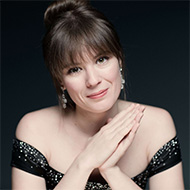
© Image: Esther Haase





























































Do you want to attract more visitors to your concerts?
Find out more about the possibilities this portal offers.
With a concert search subscription, you will receive an email for your selected cantons/federal states as soon as a new concert is listed there. You can unsubscribe from the service at any time.
