

interview
Interview with Tianwa Yang
March 31, 2026
"Without analytical experience, my intuition wouldn't exist." Born and…





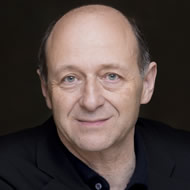
Philippe Herreweghe is a Belgian conductor. He studied piano, harpsichord, and organ, and later medicine and psychiatry. Even during his studies, he directed a choir. His ensemble, which initially had amateur status, attracted the attention of musicians such as Nikolaus Harnoncourt and Gustav Leonhardt. He participated in Harnoncourt's complete recording of Bach's cantatas.
Herreweghe is now one of the leading figures in historically informed performance practice. In 1970, he founded and has since directed the Collegium Vocale Gent, which has focused on pre-Baroque music and produced groundbreaking recordings of Johann Sebastian Bach's cantatas. Herreweghe is also the conductor of the Paris-based Orchestre des Champs Elysées. Since 1999, he has been the principal conductor of the Royal Philharmonic Orchestra of Flanders, based in Antwerp. In 1982, he assumed the artistic directorship of the Saintes Early Music Festival. In 2010, their own CD label “phi” was founded.
Classicpoint.net: You studied medicine and psychiatry. You then worked as a resident physician and conducted your choir in the evenings. Later, you focused entirely on music. Did you ever miss medicine?
I started studying piano at the conservatory very early on, alongside my regular schooling. I received my diploma at the age of 14. I attended a Jesuit school. There was a choir there. We had to rehearse and sing every day. The choirmaster was a professional musician. So we sang very beautiful music: Bach, Schütz, and so on. I led a musical double life at that time. With the piano, I mainly learned piano literature from the Romantic period. In addition, we sang church music, which was mainly so-called early music. In those days, choirmasters weren't professional conductors. I was interested in psychiatry and thought that I would work as a psychiatrist later and conduct Bach as a hobby. That's why I studied medicine. But alongside that, I founded my choir and soon began working at a professional level. The collaboration with Gustav Leonhardt and Nikolaus Harnoncourt further inspired me. From then on, I wanted to dedicate myself exclusively to music. I think I've become a better musician than I would have been a psychiatrist.
Did your psychiatry studies sometimes help you in your work as a choir director?
No, not directly. But I'm convinced that well-rounded musicians should know a great deal. The more you study, the deeper you can immerse yourself in music and the more you can understand. In that respect, my studies in medicine and psychiatry were very important to me. I would choose this path of training again. As a conductor, you don't have to practice eight hours a day. It's important to have a broad education. Furthermore, during my studies, I spent three years working with people with schizophrenia. That had a profound impact on me as a person. Psychiatry is about dealing with sick people; conducting is about dealing with complex people!
The decisive factor in your full dedication to music was your collaboration with Leonhardt and Harnoncourt. Can you tell us about your beginnings?
I learned a great deal from Leonhardt about articulation, ornamentation, intonation, etc., which I hadn't encountered so much on the piano. His great strength was rhythm. Leonhardt was completely dedicated to music. He always placed himself at the service of music and, compared to other musicians, never misused it for anything else. Harnoncourt had a rhetorically dramatic power that convinced me even more in his later music. Leonhardt was a very conservative musician, believing that anything after Mozart was no longer music.
My piano teacher, Marcel Gazelle, also had a strong influence on me. He was Yehudi Menuhin's accompanist. I've studied many things in my life: medicine, psychiatry, piano, harpsichord, harpsichord, voice, and also bassoon. What I've done most in my life, however, is conducting, and I taught myself that.
Can you describe your ideal sound?
What's most important to me is clarity. I want to make the music transparent, so to speak. My recordings should be notated by a good musician. My challenge is always to articulate the music so clearly that it could be notated by ear.
Bach's sacred works have been central to your life for almost as long as you can remember. Are you religious yourself?
For me, almost all good music is religious. Great music is sacred music. I would describe myself as religious in an etymological sense. We are all connected to each other and to the world. In my opinion, all people are religious in this sense.
What interests and activities do you have besides music?
I don't really have any free time. I'm always working. But that's not tiring for me. I read a lot and travel a lot. I spend 280 days a year in hotels.
Interview by Florian Schär | Classicpoint.net | April 2, 2018
© Photo: Michiel Hendryckx



























































Do you want to attract more visitors to your concerts?
Find out more about the possibilities this portal offers.
With a concert search subscription, you will receive an email for your selected cantons/federal states as soon as a new concert is listed there. You can unsubscribe from the service at any time.