interview
Interview with Jacques Forestier
November 1, 2026
“I want to share the music I love most with as many people as possible…”



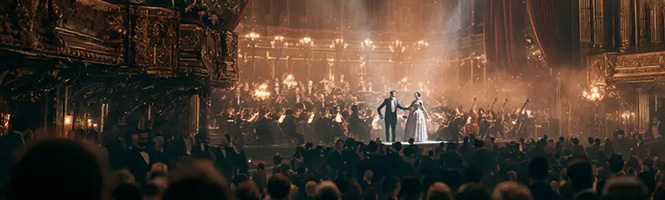



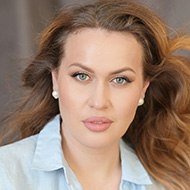
Angela Gheorghiu, born in the small Romanian town of Adjud, received her vocal training at the Bucharest Academy of Music. She made her debut in 1992 at the Royal Opera House Covent Garden. Since then, she has been a sought-after guest at numerous international opera houses and concert halls. Engagements have taken her to, among other places, New York, London, Paris, Venice, Brussels, Salzburg, Berlin, Milan, Rome, Barcelona, Amsterdam, Moscow, Tokyo, Chicago, Los Angeles, and San Francisco. Her core repertoire includes roles such as Violetta (La traviata), Nedda (Pagliacci), Juliette (Romeo et Juliette), Marguerite (Faust), Maria Boccanegra (Simon Boccanegra), Mimì (La bohème), as well as the title roles in Puccini's La rondine and Tosca.
Classicpoint.net: Your parents have nothing to do with music. Yet you and your sister have both become brilliant musicians. How did that come about?
I was very young. Before I even started kindergarten, my sister and I were already singing. I can't remember ever doing anything with more pleasure and love! In kindergarten, I sang my first real song: Brahms' "Guten Abend, Gut Nacht" (Good Evening, Good Night). I sang in Romanian and German. My father was a locomotive mechanic, my mother a seamstress, and indeed, no one in our family was a musician. My only contact with music was through television, watching Leonard Bernstein's performances. We didn't have any other recordings. Everyone who listened to me was deeply moved, and I loved that. Parents, family, relatives, friends, neighbors, teachers – everyone encouraged me, supported me, and constantly told me that I had to study music and that I would become an opera singer. So, at the age of 14, I went to the music academy in Bucharest and later to the conservatory. I enjoyed school, but felt sufficiently educated at 18. Since then, I haven't listened to anyone's advice, and everything I've achieved so far I owe to my singing teacher, Mia Barbu. I don't believe there's a recipe, but with talent, hard work, perseverance, intelligence, musical instinct, and sacrifice, anyone can become a great singer.
After the political changes in Romania, you left your homeland in 1990 and had your first performances at the Royal Opera House in London. What are your memories of that move?
I never truly left Romania; I have family and friends there. In 1992, I made my Royal Opera House debut as Mimì in La Bohème and Zerlina in Don Giovanni. My career has never involved a permanent contract; I knew from the beginning what I had to do, and I always wanted to be an international artist on the world's greatest and most important stages, without being "tied" to one place or opera house. Such engagements were, and still are, common—being employed at a single theater for several years. But that would have delayed my debuts on other stages, and I wouldn't have been able to launch an international career until much later. This "move" —the word isn't quite right — was normal for me, namely my natural path to a career as a lyric artist, for which I was ready. Moreover, perseverance, talent, and hard work helped me along the way. I always knew what I had to do, and I made all my decisions with great wisdom.
What is your current relationship with your homeland?
I have a dual relationship with Romania today. I love my country very much; I have family and friends there, but at the same time, I don't enjoy living in Romania. Almost 30 years after the so-called collapse of communism, its scars are more vivid than ever. What I've seen in the last two years frightens me. No hospitals have been built, and there's a lack of highways, etc. Romania is not a country with a secure future today and still needs time to reach the level of the civilized countries of the EU. I've been waiting for so many years for an optimal concert hall to be built. There's only one hall, where communist party congresses were held, which is unsuitable for classical music, since orchestral concerts require a proper acoustic ensemble. It's godless. We only have the Romanian Athenaeum, which was built during the time of the kings of Romania. It's the jewel of the city of Bucharest. After 1990, everyone—mayors, prime ministers, and presidents—promised me they would build a new concert hall that met international standards, and since then, no one has done anything.
After almost 30 years of performing on the world's most prestigious stages, I believe I am the only international artist in music history who has not yet debuted an opera in their own country! I have never been invited. I have only given a handful of concerts—I think I can count them on my fingers—all on a voluntary basis.
The mentality in Romania is different. As an artist of Romanian origin, you are still not recognized for your true international value. Quite the opposite: you have to sing for a much lower price, or even for free. The people who run the state institutions believe it would be outrageous to demand the same rates as any colleague of another nationality.
The last time I was invited to a concert in Bucharest and paid a normal rate, like any foreign colleague of my caliber, I was attacked in the Romanian media. Even the mayor of Bucharest joined in.
There is much to say about this. I would like to have more power to change things, but I can only be proud to be Romanian and know that the Romanian people are talented, hardworking, and very open. There isn't a single great Romanian artist with international renown—like Cioran, Brancusi, Eiade, Enescu, Ionescu, Darcle, Zeani, or Celibidache—who hasn't been accused or hated by politicians in the last 75 years. This continues to this day. I hope this injustice will end.
Everywhere in the world, I am Angela Gheorghiu from Romania. I wish that Romanian values would be truly respected and that what we are and what we do would be clearly defined. If other countries can do this correctly, why don't Romanian politicians and the media force themselves to change their mentality and see that there's no need to be afraid of artists? We are enormously important to the people and to Romania's identity. Culture is a nation's passport.
You also enjoy singing Romanian songs. What characterizes Romanian music?
I always enjoy singing Romanian songs. I sing at least one Romanian song in every concert or recital. It's difficult to say what is characteristic of Romanian music. We could write a book about it. Romanian music combines many influences, from French to Turkish or Hungarian. It varies greatly from region to region. However, I can say that Romanian music has a special rhythm; to some, it sounds exotic, to others, perhaps nostalgic. The audience is fascinated to hear me sing in Romanian.
The conductor Șir Georg Solti apparently once said the following about you after a rehearsal: "I was moved to tears. I had to leave. This girl is wonderful. She can do everything." What was your relationship with him like?
For me, my relationship with Georg Solti remains one of the most beautiful experiences. Despite the significant age difference, we both actually started with La Traviata – I had the role of Violetta, and he was conducting this opera for the first time. Our relationship was one of equals from the very beginning. I never felt patronized; on the contrary, we were colleagues from the start. He suggested I call him "George." His powerful emotions have stayed with me ever since! At his home, I met some of Britain's most remarkable personalities and brilliant actors. I have some of my fondest memories with him. During rehearsals at the Royal Opera House, he once had the assistant conduct while he wandered to every corner of the theater to hear how my voice sounded overall and everywhere, in order to adjust the orchestra and the sound of my voice. For me, it remains the only experience of its kind, and I'm so glad it happened. Everyone knew that this La Traviata would make history, and Georg Solti did too, more than anyone else. And so it did. I will be forever grateful for his friendship and for recognizing my talent. He fought to have the performance broadcast live on the BBC and interrupted the regular television schedule for it. A first in history. He wanted us to be colleagues at Decca, too. He is the artist who has supported me throughout my career with honesty, admiration, and respect.
You have also participated in film adaptations. Perhaps the most famous is the title role in the film adaptation of Tosca, directed by Benoît Jacquot. What was this collaboration like for you?
It was a very pleasant collaboration. I was singing La Traviata in Paris. After one performance, Toscan du Plantier congratulated me. He greeted me with the words, "You are Tosca!" I had sung a very good Violetta that evening. In the third act, I was given a red dress. This dress and my presence convinced him enough to give me the role of Tosca in his film, directed by Benoît Jacquot. It was earlier than I had planned to include it in my repertoire. Scrapia had already been cast with Ruggero Raimondi, and I suggested Roberto Alagna for Mario Cavaradossi and Antonio Pappano as the conductor. He was a permanent member of the Brussels staff at the time, and nobody knew him. They wanted a famous conductor, but I insisted. I'm very proud of this film. Opera films are a rarity these days. The experience of making this film was wonderful for me. We launched the film at the Venice Film Festival and then showed it all over the world. The film highlights characters, especially through the highly suggestive rendering of facial expressions. It was a great pleasure to work at the highest level with such a great director.
Would you describe yourself as a diva?
I'll let others do that! I thank those who call me a "diva." I have absolutely no problem with the word; on the contrary, it honors me. For me, "diva" means a person of another dimension, difficult to touch, who radiates a very strong emotion simply through her presence and, of course, through her talent. My friend, the great composer Vangelis, says I'm a diva because when he hears me and looks at me, time stands still!
Today the word has lost its charm; everyone is a "diva," and even men are called "divas"... but for me, the word "diva," or "the last reigning diva," "the ultimate diva," etc., are expressions that make me happy, honor me, and even motivate me.
You and Roberto Alagna were a dream team. Did your mutual success ultimately lead to the separation?
On stage, there is indeed a magic to the voices, something special. Hence this "dream team." Neither of us was swept away by the other, but we both created unique moments through our voices in duet. It wasn't personal success that led to the separation, but personal problems that actually had nothing to do with success. Each of us was already successful before the wedding; we were both young and already well-known in the professional world. Success is one thing, personal life another. I persevered to further my career, but it wasn't always easy. Strong personalities, that's the truth. Life goes on for each of us.
Which tenor voice suits you best today?
That's a difficult question. Then I say, and repeat, that I have no problem singing with Roberto; the audience wants it. And why can't we be professionals and do it when such an opportunity arises? Otherwise, I think there's a vocal "chemistry" with tenors like Jonas Kaufmann
They are very passionate and uncompromising. Are there things you would do differently in retrospect?
I am who I am, and I always have been. I never think about what might have been... I don't have those thoughts and live my life very much in the present, both professionally and personally. I'm an honest person and artist who always calls a spade a spade, even if I sometimes risk upsetting someone with the truth. I can't be any other way, and I have no reason to be. Perhaps this honesty has sometimes been to my detriment. I've said "no" to many production requests in the past, but that's because I respect the music, the composers, and the librettists. I can't ridicule the work of a genius that can touch so many people through my interpretation. It's like picking up a paintbrush and painting over a Caravaggio. Would that be okay?
Do you have any rituals before or after concerts?
Of course I do, yes. I think all artists do. I can't reveal them all, but I can say that the day before a performance, I always try not to speak at all; I rest. I protect my voice. I make many sacrifices; often, all I can see is the plane and the hotel room. I can't risk catching a cold or getting sick... and I don't take advice. I prefer to be authentic in my successes, but also in my mistakes, if I make any. I don't follow anyone and I don't have a role model. That's just who I am, and that's how I've built my career. I can't be any other way.
Is there anything you've never been asked that you'd like to answer?
Yes, there's the question: When will I sing with the Metropolitan Opera again?
Interview by Florian Schär | Classicpoint.net | February 4, 2019
© Image: Ionut Macri




























































Do you want to attract more visitors to your concerts?
Find out more about the possibilities this portal offers.
With a concert search subscription, you will receive an email for your selected cantons/federal states as soon as a new concert is listed there. You can unsubscribe from the service at any time.
