

interview
Interview with Julia Lezhneva
August 31, 2026
“Analytical work allows for emotional freedom, while emotional discoveries…”







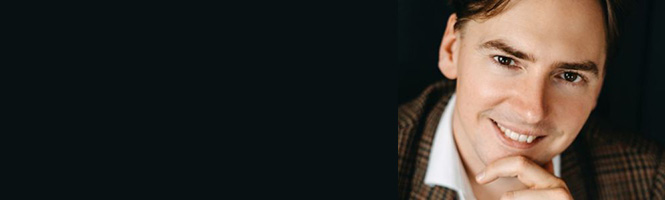


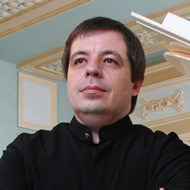
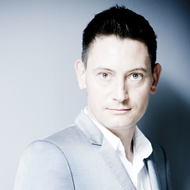
Alexey Botvinov has performed in 45 countries worldwide, including at festivals such as the Chopin Festival in Poland and the Zurich Festival. In 2015, he founded the ODESSA CLASSICS festival, where he serves as artistic director and president. This festival has since become one of the most successful in Ukraine.
You founded the ODESSA CLASSICS Festival, which has established itself as the most successful in Eastern Europe. What is your recipe for success, and what is particularly important to you?
I come from a family that has been from Odessa for several generations. And I love my hometown—its true hidden gem on the Black Sea. It was and is the cultural capital of Ukraine. And a city with fantastic Mediterranean charm, open-minded people who love culture and know how to enjoy life. Odessa's legendary classical music tradition is known to every classical violinist or pianist in the world. I love the city and am more than proud of the amazing success of Odessa Classics over the last seven years. The main idea was to put Ukraine back on the European festival map and to forge cultural connections between Europe and Odessa. I think we have succeeded in this. The festival has a very good reputation among the top artists who have performed in Odessa and enjoys great public interest among Ukrainian and European music lovers. Perhaps one of the keys to our success was my desire to maintain the highest possible quality of the program; that was always my top priority, far more so than financial gain. "Odessa Classics" became a kind of obsession for me and my wife Elena, the festival's general director; we simply wanted to create the best festival in Eastern Europe. It was constant work, 365 days a year. From 2015 onward, we held Odessa Classics every June in Odessa. There have been seven editions, starting with four concerts in 2015, and from 2018 onward, up to two weeks with multiple events every day. In addition to concerts on large stages – the Odessa Opera (1,500 seats) and the Philharmonic Hall (1,100 seats), and open-air concerts on the legendary Potemkin Stairs (up to 12,000 spectators) – we organized art exhibitions, a piano competition for young people, a program of contemporary music, readings, literary projects, and theater and ballet performances. We also invited the Zurich Chamber Orchestra to Odessa twice, for three concerts each time. The ZKO's artistic director, star violinist Daniel Hope, was the official "Odessa Classics Artist-in-Residence."
At 19, you won the All-Union Rachmaninoff Competition as its youngest participant. Today, you are a jury member, for example, at the 5th International Rubinstein Competition. What is your opinion on competitions? Where do you see their advantages and disadvantages?
I'm not a big fan of competitions in music. I think the essence of music is the mutual experience of musician and audience, which is harmonious, joyful, and very spiritual. The purpose of any competition is to find a winner, which automatically means that the majority of participants lose, and that's not a very positive experience for them. But music competitions are the most common way for young artists to find their place in the professional music world. I have a fairly good track record from my competition experience—three of my prizes went to truly important competitions: Rachmaninoff in Moscow, Bach in Leipzig, and Clara Schumann in Düsseldorf. In the 1980s and 90s, when I participated in competitions, there were far fewer than today, and they were much more specialized. There was no such devaluation of the title "prize winner" as we see today. I feel that the "competition craze" of our time is going much too far in the wrong direction. In most cases, we see that young musicians are not trained to discover something special, but rather to reach a kind of professional standard, which can be quite limited and boring. As president of the "Odessa Classics" festival, I also launched a piano competition for young people aged 11 to 15 as part of the festival. And we tried to make our competition different—much freer and more open in terms of the search for musical individuality, more than just virtuosity and technical correctness. Incidentally, our first winner, Roman Fediurko, will be performing at the Kunsthaus Zürich on February 19, 2023, as part of our new festival, "Odessa Classics in Zürich"—I am very pleased that this great talent will be presented to the Swiss public.
You have performed the "Goldberg Variations" live with the Zurich Ballet more than 300 times. How has your relationship with this work developed?
I have performed the "Goldberg Variations" live on stage 320 times so far – about 250 times with the ballet, choreography by Heinz Spoerli – mostly with the Zurich Ballet, but also with the ballet companies of the Deutsche Oper Berlin, the Strasbourg Opera, and La Scala in Milan. And about 70 performances – my solo concerts.
I remember when I was nine years old, my parents gave me the score of the Little Preludes and other short piano pieces by Bach for New Year's. Children usually have great difficulty with Bach's music, but for me it was love at first sight. I played a lot of Bach. I dreamed of participating in the Bach Competition in Leipzig; and I succeeded, becoming a prize winner at the age of 24. But I didn't dare touch one piece—the 'Goldberg Variations'. Of course, I had heard and seen Glenn Gould's version and admired it, but I was certain it was too complex for me. When I met Heinz Spoerli in Düsseldorf at the age of 30 and was offered the opportunity to perform this masterpiece for his ballet, I decided it was time to immerse myself in this universe. Even then, it was clear to me that "Goldberg" was the pinnacle of Bach's oeuvre and one of the most important masterpieces of classical music. Working on the variations became the greatest challenge of my musical life, but it continues. With each new concert, this piece reveals a new facet to me; it is very special, unique music. I have the privilege of performing it live on stage so often—almost every night for a whole year—that it has become part of my DNA.
You've Daniel Hope, recorded three very successful albums
It's incredibly fortunate to find a musical partner with whom you speak the same musical language, who shares your vision and ideas. My artistic collaboration with Daniel Hope is one of the most exciting and invaluable creative achievements of my life. It's astonishing, but when we start playing a new piece together, we don't need to talk about the music; everything flows seamlessly, in perfect harmony, and it's simply incredible. This feeling of making music together, when everything is natural and joyful, is extraordinary.
We've played very different kinds of music in concert—Romantic, early, modern, jazz. For the aforementioned recordings for Deutsche Grammophon, Daniel wanted me to record very modern music. I would say that's probably the most difficult decision a major record company can make, but I think we pulled it off well. For example, the worldwide success of the Schnittke recording was so overwhelming that it even surprised us and DG. And in this dramatic year, we made two recordings of Ukrainian music, which was very logical; but I must say that the Silvestrov recording had been planned long before the terrible war that began this February. The idea behind both CDs is that modern music can be very exciting for a broad audience; that we can find melodies of timeless beauty in our music today, that modern music is alive for both a discerning audience and very "simple" music fans. So, if I were to say something brief and essential about our collaboration with Daniel, I could only say that he is a "dream partner" for me when it comes to music.
You have already given concerts in over 46 countries. Which places were particularly special for you and why?
Yes, when I was a child, I had two big dreams: to become a concert pianist and to see the world (which was quite a challenge growing up in Soviet times). I can say that I am a lucky person because both of my dreams have come true. I thoroughly enjoy the travel that comes with my profession. It is truly exciting to experience the audience's reaction, for example, to the same pieces of music in countries with completely different cultural, social, and religious backgrounds. You can see how unique classical music is, which is like true Esperanto, because the audience's reaction is the same. Even in countries like Indonesia, Malaysia, or Thailand, where classical music is only slowly making its way onto the big stages. Among the special concert venues is one in Switzerland – Villa Senar, where I had the honor of playing on the legendary Rachmaninoff Steinway. When I was a child preparing for the Rachmaninoff Competition, I read about this exceptional piano, and I never would have dared to dream of touching it in my life. It was a truly special experience for me – and this grand piano is still something very special, even today. Of course, all the great concert halls, like the Berlin Philharmonie, London's Wigmore Hall, or La Scala in Milan, are special, and you remember your performances there. You feel the character and energy of these places, you feel like you're part of their vast musical history, and that's what makes such experiences so special. But I probably find the various open-air stages the most exciting. Every concert in a good open-air location is special. Because there I also feel the magic of the place, the connection with nature or the city. An unforgettable feeling. Last summer I played two Rachmaninoff concertos in the mountains and forests of Italy's Val Saisera. While playing, I felt like I was in a fairy tale; it was unforgettable. Incidentally, I also played several open-air concerts in Murten, and that was pure magic as well. The most common venue there is the courtyard of the old castle, but once I played Tchaikovsky's "The Seasons" very close to the river, the piano practically on the grass, it was early evening—you can't forget concerts like that, ever. I'm very proud that "Odessa Classics" managed to organize several open-air concerts in Odessa on the legendary Potemkin Stairs, with more than 10,000 listeners. I think that this place is one of the most exciting venues for classical music in the world. These concerts were undoubtedly highlights of my musical life—as a pianist and as an arts manager.
What has happened to your festival since the outbreak of war in Ukraine?
Because of the war, it was obviously impossible to hold Odessa Classics in Ukraine, and we decided that the right idea would be to relocate the festival to another location in Europe. The very thought that our festival, which had become the most important platform for classical music in Ukraine, could simply be canceled was unbearable. But with the help of my musical friends, we actually managed to organize very successful festivals under our brand in Estonia, Greece, Germany, and Lithuania.
When we landed in Switzerland and it became clear that there would be no "Odessa Classics" in Odessa this year, our goal was to hold the festival this year with a minimum program of 3-5 concerts in Europe. In the end, we pulled it off: 17 top-class concerts in 4 countries, with star artists like Daniel Hope, Pinchas Zukerman, Thomas Hampson, and others, three national symphony orchestras, broadcast of the opening night in Tallinn on ARTE TV across Europe, and much more. So, it was actually quite unexpected that the success of the festival project would expand. And since I now live in Switzerland with my family, it was a very natural idea to also bring the festival here.
Are concerts still taking place in Ukraine?
That's very difficult. Many of my colleagues are currently in completely different countries in Europe or the USA. There are many cities in Ukraine that are so badly damaged that it's impossible to talk about cultural events. In some cities like Kyiv, Lviv, and Odessa, there are some cultural activities, but mostly in very small venues. Opera houses are also trying to put on performances, but even if they start, in many cases after a few minutes everyone—artists and audience—has to go to bunkers (or simply large cellars) to wait until the air raid sirens stop. Just like in World War II. And then everyone has to go home... Of course, people want culture, but now is really not a good time for it, when all of Ukraine is under constant threat of bombing and so many places are horribly destroyed.
You currently live in Switzerland. Why did you choose to live there?
As a professional musician, I had been very closely connected to Switzerland for over 25 years – there were my own concerts, and of course, 17 years of collaboration with the Zurich Ballet under Heinz Spoerli – for me, Switzerland had long been a second home. I love this country, have many friends there, knew Zurich very well, and have always been a great admirer of the Swiss democratic system. But I had no plans to leave Ukraine. The war changed everything, and my second home became my first.
Do you have any passions besides music?
I love to travel; that's my great passion. But there are also many other things—literature and film, for example, are probably the most exciting aspects of my interests besides music.
Interview by Florian Schär | Classicpoint.net | February 1, 2023




























































Do you want to attract more visitors to your concerts?
Find out more about the possibilities this portal offers.
With a concert search subscription, you will receive an email for your selected cantons/federal states as soon as a new concert is listed there. You can unsubscribe from the service at any time.
