
interview
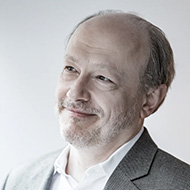
Interview with Marc-André Hamelin
July 31, 2026
“I consider composing an indispensable tool for performing musicians.”…





For over 20 years they have shared the stage, playing from memory and now with the freedom of a soloist with four hands: Hans-Peter and Volker Stenzl are among the finest piano duos on the international music scene. Critics speak of a "magical union of two brotherly hearts into one musical soul" and praise their interpretations for the "unique fusion of musical instinct and razor-sharp musical intelligence.".
Classicpoint.ch: Did you have a special relationship with your siblings as children? Hans-Peter Stenzl: We were very fortunate to grow up in a close-knit family. Everything was always discussed openly. Of course, the daily exchange between us two brothers about all our current experiences was a particular pleasure. Volker Stenzl: We didn't have a "special" relationship, but growing up in a loving atmosphere where the whole family had to stick together in every way shaped my brother and me. Our parents constantly did a lot with us – we don't have any other siblings .
How did you both come to play the piano, and why both of you in particular?
Hans-Peter Stenzl: My wonderful music teacher in fifth grade ignited my love for classical music with Mozart's Magic Flute and recommended to our parents that our interested son learn piano (so much for the importance of good music lessons, especially in schools). To make the purchase of an instrument "worth it," but also because of "fair family policy," Volker started lessons at the same time.
Volker Stenzl: My brother's music teacher suggested to our parents that our son, who was clearly interested in classical music, should learn an instrument, preferably the piano. Once a piano was purchased, I was allowed to start lessons right away.
What was it like in the past, and how do you deal with the issue of competition between you today?
Hans-Peter Stenzl: For me, competition is fundamentally a motivator – even within our duo.
Volker Stenzl: I have always been, and still am, far from thinking competitively towards my brother.
They rehearse, perform, and tour together all the time. Do you ever get too close?
Hans-Peter Stenzl: We still sit in the same train compartment and talk to each other!
Volker Stenzl: We do indeed spend a lot of time together (more than most married couples). That makes it all the more important to create personal space. We
maintain quite different circles of friends, and for me, a vacation is only possible without my brother.
Where do you differ most, and where do you have things in common?
Hans-Peter Stenzl: My brother is four years younger, but as a duo, we're the same age! ;-)
Volker Stenzl: First of all, we have things in common — due to our upbringing — in terms of fundamental human, moral, and ethical values, although I take some things more to heart than my brother. Our piano training, which began at the same time, was initially shaped by the same teachers. This almost "inevitably" created a broad shared musical foundation. It's one of the reasons why our duo has lasted for so many years despite our individuality. Our differences stem, among other things, from different physical attributes, which naturally also affect our piano playing. Sports played a significant role in my youth. I played volleyball intensively for years, with up to four training sessions a week, and our team even won the German youth championship once. During that time, my brother devoured many books. Today, my sporting activities are limited to road cycling, mountain biking, and regular jogging. Furthermore, I'm – passively – and I go to the stadium whenever time allows. I'd have to explain the rules to my brother first.
Did you both always study with the same teachers?
Hans-Peter Stenzl: Apart from my brief period of artistic training with Herbert Seidel in Frankfurt, we actually had – as soloists and as a duo : before our studies, James Adams; in Stuttgart, Renate Werner; and in London, Frank Wibaut, Hamish Milne, Stephen Kovacevich, and Alfred Brendel.
Volker Stenzl: We are four years apart in age, but we started piano lessons together (both with James Adams). Logically, we began our formal music studies at different times, but we studied with the same professor (Renate Werner) at the Stuttgart University of Music, initially focusing on solo performance. My brother completed postgraduate studies in Frankfurt, and from 1988 to 1990, we were both DAAD scholarship recipients in London, studying at the Royal Academy of Music with Hamish Milne, Frank Wibaut, and Stephen Kovacevich, and privately with Alfred Brendel.
When did you decide to fully commit to the piano duo?
Hans-Peter Stenzl: After winning the ARD Music Competition in 1986.
Volker Stenzl: In 1985, we won the International Brahms Competition in Hamburg. The jury chairman at the time, Alfons Kontarsky, strongly encouraged us to participate in the ARD Competition in 1986, an almost utopian undertaking for us back then. But after we actually managed to win in Munich as well, this was the catalyst for us to dedicate ourselves from then on specifically and almost exclusively to playing as a piano duo.
Would you recognize your brother's piano playing in a blindfolded comparison with others?
Hans-Peter Stenzl: Yes!
Volker Stenzl: Yes!
You hold the world's first and only professorship for piano duo at the Rostock University of Music and Theatre. Are there many applicants for this program?
Hans-Peter Stenzl: We've had a well-attended international masterclass for fifteen years now...
Volker Stenzl: In 1999, the Rostock University of Music and Theatre introduced the then-unique postgraduate program "Piano Duo" as a distinctive feature. In these 15 years, our students have won over 60 national and international prizes (including multiple awards from ARD/Munich, Dranoff/Miami, Bialystok/Poland, and the German Music Competition). Rostock is now known worldwide as a "piano duo breeding ground." Accordingly, there is great interest from duos all over the world.
What qualities must a good pianist possess to specialize in a piano duo career?
Hans-Peter Stenzl: First and foremost, of course, a suitable partner (ideally someone of equal skill, but not identical – this creates more "sparks"), furthermore, plenty of rehearsal time, and seemingly endless stamina...
Volker Stenzl: Piano duo playing at the highest level is only possible if both partners have excellent solo training and master the piano with complete confidence, in order to then tackle the specific challenges of duo playing (including flexible, fluid interplay, tonal variability, homogeneity paired with individuality). This is usually a process that takes years (my brother and I, for example, feel that our playing becomes increasingly precise, yet also freer, with each passing year), so in addition to the pianistic and musical aspects, the so-called "human chemistry" also has to be right.
Are there other things you do together besides playing the piano?
Hans-Peter Stenzl: Figuring out the cheapest train connections, preferably by outsmarting the "official" travel connections...
Volker Stenzl: Rarely.
Interview by Florian Schär | Classicpoint.ch | September 1, 2014






























































Do you want to attract more visitors to your concerts?
Find out more about the possibilities this portal offers.
With a concert search subscription, you will receive an email for your selected cantons/federal states as soon as a new concert is listed there. You can unsubscribe from the service at any time.
