
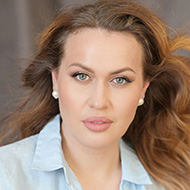
interview
Interview with Elena Stikhina
June 1, 2026
“The Zurich Opera House has a very special meaning for me.” Elena Stikhina is…


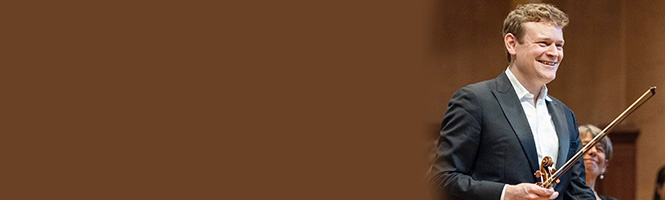


Max Emanuel Cencic is one of the world's most fascinating and versatile artists, dedicated to the rediscovery and performance of 18th-century music. With his virtuosic mezzo-soprano, he demonstrates how technically brilliant, yet simultaneously modern and sensitive Baroque singing can be. For exactly 35 years, he has graced the stage, performing at major opera houses worldwide, including the Vienna State Opera, the Theater an der Wien, the Zurich Opera House, the Opéra Royal in Versailles, the Bavarian State Opera, the Berlin State Opera Unter den Linden, Barcelona's Gran Teatre del Liceu, the Théâtre des Champs-Elysées, and the Brussels opera house La Monnaie.
Classicpoint.net: Was there a specific moment in your life when you consciously decided to become a singer?
Rather late, as I wasn't entirely sure if I wanted to sing. If you play an instrument or dance as a child, it's quite obvious, since you can decide for yourself whether to pursue it professionally or not. When you sing, it's uncertain whether your voice will still be good after the changes. Therefore, you have less "control" over it. I only decided in my early twenties to really make singing my profession.
What does opera mean to you?
For me, opera is a reflection of the world.
What are the biggest challenges of a countertenor?
To still be able to make a difference within the established system of classical opera. There have been 100 operas in the repertoire worldwide for 50 years. Of these, only 3-4 are Baroque operas, which are perhaps performed every few years. That's not many.
Have you ever experienced concertgoers who heard a countertenor for the first time and reacted strangely?
I experienced that in the 90s. These days, not so much. But it also depends a lot on the audience. It's important to distinguish between listeners who just want to hear run-of-the-mill classical music, i.e., commercially driven entertainment, and listeners who accept music and art as a form that invites challenge and dialogue.
Is the talent for a countertenor actually apparent or assessable before or only after puberty?
That varies from person to person. There are no rules.
You appeared on television at the age of six and had already given 800 concerts by the time you were 16. At 19, you'd had enough and didn't want to continue. How did you feel, and why did you return to singing?
You never feel good when you have to admit to yourself that you've reached a dead end in life. But it's a life lesson we all learn. You're not always a winner, and life can take a turn for the worse. That's perfectly normal, and I don't want to focus on my own experience. Many people go through all sorts of situations involving loss. It's up to us to deal with it and find a way to cope. Everyone reacts differently. I'm more of a fighter, so giving up wasn't an option for me.
Your passion is Baroque music. What are your thoughts on new compositions from the current generation of composers?
I don't have an opinion on contemporary classical music, as I don't have enough experience and therefore don't want to pass judgment.
You also work as a director. How do you approach a production? Does a lot change during rehearsals, or do you have your production completely planned out before the first rehearsal?
I always start with an idea and play through the libretto in my head. Directing is a true blessing for me because I find fulfillment in shaping my own dreams and realities. This immense freedom of imagination is what guides me. The vision and the overall arc have to be right. Details can always be changed, and I work these out with singers who, thanks to their stage experience, bring the story to life.
What are your most recent projects?
I will be singing "Serse" in Karlsruhe, as part of the International Handel Festival, and "Polifemo" at the Salzburg Festival, in the Felsenreitschule – which is an immense honor for me.
What do you enjoy doing besides music?
I have diverse interests, including art, travel, languages, and film.
Interview by Florian Schär | Classicpoint.net | November 2, 2018




























































Do you want to attract more visitors to your concerts?
Find out more about the possibilities this portal offers.
With a concert search subscription, you will receive an email for your selected cantons/federal states as soon as a new concert is listed there. You can unsubscribe from the service at any time.
