

interview
Interview with Julia Lezhneva
August 31, 2026
“Analytical work allows for emotional freedom, while emotional discoveries…”





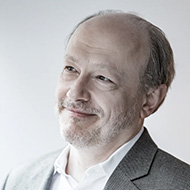
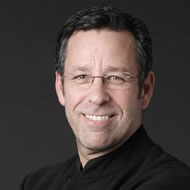
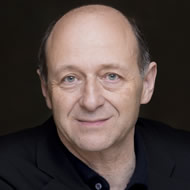
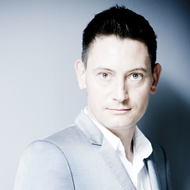
Titus Engel made his operatic debut in 2000 with the world premiere of Benjamin Schweitzer's Jakob von Gunten at the Dresden Days of Contemporary Music. Since then, he has conducted numerous performances in various genres at different venues, including Monteverdi's L'Orfeo at Radialsystem V Berlin and the Theater an der Wien, several operas at Kampnagel Hamburg and the Stuttgart Opera, and Glass's Akhnaten at Opera Vlaanderen Antwerp/Ghent. At the invitation of Gerard Mortier, he made his debut at the Teatro Real Madrid with the world premiere of Pilar Jurado's La página en blancoim in February 2011. He has since become a regular guest there: in 2014, he conducted the world premiere of Charles Wuorinen's opera Brokeback Mountain. In June 2016, he conducted the Swiss premiere and only the third complete performance of Stockhausen's Donnerstag from the Licht cycle at Theater Basel. The production received the "Performance of the Year" award in the Opernwelt critics' poll in 2016.
Engel has conducted numerous renowned orchestras, including the Orchestre de l'Opéra de Paris, the Orchestra of the Deutsche Oper Berlin, the Mozarteum Orchestra Salzburg, several radio symphony orchestras, the Orquesta Sinfónica de Castilla y León, the Bern SymphonyOrchestra, the Mahler Chamber Orchestra, the Danish National Chamber Orchestra, and several chamber orchestras in southern Germany and Switzerland. He is also regularly invited to conduct leading contemporary music ensembles. From 2000 to 2012, he was music director of Ensemble Courage. He has premiered numerous works (by Sergei Newski, Leo Dick, Elena Mendoza, Olga Neuwirth, Michael Wertmüller, and Rebecca Saunders) at festivals including the RuhrTriennale, the Berlin Festival, the Lucerne Festival, MaerzMusik, the Donaueschingen Festival, the Salzburg Festival, and the Opéra d'Hoy in Madrid.
Projects in 2017 included the world premieres of Elena Mendoza's opera La ciudad de las mentiras at the Teatro Real in Madrid and Mozart's La Betulia Liberata at the Frankfurt Opera. The world premiere of Chaya Czernowin's Infinite Now at the Vlaanderen Opera and the National Theatre Mannheim was chosen as "World Premiere of the Year" by Opernwelt magazine in 2017.
The German stage described him as a "conducting dervish" who safely guided all the actors through breakneck rapids.
You initially studied musicology and philosophy. Was it already clear to you then that you would later study conducting?
Yes, I've wanted to be a conductor since I was about 17. Around that time, I conducted our school orchestra for the first time. I was so thrilled by it that I knew immediately it was my dream job. However, I wanted to broaden my education, so I decided to pursue two degrees, some of which ran concurrently.
To what extent can you use your philosophy studies for your conducting today?
Philosophy deals with the big questions of life. Kant formulated them particularly beautifully: What can I know? What is humankind? What should I do? What may I hope? I believe that reflecting on philosophical questions shapes me as a person and as a musician. Musical aesthetics and music psychology also fascinate me. How can the miracle of music be explained? How is it possible that sound waves can evoke such incredible emotions? I still don't know, but I remain curious...
You were voted Conductor of the Year by the opera world in 2020. What tipped the scales and how important is this title to you?
This season I conducted two productions where my work was particularly well received: Philip Glass's Einstein on the Beach in Geneva and Mussorgsky's Boris Godunov in Stuttgart, which was combined with a world premiere by Sergei Nevsky. This connection between contemporary music and a major Romantic work is something that particularly fascinates me and that I thoroughly enjoy. I was delighted with the title, and I received a great deal of personal encouragement for it, especially in Switzerland.
As an opera conductor, do you also have any influence on the director's interpretation?
I really enjoy working with directors. The exciting thing about opera is that you're not solely responsible for the project, as you are in a concert; it's a total work of art in which many people participate. I always try to get in touch with the director early on—I learned that from Gerard Mortier. Often, the directors are very interested in learning new musical aspects of the piece. This usually leads to a dialogue, and naturally, I also have an influence on the staging.
They also try to bring together different musical and artistic worlds. Can you give us some examples of projects?
The first piece that comes to mind is "Am Anfang" by Anselm Kiefer and Jörg Widmann , which I participated in at the Bastille in Paris. It was incredibly fascinating to work with these two great artists. In my concert programs, I like to combine different musical worlds, for example, Islam in contemporary music. Or, time and again, the connection between Baroque and new music.
They are equally interested in old and new music. Is their approach to interpretation the same in both cases?
I see myself as a "servant of the work," as Hans Swarovski, the famous conducting teacher, so beautifully put it. I always start with the score and, in addition, read extensively about the work's intellectual context. With contemporary music, collaboration with living composers is crucial for me, and I always learn a great deal from this, also with regard to early music. It's simply impossible to notate everything in the score, even with the most sophisticated compositional technique; that's why dialogue with the composers is so important. With early music, I'm interested in historically informed performance practice; here, I can only communicate directly with the composer through books.
How are you experiencing the current pandemic situation?
My personal well-being is affected by the waves of the pandemic. At the moment, I'm happy to be back working at the Lyon Opera. While we can't perform for an audience, thanks to Serge Dorny's careful planning, we can now present Bártók's Bluebeard digitally. Looking ahead to summer, I'm cautiously optimistic and excited about Wagner's Lohengrin and numerous world premieres. However, I'm very disappointed that, despite the numerous studies scientifically demonstrating how low the risk of infection is in theaters and concert halls, these were the first venues to close and will likely be the last to reopen.
What lessons do you draw from this?
It's important for culture to strengthen its lobby. We're not visible enough, and especially with the post-pandemic era in mind, it's crucial to have a stronger presence with politicians. I also hope the public will help us with this. I'm getting a lot of feedback about how much audiences miss live performances.
What are your visions for yourself personally and for the music world?
I dream of having my own orchestra that can combine new and old music in a unique way, where all pieces are played on the original historical instruments. And I dream that opera and concert organizers will be more daring. Far too often, the same old repertoire is performed; there's so much to discover.
What passions do you have besides music?
My family, sailing, reading and movies.
Interview by Florian Schär | Classicpoint.net | February 28, 2021




























































Do you want to attract more visitors to your concerts?
Find out more about the possibilities this portal offers.
With a concert search subscription, you will receive an email for your selected cantons/federal states as soon as a new concert is listed there. You can unsubscribe from the service at any time.
