
interview
Interview with Elena Stikhina
June 1, 2026
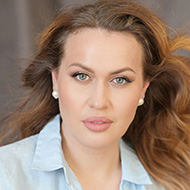
“The Zurich Opera House has a very special meaning for me.” Elena Stikhina is…


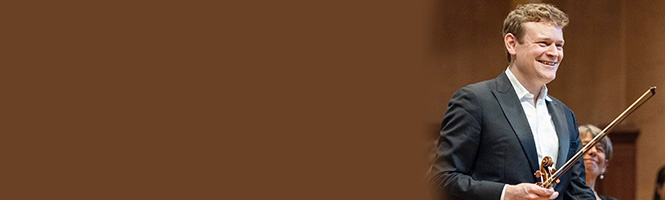


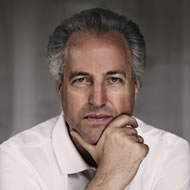
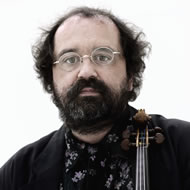
Mario Venzago is chief conductor and artistic director of the Bern Symphony Orchestra and Artist in Association with the Finnish Tapiola Sinfonietta. Before his conducting career, Venzago was a concert pianist with the Italian-speaking Swiss Radio and performed as a soloist and accompanist throughout Europe.
Classicpoint.net: You initially studied piano and were active as a pianist. How often do you still play the piano today?
I always wanted to conduct, but I believed that EVERY conductor must be able to play at least ONE instrument to a concert standard before they are allowed to convey ideas and directives to others. After my performances as a pianist at the Lucerne Festival (now the Lucerne Festival), I stopped performing publicly. I learn my scores on the piano, can still play almost everything "from the sheet music," but I will never do that publicly again.
Many conductors want to realize the composer's original text as faithfully as possible. Do you have a different view?
It is important to know the original text, precisely what the composer wrote down. In order to then find out what they MEANT. Writing down music is an immense cultural invention. But transforming what has been written back into living sound and language with all the unnotated freedoms is an equally immense achievement of the musical mind. Conducting a textually inaccurate score is nonsense.
You once said, "Conducting is a terrible profession." Can you elaborate on that?
The last ten years of my conducting career have been among the happiest. It's a profession with indescribable privileges. But the path to get there is thorny and leads through unpleasant phases with too few rehearsals, friction, and many battles outside the music. You're never really at home, always on the go. And your own expectations are often unhealthy. I've mellowed a bit. And I'm happy.
How do you convey tradition and culture to an orchestra?
To convey tradition, you have to know it. With all the internet resources available today, that's not so difficult. Deciding what is tradition and should be continued, and what — as Mahler said — is just sloppiness, is often not easy. And please: which tradition? Between the two world wars, music was played at the highest level in Germany. After that, everything fell apart. I like this old German tradition with its dark sound and low noise. All of that can be conveyed in rehearsals.
What is your personal ideal sound?
A transparent sound with bright, vibrato-free strings and dark woodwinds, illuminated by softly accentuating brass, much like the Concertgebouwe in Amsterdam or the Bern Symphony Orchestra.
As a Swiss musician, you have shaped some of the country's major orchestras as chief conductor. Currently, you are chief conductor in Bern. Where do you see the main differences between orchestras within Switzerland?
That's hard to say. It depends very much on the respective chief conductors. But it's interesting that the highest-ranked or best-paid orchestras aren't necessarily the best. The small Winterthur Orchestra, for example, has a significant say. It's a shame there isn't a competition between orchestras, some kind of Olympics...
And how do German orchestras differ? Is every orchestra different, or are there country-specific characteristics?
It's clear that orchestras in Germany offer extremely diverse performances. It's obvious that the Berlin Philharmonic is unbeatable in its repertoire, if you like their style of playing. But all German and Swiss orchestras still need to be careful not to be overrun by the English or Nordic ones. These orchestras have an incredible prima vista, meaning they play practically perfectly on the first try. And the Americans have an almost frightening rehearsal discipline. This leads to great efficiency and economy. With the smaller German orchestras, you can try out many things. This can lead to magnificent new achievements. So, everywhere, everything is always a little different. That's why it's worthwhile for a conductor to travel...
Do you have a very special relationship with the music of Othmar Schoeck?
He's a brilliant composer. Much of it is unfinished and requires meticulous re-creation. Sometimes that delights you, sometimes it annoys you. It's a laborious, great love that I feel for his work.
What are your plans for the future?
The present is exciting enough.
What are your interests besides music?
The same as everyone else's: sex and crime. But you don't really want to know that!
Interview by Florian Schär | Classicpoint.net | February 1, 2018
© Photo: Alberto Venzago
June 28, 2026 - MULTI-PACETED - above the rooftops of Zurich





























































Do you want to attract more visitors to your concerts?
Find out more about the possibilities this portal offers.
With a concert search subscription, you will receive an email for your selected cantons/federal states as soon as a new concert is listed there. You can unsubscribe from the service at any time.
