interview
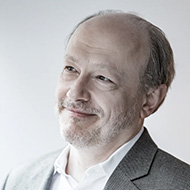
Interview with Marc-André Hamelin
July 31, 2026
“I consider composing an indispensable tool for performing musicians.”…





The German baritone Matthias Goerne is one of the most versatile and sought-after singers of his voice type worldwide. He is a regular guest in internationally renowned concert halls and opera houses, as well as at major festivals, and has collaborated with virtually all the leading conductors and orchestras in Europe, America, and Asia.
Matthias Goerne sings at the world's great opera houses, including the Vienna State Opera, the Bavarian State Opera, the Royal Opera House Covent Garden in London, the Opéra National de Paris, the Teatro Real in Madrid, the Zurich Opera House, the Metropolitan Opera in New York, and La Scala in Milan. The range of his carefully selected operatic roles extends from Pizarro (Fidelio), Wolfram (Tannhäuser), Amfortas (Parsifal), Marke, Kurwenal (Tristan und Isolde), Wotan (Die Walküre, Das Rheingold), Wanderer (Siegfried), Orest (Elektra), and Jochanaan (Salome) to the title roles in Béla Bartók's Duke Bluebeard's Castle, Paul Hindemith's Mathis der Maler , and Alban Berg's Wozzeck.
You taught as a professor of song interpretation at the Robert Schumann University of Music in Düsseldorf from 2001 to 2004. Why did you stop, or do you still teach today? What did you enjoy about teaching? What is important to you in this regard?
I no longer teach, except for masterclasses or private lessons, and a few masterclasses in conjunction with festivals and concerts. I only had a three-year contract there, as I also wanted to work more from home. Düsseldorf was well-located in terms of transport connections. I wanted to try out an endowed professorship, but I found that it wasn't for me. I'm not convinced by song interpretation. It only makes sense if the universities actually want it. The teaching style is like a foreign element, and there are always minor disagreements; it also requires an enormous time commitment. It's only worthwhile for the best students.
What about a professorship in singing for you?
Even less so. The vocal level and prerequisites here are lower compared to Korea or Eastern European countries, which have much better musical talent. The requirements are also significantly more lenient. Too many people are accepted here, simply to fill the courses. If you were to compare it to international standards, you'd see that it doesn't work. For me, it didn't make sense, as I couldn't see enough talent, and so I lost my motivation.
How did you experience the Covid period with the lockdowns, etc.? What did you personally do during that time?
The first period was surprising; I had so much time. Then things started up again with recordings and streams. I had many concerts in Spain, Italy, and the Netherlands. Perhaps two or three per month would have been better, but I thought that if life had always been like this, it would have been easier to combine private life and work. You get so used to a fast pace that you never notice it before. Now I can spend much more time with my family. Nevertheless, I don't want to sugarcoat the lockdown at all. There were many who suffered from it.
As a singer, health is especially important. Do you take any special precautions in your life?
What damages the voice most is incorrect technique; there's nothing more harmful. Of course, I avoid shaking hands with someone who has a cold, but I don't panic. Spicy food, for example, isn't good for the voice either. But just as people are different, so are their sensitivities. Sure, there are certain things that aren't good for everyone, but everyone finds some things more difficult than others. I also smoke a cigar now and then. What's okay for me might be too much for someone else. You don't have to forbid yourself everything, but you also don't have to live life to the fullest every day.
What do you find interesting about singing? What fascinates you about it?
It's much less about the singing itself than you might think. It's more about communicating about topics that are important to you. I believe that when a good voice, lyrics, and music come together, it's more impactful than simply listening or reading. Ideally, it leads to a tremendous increase in understanding of both.
What about language? Is it important to understand the language and, as a singer, to reproduce it accurately?
Pronunciation can certainly be learned. But to master the idiomatic usage of any language, one would have to live in each language region for at least ten years. I would never move to Paris or Geneva; that would be too much for me. I don't know what I would have done if I had been born in England or Finland. There are few lead singers who don't come from German-speaking countries and sing in German. Hungarian is known to be one of the most difficult languages to learn, yet I've been singing "Bluebeard's Castle" for years. Because I've sung it so often, even if I don't understand the grammar, I understand the lyrics. But that's probably the case for many Russian singers in Italian or German, and vice versa. You have to work a lot on phonetics. At some point it feels right, but the native speaker is clearly at an advantage in this respect.
One of the biggest exceptions is Felicity Lott; you couldn't tell she wasn't German, but English, and that she lives there. But that's rather rare. I don't see that as a problem at all; I actually enjoy hearing a different accent. I've heard many singers who have made significant contributions to art, even though they sang in a foreign language.
Which role do you forbid yourself from singing, even though you'd love to?
Falstaff, for example. I've been offered it time and again, but I would consider it completely wrong. There's a repertoire I haven't done yet, but could, and much that I haven't done yet, but would like to. So I prefer to choose something that suits me rather than something far removed, just to prove something. King Roger is an outstanding Polish opera, and I've been offered it very often and declined. Why should the audience be expected to listen to a German singing in Polish if he's only learned it phonetically? Artistically, that's a major limitation.
How has your voice changed with age?
I believe my range has expanded. The timbre of my voice has changed, but I wouldn't describe it as aged yet. The strain is quite different with age, though. A power develops in the voice that allows you to sing a note for much longer, but you also risk losing the ability to sing softly. This can be prevented, however, by regularly changing your repertoire. That way, you don't become rigidly attached to one style of singing. And I think I've managed that very well over time. There are also occasional spontaneous bursts of energy, which come much more easily to me now than when I was younger.
What criteria do you use to choose your accompanists?
Skill, interest, and quality. There are people who always choose the same partner. Of course, I have some lifelong accompanists, but what's appealing is the difference in strengths and the individual perspective. That's what fascinates me enormously. I consider masterful command of the instrument and mutual understanding to be the most important things.
They alternate between recitals and opera performances, sometimes with hardly any time in between. How difficult is the change for the voice?
In principle, it's better not to sing for a few days so the muscles can relax, but that's also very individual. If you do it long enough, though, you can get used to it.
When rehearsing an opera, several key figures have to work together (director, soloist, conductor). Friction is inevitable. How do you deal with that?
First, there's the question of who's conducting, who's the director, does the piece already exist? Usually, you can always find a way to make it work.
What passions do you have besides music?
Everything is so interconnected. I don't have to be involved with music every day, because the musical part of the year is already very substantial. But having a life with individual freedom is very important to me; perhaps this period has taught me that. It has certainly contributed to sharpening my thinking. My passion is to stand up for freedom and to reflect on it.
Interview by Florian Schär | Classicpoint.net | October 27, 2021
November 22, 2026 - Forward Festival: Schumann's Love 2
January 9, 2027 - Mendelssohn: Elijah, Op. 70
January 16, 2027 - Matthias Goerne (baritone), Mikhail Pletnev (piano)
May 28, 2027 - Michael Schade (Oedipus), Jamie Barton (Jocasta), Matthias Goerne (Creon), Morris Robinson (Teiresias), MDR Radio Choir, NDR Elbphilharmonie Orchestra, Alan Gilbert (conductor)





























































Do you want to attract more visitors to your concerts?
Find out more about the possibilities this portal offers.
With a concert search subscription, you will receive an email for your selected cantons/federal states as soon as a new concert is listed there. You can unsubscribe from the service at any time.
