

interview
Interview with Julia Lezhneva
August 31, 2026
“Analytical work allows for emotional freedom, while emotional discoveries…”


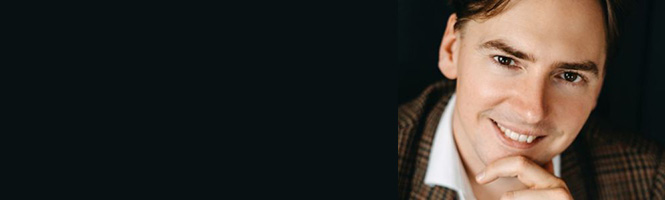
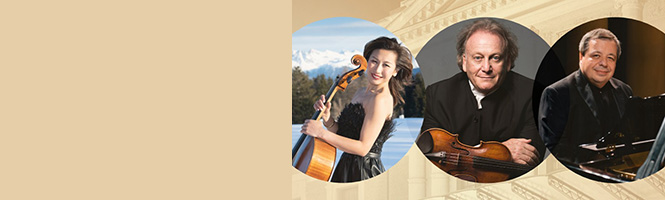


Tabea Zimmermann is considered one of the world's leading violists. She is in demand internationally both as a soloist and as a member of the Arcanto Quartet. As Germany's youngest professor, she began teaching in Saarbrücken in 1987. In 1994, she took over the viola class at the Frankfurt University of Music and Performing Arts, and since October 2002, she has been a professor at the Hanns Eisler School of Music in Berlin.
Classicpoint.ch: You started playing the viola at the age of three. Do you think it's an advantage to start learning on the viola right away, or does it not matter for a viola career whether one starts with the violin and switches later?
Today, I think it's less crucial whether one starts with the viola directly. However, I consider the quality of initial instruction so crucial that I would advise a musically interested child to choose one instrument over the other, depending on the quality of the teachers available. (Better an experienced violin teacher than an inexperienced viola teacher!)
From the perspective of a university professor, I am very concerned about the next generation of musicians. We often have to choose between exceptionally well-trained young Asians and young Germans who have only just expressed interest but are several years behind because they lack four to five years of intensive instrumental study.
You grew up in a family of musicians. Were your parents strict with you regarding learning an instrument?
My parents were very, very strict in raising their six children! And even though this gave me a special status among my age group, and I still benefit greatly from early childhood music education, I still regret a childhood I wasn't allowed to have. I suppose that will always be a matter of perspective.
You have three children yourself, all of whom play an instrument. Do you supervise or monitor their practice?
My three children are indeed all very musical and learned different instruments relatively easily. However, based on my own experiences, I can't offer them the strictness that would undoubtedly lead them to greater achievements. Sometimes I doubt my relaxed approach, but on the other hand, my children have it infinitely harder because they always see a specific result in mind. I was able to gain my own experience in the protected environment of the music school in a relaxed manner and without the parents' expertise or knowledge, since my parents weren't professionals. They set and monitored the time allotted for practice, but I had more freedom regarding the content than my children can have.
You are a professor at the Hanns Eisler School of Music in Berlin. Are there moments of pure joy in your teaching, like after a particularly successful concert?
There are countless moments of joy that are connected to teaching in the broadest sense. This can happen during the lesson itself, but it doesn't have to. Sometimes, years after a student's graduation, I receive a letter that refers to details of the lessons. For example, if someone writes to me that they are only now realizing what they learned back then, it makes me happy because the fruit has borne the seed for which I was privileged to plant. A feeling of joy always arises when a student surpasses themselves, when perceived limitations are suddenly shattered. I see my teaching more as guidance for self-study, for testing boundaries, etc., than as a collection of perfectly learned pieces. However, a good experience is also linked to the student persevering and achieving a good result, and not just knowing theoretically how to achieve a good result. An important aspect is certainly providing sound advice on repertoire selection, the number of works to perform, and pacing oneself. My motto is: better to play fewer pieces but gain good concert experience than to play too much too soon.
What do you think of competitions?
I very rarely suggest a competition, but if students want to develop an ambitious program on their own, I naturally support them, even though I don't hide the fact that I would often prefer to work intensively without the pressure of success. But some young people need to compare themselves to others to be able to assess their own abilities. Depending on personality, progress, etc., I have also strongly advised against it! It really depends on the individual student.
You studied with Sándor Végh in Salzburg. In what way was he influential for you?
Sándor Végh was particularly influential because his work reminded me of the wonderful work of my first teacher, Dietmar Mantel. Végh's imaginative work was a wonderful continuation of Mantel's work, and so a circle was completed. Unfortunately, all three of my teachers have since passed away, and I would have liked to have consulted them on one or two questions.
A major part of your work is with the Arcanto String Quartet. How did this collaboration come about?
The Arcanto Quartet is the most wonderful pastime for me (and hopefully my colleagues as well :-)). We met at a festival in Provence in 2002 and played our first program together. This followed various chamber music experiences in almost every conceivable form. Since we often share similar musical goals and also get along very well personally, I would like to call it a stroke of luck. I hope we play together for at least another 10 years, work on many more masterpieces together, and enjoy our collaboration even more!
What do you particularly appreciate about playing in a string quartet compared to performing as a soloist?
I especially appreciate the opportunity for shared growth, both personally and musically. Since these aspects always belong together for artistic expression, chamber musicians, in my opinion, gain deeper experiences than would ever be possible with the working methods of a symphony orchestra. How fortunate that, as a quartet, even after years of working on a piece, you can always try out new approaches, practice difficult passages for the hundredth time, and so on. It can truly be a great pleasure to enjoy the shared resonance of the instruments and the consonance of our thoughts. Sometimes, however, our motto is 'everyone as they like,' once we've agreed on the framework for our joint interpretation and the score allows for such individual approaches to the thematic material...
You have studied Bartók's Viola Concerto very intensively. What fascinates you about Bartók, and what specifically about this work?
What fascinates me about Bartók's Viola Concerto is the state in which he left it to us due to his early death, and the engagement with his intellectual legacy. Perhaps it was even the first work in which I could recognize the stark difference between 'tradition' and sketches actually written by the composer.
I am by no means claiming today to know what Bartók intended – but I am certain that even his student Tibor Serly and his son Peter Bartók, with the two currently accepted versions, could not definitively discern the composer's intention.
I would be very interested to know what a composer like Kurtág or Eötvös would glean from the sketches in order to fill in the blanks in the orchestral passages.
As a performer and also as a teacher, I find it a fascinating process to 'interrogate' the score, to be familiar with as many of the composer's works as possible in order to learn his unique tonal language and musical grammar. Here, too, I'm less concerned with the finished product than with the process by which a young person develops a personal interpretation of a score. Because that's surely the only reason why we musicians haven't yet been replaced by machines. If there were a single, perfect reading, if tempo and dynamics depended solely on the composer and weren't subject to variation due to hall acoustics, the musician's physical condition on a given day, or personal interpretation, then we could just let computers play! But thankfully, it's about the human aspect, the ability to seemingly make time stand still, to enable a shared breath, and so on...
Are there other works you have engaged with with the same intensity?
In recent years, I have been intensively studying the work of Paul Hindemith and try to create an enjoyable listening experience for the audience through my interpretation at the concert. However, there is less doubt about the composer's intention, as he notated very precisely and was himself so much a practical person that there isn't much room for different versions – but there is certainly room for different readings!
Interview by Florian Schär | Classicpoint.ch | February 5, 2013
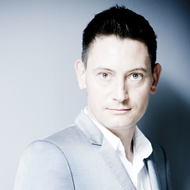
© Photo: Marco Borggreve
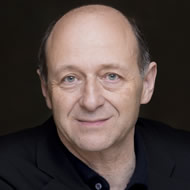
November 5, 2026 - Tabea Zimmermann (viola), ORF Vienna Radio Symphony Orchestra, Ingo Metzmacher (conductor)
November 7, 2026 - Valeriy Sokolov & Friends
November 16, 2026 - Hindemith's Birthday Celebration
February 6, 2027 - Tabea Zimmermann (viola), Antoine Tamestit (viola)
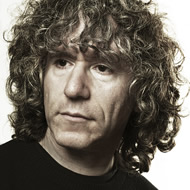
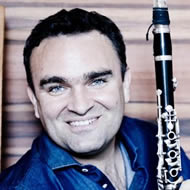
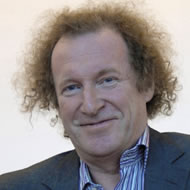
April 19, 2027 - Daniel Ottensamer (clarinet), Stefan Dohr (horn), Christian Tetzlaff (violin), Tabea Zimmermann (viola), Kirill Gerstein (piano)

























































Do you want to attract more visitors to your concerts?
Find out more about the possibilities this portal offers.
With a concert search subscription, you will receive an email for your selected cantons/federal states as soon as a new concert is listed there. You can unsubscribe from the service at any time.
