

interview
Interview with Julia Lezhneva
August 31, 2026
“Analytical work allows for emotional freedom, while emotional discoveries…”






Rudolf Kelterborn's compositional output encompasses all musical genres and has been honored with numerous awards. In addition to his work as a composer, Kelterborn also taught music theory, analysis, and composition at various Swiss and German music academies, was head of the music department at Swiss Radio DRS, editor-in-chief of the SMZ (Swiss Music Journal), and director of the Basel Academy of Music.
Classicpoint.ch: How exactly does a composition come about for you? Is it always the same process, or do you use different approaches?
It certainly makes a difference whether I have a commission to fulfill or whether I simply want to write a piece "for fun." But in both cases, I develop a composition in my inner (aural) imagination, from the overarching architecture down to the sonic details, before I begin to write it down. I record individual aspects in verbal notes or musical sketches. With compositions that include text, or even with pieces for theatrical music, the process is more complex.
Do you use any digital tools when composing?
No.
What's the best way for you to come up with new ideas?
I relentlessly challenge my imagination, and I critically examine my ideas. I can't explain how ideas come about. But if, for example, I can't come up with anything convincing for a composition commission, I decline the commission. That's why I always request a few weeks to consider every inquiry.
Do you consciously process your own experiences and feelings through your music?
For me, my music expresses the fullness of my life, encompassing everything I experience and feel, from the horrific to the wonderful. But it's not individual, specific experiences or momentary moods that I translate into music.
What criteria do you use to name/title your works?
I have, so to speak, two categories of titles. I call many works "Music for…", "Concerto", "Quartet", "Ensemble Book", "Chamber Sonata", etc. – these are neutral titles, so to speak, that say nothing about the content, character, or expressive atmosphere. Then there are titles like "Dream Music", "Phantasms", "Nocturne", "Adagio con interventi", "Fantasies + Flashes", which aim to guide the listener's associative imagination in a particular direction.
Which of your compositions do you currently like best?
With a catalog of around 200 compositions, I can't focus on just one. Here's an extremely rigorous selection:
Do you understand professional musicians who can't connect with contemporary music?
Not really... Curiosity and openness are essential qualities for a competent and dedicated musician. Accordingly, aspiring musicians should be "educated" by their teachers, which, in turn, is only possible with curious and open-minded teachers...
Do you see an influence of the internet on the development of contemporary music?
Not really – but I'm not an expert in this field.
In the past, world premieres sometimes provoked strong audience reactions, scandals, and even controversies. Why are such reactions so rare today?
While I, as a composer involved in such controversies (many years ago), wasn't exactly thrilled, the trend you've described fills me with concern. Identifying the reasons, however, requires profound reflection and research. They could lie in the increasing inertia of the audience, the specialization of concert programs (the division into old and new), or even in the lack of commitment in many new compositions.
Which current movement(s) in contemporary music particularly interest you?
Currently (i.e., after a long career as a composer), I'm less interested in "current trends" than in individual composers—or, more precisely, individual new works. That would result in a rather extensive list, including many names of young colleagues.
Interview by Florian Schär | Classicpoint.ch | July 8, 2013
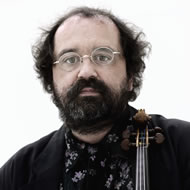
Image: University of Oldenburg



























































Do you want to attract more visitors to your concerts?
Find out more about the possibilities this portal offers.
With a concert search subscription, you will receive an email for your selected cantons/federal states as soon as a new concert is listed there. You can unsubscribe from the service at any time.
