
interview
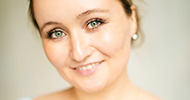
Interview with Julia Lezhneva
August 31, 2026
“Analytical work allows for emotional freedom, while emotional discoveries…”


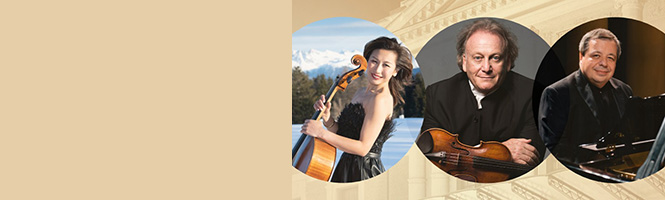


Sabine Meyer is one of the world's most renowned soloists today. It is thanks to her that the clarinet, once underestimated as a solo instrument, has reclaimed its place on the concert stage. In addition to her work as a soloist, Sabine Meyer has a particular passion for chamber music. In 1993, she was appointed professor at the Lübeck Academy of Music.
Your grandfather was a clarinetist, and your father and brother also play the instrument. Didn't you want to learn a different instrument?
My parents never pushed us children in any particular direction, but they recognized and nurtured our musical talent early on. I started learning piano at four or five, then the violin, and finally the clarinet at eight. Although it quickly became clear that I had the greatest talent and also the most enjoyment playing the clarinet, I played all the instruments simultaneously for about ten years and also took organ lessons.
Besides your grandfather, father, and brother, your husband also plays the clarinet. Are your two children also learning this instrument?
My husband and I never pushed for our children to pursue a musical career. They both enjoy making and listening to music; our daughter played the bassoon and now plays the piano, my son used to have a rock band at school, plays keyboard and piano, and writes his own music—but they chose psychology and physics, respectively, as their university subjects.
As a sought-after soloist, you've been constantly on the go for years, performing concerts all over the world. How do you manage that with two children?
When the children were small, I never took them with me on concert tours, but left them in the care of family. My husband and I always planned our family life together, and our parents were a great help. I was never away from home for more than ten days and didn't want to travel with a nanny and children. If their mother is stressed or needs to rest before a concert, the children don't get to enjoy her company, only the disadvantages of living in a hotel.
You and your husband have developed a systematic training program that aims to combine the powerful, rich tone of the German clarinet with the flexible sound shaping of the French Boehm system. Could you explain this to us in more detail?
Unfortunately, most clarinet teachers focus primarily on finger technique. In contrast, we have tried to develop breathing technique, tone production, articulation, and intonation just as systematically. To this end, my husband has published a comprehensive instructional work ("Clarinet Fundamentals"/Schott Verlag Mainz), which forms the basis of our teaching.
The goal is a physically expressive, lyrical style of playing that combines the advantages of both clarinet systems.
You teach as a lecturer at the Lübeck Academy of Music and also give masterclasses. What is important to you in your teaching?
What's particularly important and also particularly exciting is that you can address each student very individually. There are no two paths the same, and in that sense, teaching is a tremendous enrichment to my life.
You are a strong advocate for new music and regularly commission new works. What criteria do you use to select composers?
Throughout history, including Mozart's time, there have been works in contemporary music that are original and exciting, and works that are rather bland and rely on clichés. In today's contemporary music, it's truly not easy to discern the substance of a work or a composer, especially since many composers try to impress with extreme demands and playing techniques, and often with sheer spectacle.
On the one hand, I don't like music that requires me to dismantle my instrument, bring in four sound engineers, and even roller skate while playing. On the other hand, I also dislike the music so prevalent today that panders to popular taste with numerous tonal allusions and effects. I engage extensively with contemporary music and believe that with experience, it's possible to separate the wheat from the chaff.
You have been at home on concert stages all over the world for many years. Are there any particular concerts that stand out in your memory?
There are so many concerts each season that are especially memorable, some – in chamber music – even in very small towns. So it's difficult to single any out. Of course, many concerts with my own ensembles (the Sabine Meyer Wind Ensemble and the Trio di Clarone) were very special because of the opportunity to play with true friends, and certainly also the concerts with the Lucerne Festival Orchestra under Claudio Abbado, who elevated this very personal connection between the musicians to the orchestral level. There were also very profound experiences in the concerts with Sandor Vegh or Gidon Kremer, and in the collaborations with the Academy of St Martin in the Fields and with the Vienna Philharmonic and Christian Thielemann.
Do you still breed horses?
Riding was the whole family's hobby. Just a few years ago, we had five horses. Since the children left home, the number has naturally decreased, and we haven't bred any more. But the horses we bred ourselves are still around, and whenever time allows, I spend my hours in the countryside.
Interview by Florian Schär | Classicpoint.ch | August 3, 2012


























































Do you want to attract more visitors to your concerts?
Find out more about the possibilities this portal offers.
With a concert search subscription, you will receive an email for your selected cantons/federal states as soon as a new concert is listed there. You can unsubscribe from the service at any time.
