interview
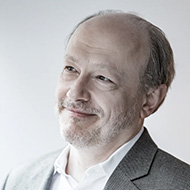
Interview with Marc-André Hamelin
July 31, 2026
“I consider composing an indispensable tool for performing musicians.”…




For several years, the French pianist David Fray has been among the stars of the younger generation. Born in 1981 in Tarbes (southern France), he studied at the Conservatoire national supérieur de Musique et de Danse in Paris with Jacques Rouvier and was mentored by renowned artists such as Dmitri Bashkirov, Paul Badura-Skoda, Christoph Eschenbach, and Pierre Boulez. His repertoire reflects his affinity for the works of the great German-Austrian composers Bach, Haydn, Mozart, Schubert, Schumann, and Brahms. David Fray's recordings have been unanimously praised by critics and have received awards such as the ECHO Klassik (2008 and 2009). In early 2010, he received the French music prize Victoires de la Musique Classique in the category "Instrumentalist of the Year." David Fray is an exclusive artist with Erato/Warner Classics and has recorded numerous albums.
You started playing the piano at the age of four. Can you remember that time, and how did it come about?
It was my parents' decision; they did the same with my older brother. They decided to send us to a private school for solfège, music theory, and piano when we were four. And for me, it was more than just a hobby. It became quite important. It wasn't really my choice, I would say. And my parents weren't musicians at all; they were just music lovers, so they didn't expect to have a professional musician in the family.
Did you choose the instrument, or did your parents choose it for you?
Yes, they more or less chose the piano because we had a piano at home.
And your brother?
My brother did too, but he also played classical guitar. He's not a professional musician.
I read that you cite Wilhelm Kempff as your role model. Is that correct? And why?
In a way, he really is a role model, because he has all the qualities I'd like to have and that I somehow don't yet possess. Willem Kempff's sound is very special to me. Because, of course, sound is important for a musician, but it's not just about a beautiful sound. Sound is simply the realization of expression and a musical idea. In some pieces, the sound shouldn't even be so beautiful, sometimes. So we have to work on the quality of the sound, but more on what specific sound is required for a particular work. As far as sound quality and vocal qualities are concerned, that, I think, is my favorite part of the work. I try to make the piano a lyrical instrument, also a speaking instrument. And I think that Kempff realizes both superbly, the rigor and the poetry. And if one day I can have both qualities like that, I will be a happy musician.
But are you not a happy musician yet?
Perhaps I'm afraid that if I were a happy musician, I'd quit. Perhaps the only reason I continue is that I'm not satisfied.
But is being happy and being content the same thing?
You're right, one can be happy and uncontent. Well, I'm not the type who's happy and uncontent. But there are some moments when one is at least content. Sometimes I have wonderful moments on stage. That happens.
But those are rare, aren't they? Or are they frequent?
Sometimes it's only five minutes during a concert. Sometimes it's a little more, sometimes less. It depends. Kempff is also a model of restraint, which I'm not. And I'd like to be able to achieve that kind of balance one day. I like the fact that Kempff is the anti-excessive player. There's no excess in Kempff's playing, so some people might find it a bit boring. I don't know, because the fast movements aren't very fast and the slow movements aren't very slow, so the differences between slow and fast are actually quite moderate. But I think it's very, very efficient, especially for the classical repertoire. And that eloquence he has also impresses me greatly. I remember discovering Kempff at my parents' friends' house. They were having dinner, and they had a wonderful room for listening to music. And so I spent the whole night getting some CDs. And there was this box set, I remember, Wilhelm Kempff, Beethoven Sonatas. I put on a random sonata, and immediately something drew me in. Because I had the feeling that something important was happening there in terms of integrity.
You've made a name for yourself with your Bach interpretations. What is it about Bach's music that is so special to you personally?
It's a language that possesses a certain formal perfection. Formal perfection is nothing without expression, without emotion. And there's also this expressiveness that you find. I think Bach is always a point we return to because he's also very healthy for our ears. He doesn't forgive anything. You can't cheat with Bach. Firstly, in terms of instrumental technique, and secondly, in terms of the music itself. As a pianist, you can't use pedal effects or anything like that to cover things up in Bach. It's also problematic, of course, because Bach didn't compose for the instrument I play. So that makes my work even more difficult. I simply find everything I need as a human being in Bach's music: beauty, feeling, humanity, and also perfection in its language. It touches me deeply. And that's the music I primarily need as a listener, not just as a player, actually. I needed it more as a listener than as a player at first, because I hadn't played Bach that much until I was perhaps 22. I actually started quite late because I first had to learn a lot of things to even try to get into that language, because it's very complicated, and even if I more or less knew what I wanted to do with the music, I couldn't put it into something concrete.
If Bach were still alive, what would you ask him?
I would hide. I think I would first want to hear how he used to play his own pieces. Yes, of course. How he conducted his own pieces, what kind of musicians he chose for his interpretations. That would help.
It's important for you that the audience is quiet and very focused.
Yes, because I really feel that the quality of silence is one of the most important tools we need to build an interpretation. And the audience is largely responsible for a good interpretation, simply through the way they react to the music and how they listen to it. Actually, it's not just a question of silence. There are different kinds of silence. If I may say so, not all silence is equally good. Some silence can be a bit boring. Some silence is full of tension; you can feel that the people are there and that you've really got them, and that's a very powerful and pleasant feeling when you realize that people are really going on this journey with you, that they're really following you. That's one of the most beautiful aspects of my work—when you have a very cooperative audience.
And how do you choose the pieces you play?
Generally, I choose them. Sometimes people ask me, and then I decide whether I feel I can do it well or not. But yes, generally it's my decision because I'm quite slow, so I need some time to learn the piece. I want to dedicate some time to a piece that I'll play for the rest of my life. But first and foremost, I have to love the piece; I have to feel that I have a connection to it and that I can have an interesting process with it. There are many pieces that I like, but I'm not playing them yet because I feel it's not the right moment.
What does success mean to you?
What is success? Whether success is something to do with one's career, or the audience, or the journalists, I don't know. It's not something you can control anyway. And that's why I haven't had the impression that I'm particularly successful. I don't have people waiting for me outside my house, which is fine. But real success, what's interesting, is the performance you can sometimes achieve when playing certain pieces. Sometimes I feel that I've found a way into the piece, and that's very, very satisfying. So for me, the only possible success is the work you put into the music. The rest doesn't depend on us.
And what other passions do you have besides music?
Besides music? Yes, I mean, music is obviously the main thing in my life, but I would say that I'm generally interested in every form of art. That's what I need to make a living. It's not easy for me to lead a normal life alongside my job. So if I manage to have a family life, that's good too. If I can spend some time at home. And that's something that also nourishes me, because you can't spend your whole life in airports, hotels, and concert halls. I don't think that's a good life. I like it in moderation. But if it's too much, you don't have time to think or simply enjoy the moment. In any case, I never wanted to be a machine. I've played a lot in the last month, I must say. And sometimes it was very nice.
And sometimes you need to rest to get the energy you need again.
Yes, yes. To clear your head. It's not like the concert gives you energy for the next concert and so on. I don't work that way. I also need to pause sometimes and reflect a bit. Simply on what I'm doing and whether I'm doing it well or not.
You performed here at the Verbier Festival , how did you like it?
I had three different sets in four days. Unfortunately, I didn't get to see Verbier itself. It's tough, but that's the reality. That's what our lives are about, and people think we travel and have fun. But the atmosphere here is a bit different than in a city because here we musicians are all kind of together, and I had the opportunity to meet some colleagues I otherwise never see. The dinners and being able to listen to each other create a connection, a little bubble with all the musicians together. I met people I didn't know before because everyone is kind of on their own and you don't really run into each other. I really enjoyed that here in Verbier!
Interview by Florian Schär | Classicpoint.net | 08/02/2024
© Jean-Baptiste Millot Warner Classics
August 21, 2026 - David Fray (piano)
, 2026 - SCHWARZENBERG SCHUBERTIADE: Piano Recital David Fray
- Christiane Karg (soprano), David Fray (piano)
August 23, 2026 - SCHWARZENBERG SCHUBERTIADE: Lieder Recital Christiane Karg, David Fray
December 3, 2026 - Beethoven Pure - Piano & Choir
March 14, 2027 - David Fray (piano), Chamber Orchestra of the Symphony Orchestra, Radoslaw Szulc (conductor)




























































Do you want to attract more visitors to your concerts?
Find out more about the possibilities this portal offers.
With a concert search subscription, you will receive an email for your selected cantons/federal states as soon as a new concert is listed there. You can unsubscribe from the service at any time.
