
interview
Interview with Elena Stikhina
June 1, 2026
“The Zurich Opera House has a very special meaning for me.” Elena Stikhina is…


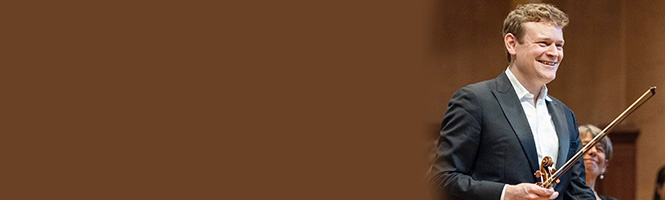


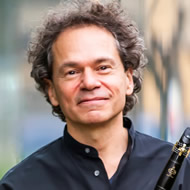
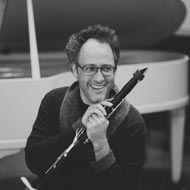
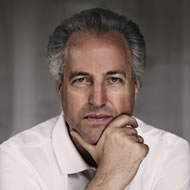
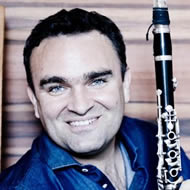
Paul Meyer is one of the world's most outstanding clarinetists and regularly performs with major orchestras in Europe, the USA, the Far East, and Australia. In recent years, Paul Meyer has also increasingly made a name for himself as a conductor, so that his conducting activities now occupy an equally important place in his artistic output alongside his clarinet playing.
Classicpoint.ch: As a young, celebrated prizewinner of various competitions, you met the legendary Benny Goodman. How important was Benny Goodman to you during this period?
I was 19 years old when I gave the prizewinner's concert in New York. At the time, I didn't know that Benny Goodman was in the audience. The next day, he called me and said that he had enjoyed the concert very much. He invited me to play with him. I then met with him, and we talked and played together a lot. That was very interesting and instructive for me. Shortly afterward, I also had the opportunity to play with other great artists, such as Jean-Pierre Rampal and Mstislav Rostropovich.
Luciano Berio, Krzysztof Penderecki, Gerd Kuhrs, and others composed clarinet concertos for you. Did you have any influence on the compositions of these works?
There are composers who have extensive experience with the clarinet and know how to utilize it to its full potential. Others are less familiar with the instrument. However, composers always have a specific sound in mind, tailored to the artist to whom they are dedicating the work. In my case, my virtuosity was usually the deciding factor, so composers wrote highly virtuosic pieces for me.
When I receive the score, I naturally have to study the piece first. This is followed by a phase of active exchange with the composer, whether the composer conducts or accompanies me on the piano. During this collaborative rehearsal phase, adjustments are usually possible, allowing me, as the performer, to intervene and suggest changes. This might involve aspects such as technique or dynamics, particularly the balance between the orchestra and the soloist. During this phase, the composer also assesses how the performer has interpreted the piece and may adjust the score and instructions to ensure their vision is realized as accurately as possible. This is a very interesting process that I love, both as a conductor and as a clarinetist.
Which composer would you like to hear write another clarinet concerto for?
I would love a concerto by Henri Dutilleux. Henri Dutilleux was approached about writing a clarinet concerto in his early years, but he wasn't willing at the time. He declined. Later, when he heard me perform the Mozart Clarinet Concerto, he came to me and said that he would very much like to compose a concerto for me, but he had already declined another clarinetist and therefore couldn't do it. It's a great pity that it didn't work out back then. However, there are many other projects currently underway, and I'm very much looking forward to the new works that are in the making.
These days, you conduct as much as you play the clarinet. How did you get started with conducting?
Even as a child, I was always fascinated by conducting and would think about which tempo I would choose and which parts I would emphasize. Even though I was learning the clarinet, I already knew back then that I wanted to be a conductor one day. That's why I took an orchestral position, to learn the repertoire and the perspective of an orchestral musician. At 22, I resigned from the Paris Opera Orchestra and seized the opportunity to conduct as John Carew's assistant. That's how it all began. In the past, however, it was much more complicated to launch a solo career alongside a conducting career. Today, on the contrary, orchestra directors consider it an advantage. Orchestral musicians also appreciate my experience as both a soloist and orchestral musician when I conduct them.
Has conducting also changed your clarinet playing, and if so, how?
I've conducted all the wind concertos, for example. You learn an incredible amount from that, both for your own playing as a soloist and in chamber music. You simply understand the music and its forms much better.
When you perform as a clarinet soloist with an orchestra, has the collaboration with the conductors also changed since you started conducting yourself?
Yes, you understand better what the conductor wants. These days, you have incredibly little time with an orchestra during rehearsals. With my experience, I can sense much more quickly what's needed and what the conductor envisions.
You recently recorded all of Spohr's clarinet concertos. What fascinates you about this composer?
Spohr was the most famous musician in Europe in his time. He was a genius and a star. I wanted to bring this wonderful music back into the spotlight. It's important to me that not only Mendelssohn, Beethoven, Mozart, etc., are played. For me, working on these pieces was very interesting, and it was also a lot of fun.
Do you have any further projects planned?
There are various recordings, for example, with clarinet/accordion or the complete Weber concertos. In the future, I would like to dedicate myself to the Viennese Classical repertoire with a chamber orchestra, and of course, I'm interested in projects involving contemporary music.
Interview by Florian Schär | Classicpoint.ch | September 1, 2015
Photo: Vandoren - Edith Held




























































Do you want to attract more visitors to your concerts?
Find out more about the possibilities this portal offers.
With a concert search subscription, you will receive an email for your selected cantons/federal states as soon as a new concert is listed there. You can unsubscribe from the service at any time.
