

interview
Interview with Julia Lezhneva
August 31, 2026
“Analytical work allows for emotional freedom, while emotional discoveries…”




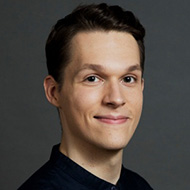
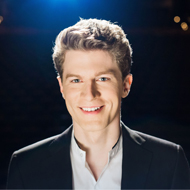
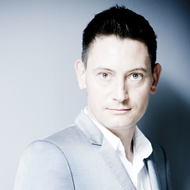
Lukas Sternath (born 2001 in Vienna) is an Austrian pianist and one of the most promising young artists of his generation. He gained his first international experience as a member of the Vienna Boys' Choir. He studied piano in Vienna and Hanover with renowned teachers. He achieved international recognition by winning the ARD Music Competition in 2022. Since then, he has performed regularly in major concert halls across Europe and has received numerous awards, including the ECHO Rising Star Award and the BBC New Generation Artist Award.
Your interpretations often seem very structured yet free—how do you balance analytical thinking and intuition when working on a piece?
I don't see that as a contradiction. Of course, you prepare, analyze, and question. But in the moment of the concert, you need the freedom to trust your own intuition and to take a different emotional or interpretative direction. Both complement each other and form a structure that is constantly being recreated in the moment of playing.
Is there a work that completely baffled you upon first hearing it, one that you had to work through to understand?
Rachmaninoff's Fourth Piano Concerto. On first hearing it, I was baffled and didn't know what to make of it. It wasn't love at first sight. But over time, the work became increasingly close to me, almost physically tangible. It developed into a key piece for me – I played it in the final of the ARD Competition and at my debut in the Vienna Musikverein. Precisely because the connection wasn't immediate, the relationship became all the more intense.
What role does silence play for you in music—especially in transitions or after climaxes?
Silence is essential. The moment before the first note, when the hall falls silent, is particularly intense, as is the fading away of a piece. Silence can be very powerful, almost shocking. In Schubert's late works, for example, there are often breaks where the music transitions into silence or ends abruptly. These moments shape our perception of what came before and what followed. Silence is never the same—it changes depending on the context.
How do you decide when to adhere strictly to the score and when to deliberately deviate from it?
Generally, I follow the score closely and take the composer's instructions very seriously. At the same time, experience—for example, with Rachmaninoff's own recordings or in discussions with contemporary composers—shows that interpretation is a dynamic process. Composers, too, are constantly evolving their ideas. Deviations are possible, but should always be justified and based on a sound understanding.
Which composers do you consider more "intellectual"—and which more "emotional"?
I think this distinction is artificial. Music can be both at the same time. Bach is a good example: highly structured and at the same time profoundly emotional. It is precisely the thoughtful aspects that can unleash a powerful emotional impact. The crucial factor is the diversity of expressive levels.
How do you put together your programs—more through a dramatic lens or out of personal curiosity?
Both play a role. The starting point is always a strong inner need to perform a work. From this emerges a program that is well-thought-out and has a common thread. It's important how the pieces interact and create a sense of arc. This is how each evening becomes a coherent journey.
Is there a work that you're currently particularly interested in, but which you wouldn't yet perform publicly?
If a work interests me, I want to perform it as soon as possible. Of course, some things take time and planning, especially large works. But it's precisely through playing them that they grow. You put them aside later and return with new experiences. This process of growing together is important to me.
Was there a concert where something completely unexpected happened and influenced your interpretation?
I can't think of any specific extreme examples, but something unexpected actually happens at every concert: the atmosphere, your own mood, or the audience's response. None of that can be planned, and it makes every performance unique and vibrant.
What kind of music do you listen to privately that one might not expect?
I listen to a wide variety of music and don't recognize any genre boundaries. For me, the crucial factors are quality and palpable passion. When music is made with dedication, it has a touching and inspiring effect – regardless of the style.
What passions do you pursue besides music?
Philosophy is an important complement for me—a way to reflect on my love of life. My fellow human beings and the time I spend with them are equally important to me. Humor also plays a big role, for example through late-night shows. Music, laughter, and interpersonal relationships are central sources of my energy.
Interview by Florian Schär | Classicpoint.net | May 1, 2026
Image Copyright: Daniel Delang
November 1, 2026 - Samuel Hasselhorn (baritone), Lukas Sternath (piano)
November 3, 2026 - Lukas Sternath (piano)
November 7, 2026 - 75th Anniversary of the ARD Music Competition
November 16, 2026 - Lukas Sternath (piano), City of Birmingham Symphony Orchestra, Kazuki Yamada (conductor)
November 18, 2026 - Lukas Sternath (piano), City of Birmingham Symphony Orchestra, Kazuki Yamada (conductor)
February 3, 2027 - Tugan Sokhiev & Lukas Sternath
Tugan Sokhiev & Lukas Sternath
12, 2027 - Lukas Sternath (piano)
March 7, 2027 - Lukas Sternath (piano)
April 27, 2027 - Lukas Sternath (piano), Cuarteto Casals
May 2nd, 2027 - Lukas Sternath (piano), Philharmonia Orchestra, Santtu-Matias Rouvali (conductor)
May 3rd, 2027 - Lukas Sternath (piano), Philharmonia Orchestra, Santtu-Matias Rouvali (conductor)
May 5th, 2027 - Lukas Sternath (piano) May
20th, 2027 - Lukas Sternath (piano)
June 25, 2027 - Lukas Sternath (piano)





























































Do you want to attract more visitors to your concerts?
Find out more about the possibilities this portal offers.
With a concert search subscription, you will receive an email for your selected cantons/federal states as soon as a new concert is listed there. You can unsubscribe from the service at any time.
