
interview
Interview with Elena Stikhina
June 1, 2026
“The Zurich Opera House has a very special meaning for me.” Elena Stikhina is…


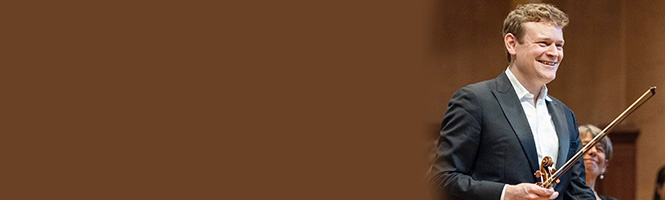


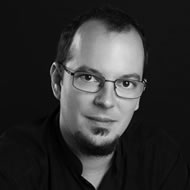
While the Stuttgarter Zeitung highlights the "fascinating and enormous expressiveness" in Moritz Winkelmann's piano playing, the Hildesheimer Zeitung describes him as a "pianistic personality" and an "exceptional artist." Moritz Winkelmann performs concerts all over the world and is a prize winner of the Beethoven Competition in Bonn. He has performed with, among others, Itzhak Perlman, Stefan Blunier, Helmut Lachenmann, and Wolfram Christ, and has appeared as a soloist with the Beethoven Orchestra Bonn, the Cologne Chamber Orchestra, the Kurpfalz Chamber Orchestra, and the New York Classical Players. Regarding his performance of Franz Liszt's Piano Concerto No. 2 with the Staatstheater Niedersachsen, the Hildesheimer Allgemeine Zeitung wrote: "The musical intensity of this exceptional artist allows the composition to mature into a sonic thriller of the highest order."
Over the past few years, Moritz Winkelmann earned a special reputation for his Beethoven interpretations. In February 2022, his recording of the last three sonatas by Ludwig van Beethoven, as well as Helmut Lachenmann's Wiegenmusik (1963) and Marche Fatale (2017), will be released by Hänssler Classic.
His first prize at the Richard Laugs Competition in Mannheim was followed by his debut at the Rheingau Music Festival. International engagements have taken him to Carnegie Hall in New York, the Beethovenhalle in Bonn, the Slovak Philharmonic in Bratislava, the Rosengarten in Mannheim, the Liederhalle in Stuttgart, and the Beethoven House in Bonn, as well as to the Schwetzingen Festival, the Schleswig-Holstein Music Festival, the Ravinia Festival in Chicago, and Music@Menlo in California. Concert tours have taken him not only throughout Europe and the USA, but also regularly to China and Japan. Radio recordings have been made in collaboration with SWR, WDR, DR Copenhagen, WBJC Baltimore Classical Radio, and WFMT Chicago, and television broadcasts have appeared on ZDF. Following
his studies with his grandfather, Professor Gerhard Wilhelm, he completed his foundational studies with Professor Michael Hauber at the Mannheim University of Music and Performing Arts. Moritz Winkelmann at the Peabody Conservatory of Music in Baltimore with Leon Fleisher as a scholarship recipient of the DAAD and the German National Academic Foundation, graduating with distinction. Ferenc Rados and Marisa Somma provided particularly valuable support for his artistic development.
In 2021, Moritz Winkelmann a professorship in piano at the Mannheim University of Music and Performing Arts. Previously, he taught at the Stuttgart University of Music and Performing Arts and the Bern Conservatory. He gives international masterclasses and has served as a jury member for international competitions. He was a scholarship recipient of the Baden-Württemberg Arts Foundation, is the artistic director of Klassik im Klösterle in Weil der Stadt, and a recipient of the Mozart Prize from the Stuttgart Mozart Society.
You will be releasing a new recording featuring Beethoven, Lachenmann's lullaby, and Marche Fatale. How did you come up with this program?
Both are composers I have been working with for many years. I played Helmut Lachenmann's lullaby as a teenager. I also met Helmut at the same time. It was at my grandfather's house, where Helmut sang in the choir as a young man. The lullaby was the first atonal piece I learned. The notation alone was a challenge. But over the years, the piece has grown very dear to me. Say what you will about contemporary music—I find the lullaby beautiful. And Beethoven has been with me, it seems, forever. His music draws me in a very powerful way. That's why I wanted to play precisely these two composers on my debut album.
The way the works are arranged on the album creates a listening context that makes familiar music newly accessible. None of the works are influenced by the others; their contours become clearer through their proximity. And yet, a connecting atmosphere emerges, which I find very appealing.
You teach at the music academies in Stuttgart, Bern, and now also in Mannheim. Can you describe your teaching style?
I taught at the Stuttgart University of Music and the Bern Conservatory of Music until the end of the summer semester of 2021. I relinquished both positions for the winter semester of 2021/22 to take up a professorship at the Mannheim University of Music and Performing Arts.
I strive to have as many teaching methods at my disposal as possible, which I can use to support my young colleagues. I want to adapt my teaching to the individual student I'm working with. Some students benefit more from an "I believe in you," while others are truly inspired by a "Convince me." Recognizing this is crucial for providing optimal support. Everyone is different. That's part of what makes teaching so enjoyable.
Aren't there actually too many musicians being trained these days?
I don't think so. Of course, there are more musicians than positions in orchestras and at universities. But these aren't the only career paths open to musicians. Many of them work freelance. It's a profession that, depending on its structure and personal preferences, can be composed of many elements. For example, a combination of private lessons, various engagements, and regular work as an accompanist. This can be very fulfilling and socially relevant in many ways. On the one hand, directly, for example, through instrumental lessons for children and young people or through performances at weddings and funerals. But also because musicians keep one of the greatest cultural heritages of our civilization alive, embody it, and pass it on.
Are you also involved in introducing classical music to children?
Yes, for precisely this reason. We know that children who don't come into contact with classical music through their families often never have access to this world. Yet it can give people so much strength and moments of happiness. It's a shame when someone is denied this. And it's also about the future and the morals of our future society. Before I received the offer from Mannheim, I worked extensively with children and young people in my teaching. Knowing that it's not just about playing the scale evenly, but also about being able to change an entire person's life through music, inspired me and gave me the strength to take on this demanding task. In my concert series "Classics at the Monastery" in Weil der Stadt, we invite children and young people from local schools to a presentation with the artists at the monastery in conjunction with the concerts. There they get to know the musicians, learn that it's a real profession, listen to music – and of course, can ask as many questions as they like.
You're also a jury member at international competitions. What do you pay most attention to there?
Beethoven already told us what we should look for: "To play a wrong note is insignificant. To play without passion is unforgivable." I pay attention to the artistic expression. If it moves me, that's an extremely strong argument. I imagine where the journey could lead for the participant. How passionate are they about the music, how strong is the need to imbue the notes with meaning and to play expressively? The profession of a musician isn't exactly easy. The challenges are countless, both internal and external. By that, I mean on the one hand the artistic engagement with the music and oneself, and on the other hand the Herculean effort of establishing oneself professionally. How passionate a musician is about their work has a strong influence on how far they can develop. Ultimately, however, a competition naturally creates an overall picture that I allow to affect me as a person and as an artist. I try not to be a juror, but a colleague. There's plenty to criticize. It doesn't make me happy to notice all the flaws and devalue the performance accordingly. But I'm still relatively new to being a juror. So far, I haven't had the experience of having to choose between two artists where it's practically impossible. I hope that never happens to me. That would be stressful.
Which composers and musical periods do you like best?
As a player, I'm currently most at home in the Classical and German Romantic periods. That's my focus, but of course, it's not a limitation. As a listener, all music gives me something; I love the drive of Baroque music, I'm overwhelmed by Mahler, swoon over Rachmaninoff, and have strong feelings about Alban Berg. And hip-hop. Do
you compose yourself?
I don't compose. The most I do is create arrangements, which I sometimes play as encores at piano recitals. However, I often try to see the works through the composer's eyes. I believe that you play pieces differently when you become aware of the abundance of possibilities available to the composer; namely, all the notes that exist. Sometimes we musicians look at the score as if it were an act of God. But Schumann, for example, had to choose each individual note, just as a poet has to choose each syllable. And from that, he chose a combination and sequence that can move us to tears or make us jump for joy. When I, as a performer, am aware of this, then my way of making music regains a touch of freedom that allows it to breathe.
What would have become of you if things hadn't worked out with the piano?
That it hadn't worked out wasn't an option. I never even asked myself that question. I probably owe that to a certain youthful enthusiasm. I like to think back to the time when I wasn't yet the pianist Moritz Winkelmann , but simply Moritz Winkelmann. Someone for whom things could still go in any direction. I don't know what would have become of me. Perhaps a pilot? I'm fascinated by aviation and large airplanes. Certainly something that would have meant freedom to me in some form. But I'm actually quite sure I couldn't have done better.
What are your personal visions? What do you wish for, and what do you absolutely want to achieve?
I want to record the Beethoven piano concertos and learn Bach's Goldberg Variations with plenty of time and peace. Otherwise, I always heed the old saying, "The journey is the destination." Because, of course, I constantly strive for artistic development. But that will remain the case until the end. So, the point will never be reached. If I saw happiness only when that goal is achieved, I would probably have a very sad life. But that's not the case at all. I consider myself very fortunate and am grateful to be able to live a fulfilling life as a musician.
What passions do you have besides music?
I enjoy being on the go—I like sitting on airplanes, feel comfortable on the ICE train, and find long car journeys restorative. My thoughts are free when I'm traveling. I'll never tire of seeing a sunrise from an airplane. Actually, I approach most things in life with a certain passion.
Interview by Florian Schär | Classicpoint.net | December 23, 2021





























































Do you want to attract more visitors to your concerts?
Find out more about the possibilities this portal offers.
With a concert search subscription, you will receive an email for your selected cantons/federal states as soon as a new concert is listed there. You can unsubscribe from the service at any time.
