

interview
Interview with Julia Lezhneva
August 31, 2026
“Analytical work allows for emotional freedom, while emotional discoveries…”


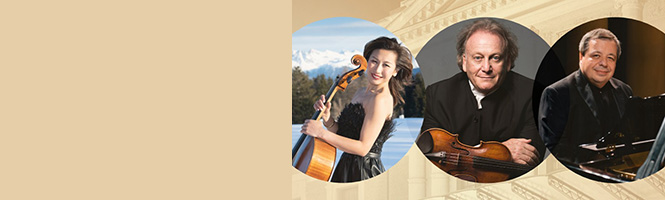




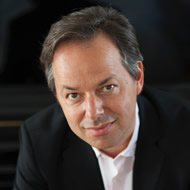
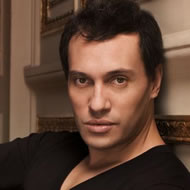
Since winning the ARD Competition and the Grand Prix Emanuel Feuermann, Danjulo Ishizaka has been considered one of the most outstanding cellists of his generation. His distinctive tone and honest musical language demonstrate great maturity and a highly recognizable style. Danjulo Ishizaka is a professor at the Carl Maria von Weber University of Music in Dresden.
Your mother is German, your father Japanese. You grew up in Germany. What about you is Japanese?
Of course, everyone has different ideas about what is Japanese. I certainly have many traits that could be described as Japanese – there are definitely things I inherited directly from my father. For example, the will to see something through to the end when you've set yourself a goal, and to do so with a certain discipline and determination. Or certain characteristics in interpersonal interactions, such as not using the word "no" very often or directly – in Japan, the use of this short but potentially very strong word is hardly common in many situations. Whether my appearance is Japanese is for everyone to decide for themselves – in Europe, I'm usually mistaken for the Japanese person, and in Japan, for the European person…
You started cello lessons at the age of four. What are your memories of those early days? How did it all come about?
Ever since I was able to think and consciously perceive things, music has been one of the things I've always heard. On the one hand, it was primarily my older sister, who was already playing piano and practicing daily when I was born, and on the other hand, it was recordings by a wide variety of artists and orchestras, but especially chamber music, which were played at every possible opportunity. Incidentally, the Bach Suites, played by Pablo Casals, were also part of that. In short, music was always omnipresent in my childhood. So it seemed only logical that I also started learning piano myself at a very young age, taught by my mother. I have a vivid memory from that time: My mother trained us to have perfect pitch using a "guess the notes" game. I can still clearly remember the small footstool on which I sat behind the piano during that time. Soon my mother decided that there should be a cellist in the family, and I naturally found it exciting to play something new and approached it with corresponding enthusiasm. It quickly became apparent that my talent was perfectly suited to the cello.
You studied with Boris Pergamenschikow in Berlin until his death in 2004. Can you tell us about your time as a student?
The time with Boris Pergamenschikow was the most important and formative period of my studies. He was not only a great role model for me, a brilliant teacher, and later, on several occasions, a musical partner, but he also became a confidant, a true friend. I learned from him that will last a lifetime. His teaching style and approach were also intentionally designed to have a holistic impact. He treated his students as equals, like colleagues. His teaching methods were always subtle and often characterized by his very personal sense of humor. His goal was always to expand the student's imagination, broaden their horizons, and foster a more holistic way of thinking.
You also maintained a close working relationship with Mstislav Rostropovich. What memories do you have of this figure?
He was, of course, the ultimate mentor to all cellists for me as well. To be able to play under his direction and receive lessons from him was like meeting a living legend. There was, of course, much that impressed me about him, such as his captivating personality and his fearlessness, with which he could win people over not only on stage but also in personal relationships. Furthermore, he possessed a seemingly inexhaustible energy, which manifested itself, among other things, in his ability to function on an absolute minimum of sleep. He once told me that in his youth, after his father died and his family was left to fend for themselves, he sometimes worked through the night to secure their livelihood. His life was simply so incredibly full, and he accomplished what others might manage in 140 years. But what was particularly impressive was his ability to always follow his instincts and always stand by his own principles.
Classical concerts are finding it increasingly difficult to fill concert halls. What's your take on this problem?
Unfortunately, it's true that there's less and less interest in classical music, especially among younger generations. That's at least my subjective impression, even though I don't have access to statistics from recent decades. In my opinion, the problem is that our society is becoming increasingly consumer-driven, and relationships are becoming less and less meaningful, not only with other people, but many young people are also losing touch with their inner selves. To truly appreciate classical music, you need a willingness to engage with it, to learn, to understand, and to allow the music to have an effect. All of this stands in stark contrast to what defines and shapes large segments of the younger generation. You can't just passively consume classical music; it's usually not "cool" enough. Of course, this also raises questions for us classical musicians about how we can counteract this trend. However, it would not be the right approach to place the responsibility for all of this solely on classical musicians. It's not enough to simply visit a school now and then; it's a societal question about what we want for future generations, how they should grow up, and what the underlying causes of all our current problems are. Among other things, I believe we should make our art and culture more accessible to a broader segment of society through full integration into our current education system, on par with the training of our left, or rational, brain hemisphere.
You are playing the Stradivarius cello "Feuermann," formerly played by the legendary cellist Emanuel Feuermann, and the cello built by Wolfgang Schnabl, previously played by Boris Pergamenschikow. How do the two instruments differ?
The Feuermann is a very small cello; it comes from Stradivari's late period, and he only made two cellos in this format. It is particularly slender. This form was, in a sense, an experiment by Stradivari; he was searching for a shape that better met the growing demands of solo playing. It was quite an adjustment for me, as I had previously played the Stradivarius Lord Aylsfrod, a cello from 1696, from an early period of Stradivari's work, when cellos were very large.
The cello built by Wolfgang Schnabl is an exact replica of the Montagnana Cello ex Konstantin Romanov, made by my teacher Boris Pergamenschikow. In its overall design, it is completely different from the Feuermann. It has rapidly sloping ribs that are also rounded, resulting in a distinctive shape that reminds me of a bell.
The two instruments require entirely different approaches. The Feuermann has a very strong will of its own and cannot be dictated to; it simply wants to sound as it pleases at any given moment, and this can vary considerably depending on the weather conditions. However, one is rewarded with many unique tonal colors and a brilliance almost atypical for a cello, with a wealth of overtones, almost violin-like in character. For certain works, such as Prokofiev's Sinfonia Concertante, I would, however, prefer the Montagnana replica in terms of its character, as it is much better suited to this piece. Furthermore, Wolfgang Schnabl's Montagnana copy is simply a fabulous new instrument. It, too, is very rich in color and possesses tremendous power. It's a luxury to be able to play both instruments; playing them together is incredibly enriching for understanding each other. The Feuermann cello is on loan from the Nippon Music Foundation, and the Schnabl Montagnana copy is on loan from the Kronberg Academy. Do I own another cello of my own? No!
You have won first prizes in major competitions. What do you think is the key to your success?
Of course, the answer depends on how you define success. For me, success primarily means personal success, which isn't necessarily about competing with others, like how many concerts you play with orchestras of a certain "class," or how many competitions you've won. In my opinion, success is about following your own path, doing what you're passionate about and love, and not compromising yourself—always staying true to yourself. In other words, to answer it briefly: success means being yourself. And anyone who genuinely tries to do that knows how difficult it can often be.
The competitions have certainly opened many opportunities for me; they've opened doors, so to speak. But I also quickly realized that you can't rest on your laurels because of competition successes and believe that everything will just fall into your lap—we live in the wrong era for that. These days, one is in high demand not only as an excellent instrumentalist and artist, but also as someone who can express themselves eloquently about music, possesses certain managerial skills, has at least some of the programmatic vision of an artistic director, and is so adept at organizing travel that one could immediately land a job in a travel agency. Perfect computer skills are, of course, mandatory and a given.
You teach as a professor at the Dresden University of Music and regularly give masterclasses. What is important to you in your teaching?
In my teaching, it's important to me that my students find their own musical truth and learn to fuse the intellectual knowledge they acquire about music during their studies with their intuition to create their own unique and personal interpretation—in other words, that they find their own personal musical voice. This naturally requires many instrumental prerequisites, by which I primarily mean the indispensable foundation of technique. Technique, like everything else, can always be refined, but what's important is that students learn to approach life with open senses for everything new and learn to apply newly acquired knowledge to their own lives.
The Dresden University of Music offers an excellent location for the students' training. Dresden is a cultural city of high standing with two outstanding orchestras, an incredible array of cultural events, and a beautifully reconstructed historical city center. The university itself offers an inspiring environment and an outstanding faculty.
Do you have any other interests or passions besides music?
There's something I've been doing longer than playing music, and I'm passionate about it: skiing. I also love cycling, photography, and I have a deep connection to nature, especially the mountains. Unfortunately, my schedule doesn't allow as much time for all of this as I'd like. However, there is one activity I try to integrate into my daily life in a natural way—something I find almost as creative as playing music: cooking. Without a recipe book, of course.
What are your plans and visions for the future?
There are, of course, many musical projects and ideas that I would love to realize. Naturally, that won't be possible, but a major concern of mine is to bring composers and their works more into the spotlight for listeners, as I believe they are far too rarely heard. This includes, for example, Zoltán Kodály, to whom I am currently dedicating a CD recording, which is scheduled for release this year. Further CDs are in the works. A truly wonderful vision would also be to finally own my own cello, which certainly won't be easy with so much competition from the two loaned instruments I currently play.
Interview by Florian Schär | Classicpoint.net | March 1, 2017
03/07/2027 - Andrej Bielow (violin), Danjulo Ishizaka (cello), Benjamin Moser (piano)
04/08/2027 - Karen Gomyo (violin), Danjulo Ishizaka (cello), Markus Schirmer (piano), Mozarteum Orchestra Salzburg, Dima Slobodeniouk conductor)





























































Do you want to attract more visitors to your concerts?
Find out more about the possibilities this portal offers.
With a concert search subscription, you will receive an email for your selected cantons/federal states as soon as a new concert is listed there. You can unsubscribe from the service at any time.
