
interview
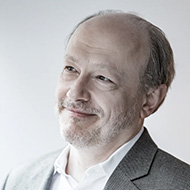
Interview with Marc-André Hamelin
July 31, 2026
“I consider composing an indispensable tool for performing musicians.”…





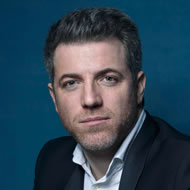
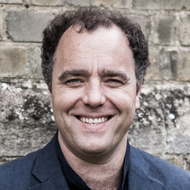
Cédric Pescia, born in Lausanne to Swiss and French parents, won one of the world's most prestigious piano competitions, the Gina Bachauer International Artists Piano Competition in Salt Lake City, USA, in 2002. He performs extensively in Europe, South America, North Africa, China, and the USA. Alongside his solo career, his passion for chamber music leads him to regularly collaborate with renowned partners. He has enjoyed a long-standing artistic partnership with violinist Nurit Stark. He is a founding member and artistic director of the Lausanne chamber music series Ensemble enScène. He also served on the jury of the Clara Haskil Competition in 2005 and 2007. He gives masterclasses in the USA and Europe. In 2012, he was appointed Professor of Piano at the Haute Ecole de Musique de Genève.
Classicpoint.net: Three years after winning one of the world's most prestigious piano competitions, the Gina Bachauer International Artists Piano Competition, you were already a jury member at the Clara Haskil Competition. How did this change of scene feel?
In both cases, I felt like an outsider. The Gina Bachauer Competition was the first international competition I ever participated in. It also remains the only one. There were many pianists there who had already won major competitions. I wasn't so young anymore (26) and lacked self-confidence. All the other candidates played the great Russian virtuoso pieces; I played, among other things, the Goldberg Variations and a Mozart concerto, and I didn't believe I had any chance. The very idea of participating in a competition was foreign to me. I'm not a competitive person by nature, wasn't then, and haven't become one. But I have to say that winning that competition did me a lot of good. Without it, I don't think I would have the same career today.
When I was a jury member at the Haskil Competition, most of my colleagues and fellow contestants didn't take me seriously, and rightly so: too young, too inexperienced. I also didn't quite know how to handle the whole situation, nor the playing of most of the young pianists, which seemed smooth and impersonal to me.
Above all, I hadn't yet grasped that the sole purpose of sitting on a jury (and the reason I do it occasionally) is to help talented musicians, to open doors for them, just as the jury members at the Bachau Competition had done for me.
What do you look for most when judging as a jury member?
I'm interested in pianists who have the ability to communicate with the audience, who can tell a story. It's a subtle blend of fidelity to the work and style, honesty, intelligence, spontaneity, and generosity. This naturally requires refined, solid, and versatile dexterity, which shouldn't be seen as an end in itself, but rather as a means of expression.
You are a founding member and artistic director of the Lausanne chamber music series Ensemble enScène. What makes this series special?
It has been taking place in Lausanne for 13 years, in a spoken-word theater run by a brilliant Colombian director named Omar Porras.
I have several goals there:
You are a professor at the Geneva University of Music. What criteria do you use to select your students?
The most important thing is that the student has a good ear. Of course, this can (and must) be trained, but you also need a natural aptitude.
I primarily train future teachers. Very few will find a place on stage. I try to select students in whom I see the ability to convey their knowledge and passion for music. It's not always easy to recognize. Many are still shy at 17 or 18. Over the years, however, I try to develop a feel for it.
The prospective student must also be willing to discover and develop their own personality, must be open to experimentation, diligent... and pleasant to be around.
What do successful pianists need to learn during their studies?
There are so many important points, but I'd like to mention three here:
What were the three most important things you personally learned during your studies?
You recorded Bach's "The Well-Tempered Clavier" at the end of September. Can you describe the process of engaging with this work leading up to the recording?
I learned the work as a teenager. At 18, I performed both volumes publicly for the first time, and later I played excerpts from them regularly. Then I didn't play it again for about 10 years. I started playing it again when I began teaching (2012). It's the work I teach most often. I learn a great deal from it. I performed both volumes several times in concert last season. At 41, it felt like the right time for me to record it.
What are your next projects?
You are still young. What are your long-term goals?
What interests and hobbies do you have besides music?
I read a lot; constant travel makes it possible.
I'm very interested in Central European literature, especially Hungarian literature. Otherwise, my great literary discovery of the year is the brilliant Chilean writer Roberto Bolaño.
I also really enjoy watching films (I particularly like Bergman, Antonioni, Godard, and David Lynch).
Interview by Florian Schär | Classicpoint.net | December 3, 2018
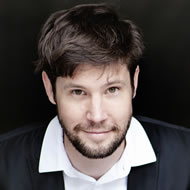
© Image: William Beaucardet






























































Do you want to attract more visitors to your concerts?
Find out more about the possibilities this portal offers.
With a concert search subscription, you will receive an email for your selected cantons/federal states as soon as a new concert is listed there. You can unsubscribe from the service at any time.
