interview
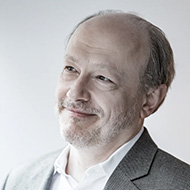
Interview with Marc-André Hamelin
July 31, 2026
“I consider composing an indispensable tool for performing musicians.”…





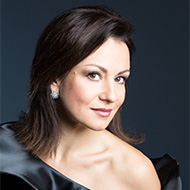
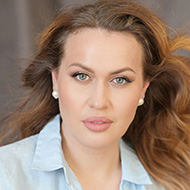
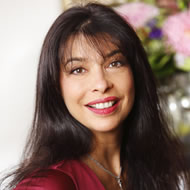
With a voice described by the New York Times as "a shimmering soprano of attractive size" with "brightness", "florality and warmth", Irina Lungu is one of today's leading opera artists.
Irina Lungu completed her vocal studies at the Voronezh State Conservatory under the tutelage of baritone Mikhail Podkopaev. After winning several major international competitions, she was selected by Maestro Riccardo Muti, while still a student at the Accademia della Scala, for the opening production of the 2003/2004 season at La Scala as Anaï in Rossini's Moïse et Pharaon.
Since then, she has performed numerous roles on this prestigious stage: Adina in L'elisir d'amore and the title role in Maria Stuarda, Marguerite in Faust, Nannetta in Falstaff, Oksana in Čerevički, the title role in Sancta Susanna, and Violetta in La traviata, under the musical direction of Lorin Maazel and in a production directed by Liliana Cavani. In 2008, she returned in the same production, and in 2013, she sang the role in Dmitri Tcherniakov's new production, conducted by Daniele Gatti.
Ms. Lungu has sung with some of the world's greatest conductors, including Riccardo Muti, Lorin Maazel, Daniele Gatti, Michel Plasson, Daniel Oren, Gianandrea Nosea, Nicola Luisotti, Daniel Harding, Gustavo Dudamel, and Stéphane Denève, and has worked with directors such as Franco Zeffirelli, Luca Ronconi, Robert Carsen, Laurent Pelly, Pierluigi Pizzi, Deborah Warner, Claus Guth, Eimuntas Nekrošius, and Liliana Cavani.
When and why did you decide to make singing your profession?
I always say that I didn't come to sing, singing came to me. Actually, I've always made music. When I was six years old, I started learning piano. Then choral conducting, and then I met my singing teacher, who introduced me to opera and operatic singing. So it wasn't really a decision on my part, but rather things happened in my life that eventually allowed me to pursue this profession. It was both a personal effort and a bit of fate that led me to become an opera singer.
As a student at La Scala, you made your debut as Anaï in Moise et Pharaon under Riccardo Muti. How did that come about?
In 2003, I won a scholarship to the Academy of La Scala in Milan. I began my studies in September 2003. Moïse et Pharaon was scheduled for the season opening at La Scala that year, and they were looking for a soprano to replace Barbara Frittoli. They sent me the score, and I auditioned for Maestro Muti, who selected me. It was partly a stroke of luck, but also due to my willingness to learn immediately and to give it my all. I have to say that these things are easier when you're young than when you already have a career. It was a fantastic experience that introduced me to this world and immediately raised the bar for me. It was a great challenge, but also a stroke of luck.
How do you take care of your voice?
There are some very important things to consider to protect your voice. The most fundamental is ensuring your voice is technically set up correctly, positioned at the front of the mask, and aligned with your breath. Equally fundamental is constantly working on your voice to maintain this technically correct setup at all times. Without these basics, vocal health is impossible for anyone. The second point is choosing the right repertoire. I've always been very careful, always taking a step back in developing my voice to protect it and avoid rushing things. Another point is the pace of work: sometimes the intervals between projects are very short, but ideally, you should allow yourself breaks and learning periods. Finally, good preparation is also important. Physical health is also crucial, which is why I exercise; I jog. Generally speaking, it's a complex matter because you can't feel comfortable with your voice if you're not mentally and emotionally healthy. You have to find a mental and physical balance. It's a bit like with athletes. Vocal recovery is also important, especially for singers who travel a lot. It's not an easy job, but one that demands a lot of health and mental balance.
Do you sing exclusively in opera or do you also give recitals?
At the beginning of my career, I gave many recitals, but now that's become rare. I dedicate myself more to opera productions, where I can not only sing but also act. That's something that inspires me greatly. I love showcasing my acting skills. But I believe I also have talent as a recital singer. I enjoy listening to recitals by other singers and would be delighted if I could find the time for recitals myself in the future.
What significance does opera hold for you, and what were your first opera experiences as a child?
As a child, I had no experience with opera. I was already 18 when I saw my first opera. It was "La Traviata" in a provincial theater. It wasn't a great experience, and that's one of the reasons why, at the beginning of my career, I wanted to sing anything but "La Traviata," because that experience traumatized me. But as fate would have it, I ended up singing in more than 250 performances of "La Traviata." Perhaps that first opera performance was just a sign from fate, telling me that I had to overcome something I carried within me. In general, I think it's very important to give children the opportunity to come into contact with opera at an early age. After performances, I often meet people, some of them very young, who tell me that they became enthusiastic about opera after seeing a performance with their school class. That's why I also consider education in this context very important, because it gives young people access to this very exclusive and sublime art and broadens their horizons a little.
Which opera roles do you like the most?
I love all the operas I sing, and I think that when a singer embodies a role, it's always an act of love for the character, the music, and the composer. I love them all from the bottom of my heart, every single woman I portray on stage. Of course, there are roles and operas among them that I particularly like. Certainly La Traviata, because without loving it, I wouldn't have been able to interpret it so often in so many different productions. And then there's a role I've only sung in a single run, but which is certainly among the roles that suit me best: Massenet's Manon. Then, of course, there are also operas and roles that I haven't yet sung but in which I would love to debut, such as Norma or Adriana Lecouvreur.
Have you ever had requests from directors that you didn't want to do?
That has happened occasionally, but it wasn't about anything scandalous; it was mainly about stage movements that were too uncomfortable for the singers. But you can always talk about things like that, and a solution can always be found. It's never happened to me that a director insisted on something and said, "It's either this way or not at all." I'm very open and consider myself a very versatile singer; I also enjoy trying my hand at acting. Most of the time, I'm very happy to take on such projects if it's an idea that convinces me. On the other hand, it's also a director's job to convince artists of their ideas. I've never had an unfortunate experience in that regard.
Would you like to direct an opera yourself someday?
Yes, I would love to direct an opera myself. I really want to do that one day because I always have so many ideas. I often see a performance and think I would have done it differently. So, honestly, that's something I'd like to do someday.
How has your voice changed over the course of your career?
When I sing, my voice seems to stay the same. But when I listen to my recordings, I notice that it has changed a little. And others tell me the same thing. It's like when you're with the same person every day. Then it seems as if a child isn't growing. But it is growing, and it's the same with the voice. Because I practice every day, it always sounds the same to me. But I also notice that it has become stronger over the years of my career, richer in overtones and nuances. That's why I now feel ready to tackle a new repertoire.
You regularly post cooking and baking videos on your Instagram profile. What are your favorite recipes?
Yes, I'm passionate about cooking, but above all, I love good food! Cooking relaxes and inspires me. I try to eat well and healthily, no matter where I am, to maintain my eating habits, and to experiment. I believe cooking is also an art, one that requires a lot of precision, just like singing. I especially love Italian cuisine, which I consider the most perfect in the world. I love cooking risotto, especially Milanese risotto.
You're also a passionate skier. Are you more of a leisurely skier or a daredevil?
I love skiing. However, I didn't learn it from a young age, but rather quite late, when my son was little. Partly to spend time together skiing, and partly because I live in Italy. And it would be a shame not to ski when you live in one of the countries with the most beautiful mountains in the world. I've fallen passionately in love with skiing and can't imagine a winter season without it. I'm a very cautious skier myself, but I always have a little devil next to me, always wanting to push me further. And so I have to overcome that, which is wonderful. Otherwise, I'd probably relax too much in my free time, and instead, skiing with my son always presents me with little challenges. Skiing is simply wonderful!
Interview by Florian Schär | Classicpoint.net | July 20, 2021



























































Do you want to attract more visitors to your concerts?
Find out more about the possibilities this portal offers.
With a concert search subscription, you will receive an email for your selected cantons/federal states as soon as a new concert is listed there. You can unsubscribe from the service at any time.
