interview
Interview with Elena Stikhina
June 1, 2026
“The Zurich Opera House has a very special meaning for me.” Elena Stikhina is…


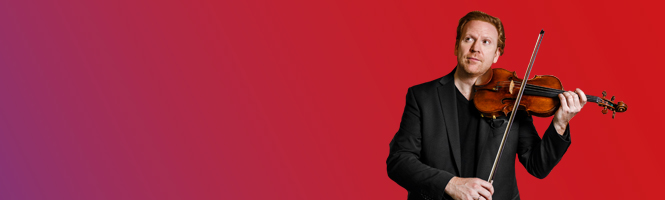
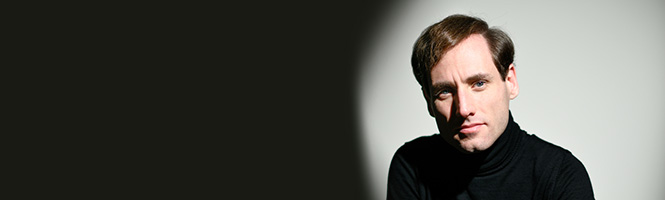

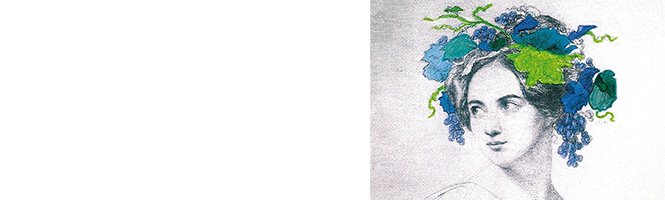


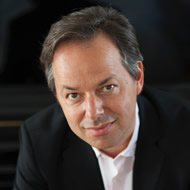
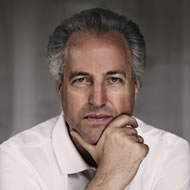
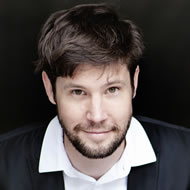
Xavier de Maistre is widely celebrated as the artist who has succeeded in elevating the harp from the realm of delicate, wonderful, yet overly gentle tones into which it is all too readily categorized. As a soloist, Xavier de Maistre performs regularly in the leading concert halls of Europe, Japan, and the USA. Since 2001, Xavier de Maistre has been a professor at the Hamburg University of Music and Theatre.
How did you come to play the harp?
My parents sent me to music school as a boy, and I was so impressed by the harp teacher that I absolutely wanted to learn the harp.
Before studying the harp, you studied political science at the renowned École des Sciences Politiques in Paris and later at the London School of Economics.
I don't come from a family of musicians, and my parents wanted me to learn a "real profession." Although all the teachers repeatedly said it was a waste of time and that I should concentrate fully on studying the harp, my parents didn't believe I would earn enough as a musician to make a living.
When did your parents finally believe you could make a good living as a musician?
That was when I got the position of principal harpist with the Bavarian Radio Symphony Orchestra.
Are you still interested in politics today?
While studying political science, I realized that I couldn't live without music and that I absolutely wanted to dedicate myself to it. Nevertheless, I'm very interested in world events today. I read at least two newspapers every day.
Do you believe it's possible for other harpists to achieve a career of your caliber?
I would be very happy if they did. However, I fear the market is still too small. The harp is a very spectacular instrument. When people get to know the instrument better, they'll want to hear more of it. It's also important that the repertoire is expanded. I wouldn't have been able to have a solo career with the standard repertoire. I've adapted many pieces for the harp and have thus been able to expand the repertoire.
You convinced Krzysztof Penderecki to accept a commission.
Most composers have great respect for the instrument and don't dare to compose for it. My fame helps me, and I want to use it to convince contemporary composers to write new works. Penderecki was also hesitant. I've met with him several times already and will continue to help him understand the instrument and show him the possibilities so that the harp's vast range can be fully explored. Historically, there are few composers who have engaged intensively with the harp, such as Maurice Ravel or Richard Strauss.
The vast majority of harp players are women. Why is that?
It's due to historical reasons. There's always this image from the 18th century of a pretty woman playing the harp in a drawing-room. Even though men were the famous harp soloists in the past, this stereotype is deeply ingrained.
You are a professor in Hamburg and regularly give masterclasses at the Juilliard School in New York, Toho University in Tokyo, and Trinity College London. Through your work as a professor and as a role model as a harpist, do you see a trend of more students choosing the harp as their instrument?
Yes, definitely. Not among the students at the music school, but among those who want to pursue the harp professionally, the trend is noticeable.
Can a harp fill a large hall?
Absolutely, a harp can fill large concert halls. Many soloists are hesitant to play triple piano. I've found it's quite possible. People hold their breath so they can still hear the notes. Afterwards, a fortissimo naturally sounds much louder. The ear adapts to the range. I love those moments when a packed hall suddenly falls silent so that even the softest pianissimo can be heard.
Before your international solo career, you spent over ten years with the Vienna Philharmonic. What was that time like for you?
As a musician, I learned a great deal from the many different magnificent conductors, such as how to shape the broad phrases and lines, and how to work on the pieces in detail. However, I was always very frustrated because, as a harpist, I mainly had to wait around during rehearsals and take breaks. I wanted to play, and I haven't regretted for a second my decision to leave the orchestra and pursue a solo career.
What do you actually do when you're not playing the harp?
I play over a hundred concerts a year and travel a lot. There's hardly any time left for anything else. But I really enjoy doing sports. When possible, I go jogging, rowing, or swimming. As I said, I read several newspapers every day. I also try to spend as much time as possible with my six-year-old daughter.
Interview by Florian Schär | Classicpoint.ch | July 9, 2012
Photo: Felix B. Röde


























































Do you want to attract more visitors to your concerts?
Find out more about the possibilities this portal offers.
With a concert search subscription, you will receive an email for your selected cantons/federal states as soon as a new concert is listed there. You can unsubscribe from the service at any time.
