interview
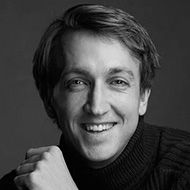
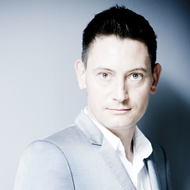
Interview with Fabian Müller
September 30, 2026
"I like to practice at night in the dark, without turning on the light. The silence sounds..."


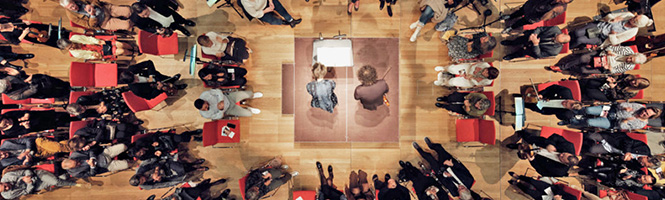
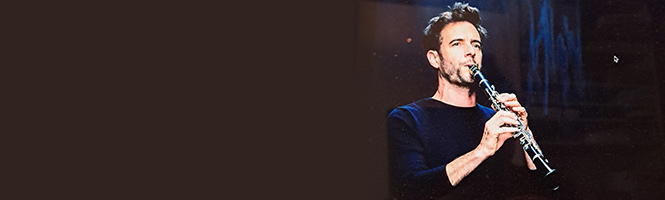
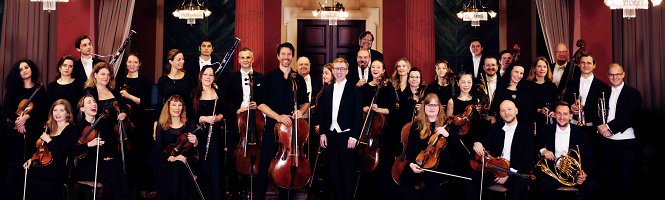
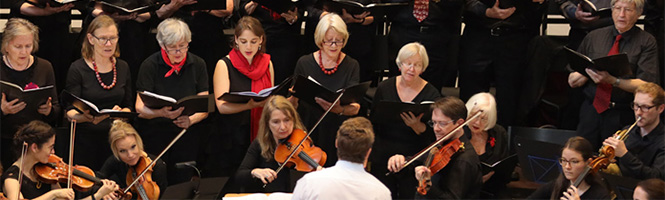

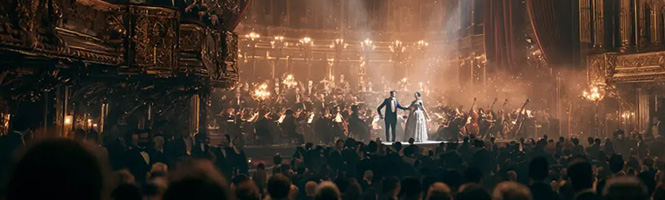


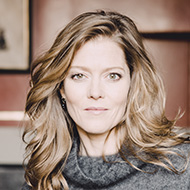
Elisabeth Fuchs is the principal conductor of the Salzburg Philharmonic and maintains a lively collaboration with renowned orchestras such as the Stuttgart Philharmonic. Born in Austria, she studied orchestral conducting, oboe, music education, and mathematics at the Mozarteum University Salzburg, the Paris Lodron University of Salzburg, and the Cologne University of Music. Elisabeth Fuchs loves to push musical boundaries. This has led to special collaborations with Stjepan Hauser (2 cellos), the David Orlowsky Trio, the Klazz Brothers, Rolando Villazón, Iris Berben, and many other artists. Participatory music education is a major focus for her, resulting in, among other things, choral projects with over 300 participants and intensive work with children and young people.
In the following interview, Elisabeth Fuchs talks about her crossover projects, the long-term vision of the Salzburg Philharmonic, and her great role model.
Classicpoint.net: What are your earliest musical memories?
When I was four years old, I remembered the Emperor Waltz, played by my mother on the piano. I also heard "Eine kleine Nachtmusik" once as a child and immediately loved it and sang along. The melody of "Weißt Du wieviel Sternlein stehen" (Do You Know How Many Little Stars There Are) also immediately comes to mind; incidentally, that was my first experience accompanying someone when I was five: me on the recorder, my mother on the piano.
You studied oboe before taking conducting lessons. Was an instrumental career ever a consideration?
A solo career on an instrument was never a serious possibility, no. But to let you in on a little secret: the audacious idea of a singing career briefly crossed my mind, but only very briefly.
You also enjoy pushing musical boundaries. Can you tell us about your performance and acrobatic projects?
In life and in all my projects, I seek encounters with amazing people and artists. I'm interested in what they do, what motivates them, where we have similarities, and where we differ. Therefore, it's only logical for me to break down the boundaries between genres. Besides music and sports, I've always found other disciplines like dance and acrobatics, directing, acting and literature, or architecture, visual arts, and film inspiring. I'm a curious person, but of course, life is too short to grasp all the questions of religion, psychology, world history and politics, or physics in their entirety.
I use my time as best I can, and that's also one reason why there are many crossover projects in my artistic work. I love complexity and diversity when it has depth. It's all or nothing. In 2018, we rented an arena and invited acrobats and BMX riders to join us on stage; it was a huge success, a real next level. In 2019, we explored a new dimension with actor Philipp Hochmair and his "Jedermann reloaded," creating a symphonic version. Yes, we are bold and love to experiment. We're lucky because our audience is enthusiastic about it.
You want to share music by involving people. Could you tell us about your projects in this regard?
Music is a great source of inspiration for me. I want to pass this on to my audience, and especially to young people. We design our children's festivals and our concerts for students and apprentices in a creative, audience-oriented, and sustainable way. We present classical music in an age-appropriate and engaging manner. Open ears are curious, and participation is a natural approach for them to understand music.
In short, there are two aspects of participation in my projects. One is participation during a concert, such as our educational concerts, where there are interactive parts for the audience. Singing, dancing, body percussion, playing along – we have had great success with this for many years.
The Salzburg Philharmonic Choir, which I founded, is a very recent addition. It invites enthusiastic choir singers to participate in choir-orchestra projects. The response has been tremendous. For example, we had over 400 singers on stage for Carmina Burana at the Salzburg Felsenreitschule; for operas, there are 250 singers, and for Beethoven's Ninth, over 350. I think there should be much more singing together overall.
You had several conducting teachers. From whom did you learn the most?
I think every teacher taught me a great deal. Without encountering great role models, you learn nothing about yourself or your chosen profession. I wish for everyone that they meet the right mentors in their lives. For me, learning has never stopped; it's a continuous process. That's wonderful!
One of my greatest role models is my mother. She was a restaurateur and head chef. I learned what management means from her, helping out in the kitchen and the restaurant. That, and her exemplary will to persevere, has shaped and enriched my life.
Can you describe the sound ideal you strive for with your orchestra?
For me, a sound ideal is an affirmation of the whole. When EVERYONE shares a common breath, a common phrase, and a common vision of sound. And when everyone brings out the full spectrum of that sound, from "deeply sad" to "exultantly jubilant." As nuanced as possible. This applies to life and to music.
My orchestra, the Salzburg Philharmonic, is unbureaucratic and open. We work with flexible structures, support young musicians, and love both: classical and crossover music. A sound ideal, in a figurative sense, also occurs when the atmosphere in the hall is just right, between myself, the musicians, and the audience.
You're still young, what goals have you set for the future?
My goal in life has always been to seize the opportunities that arise and suit me. That's how I want to proceed, hoping that I won't run out of good ideas. Perhaps my goals are my visions. If so, a dedicated building for my orchestra here in Salzburg would be a major goal, for rehearsals, small concerts, and workshops.
What interests you besides music?
For me, there is no "besides" music, because I see my life as a constant flow. Music plays a major role in every fiber of my being. But if you ask me what else is important to me, it's people. Of course, my family, my children, and my friends.
Interview by Florian Schär | Classicpoint.net | March 2, 2020
Photo: © Erika Mayer
October 25, 2026 - Würth Philharmonic - Up Close! Vol. 4
November 29, 2026 - Advent Concert
March 7, 2027 - Prokofiev: Romeo and Juliet, Op. 64



























































Do you want to attract more visitors to your concerts?
Find out more about the possibilities this portal offers.
With a concert search subscription, you will receive an email for your selected cantons/federal states as soon as a new concert is listed there. You can unsubscribe from the service at any time.
