
interview
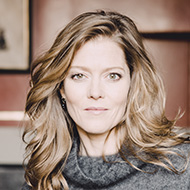
Interview with Barbara Hannigan
July 1, 2026
"I rediscover every piece I sing, again and again, no matter how often I've already sung it..."




Maestro Yu Long is considered the most influential figure in the classical music scene in China. The Chinese conductor, with an established international reputation, is the founder and artistic director of the Beijing Music Festival, artistic director of the China Philharmonic Orchestra, music director of the Shanghai and Guangzhou Symphony Orchestras, deputy director of the MISA Shanghai Summer Festival, and principal guest conductor of the Hong Kong Philharmonic Orchestra.
You are considered the most influential person in the classical music scene in China. Where do you see the greatest potential in the classical music scene in China?
After turning 50, I became even more focused on passing on music from my generation to the next. The enthusiasm for music in China offers a great platform for young artists. I hope that China's resources can help shape the musical history of the world. With 60-70 orchestras and around 50 million children learning an instrument, we have a lot to share. Even if not all of these children become great soloists, I hope that China will educate the next generation with a love for classical music. This holds enormous potential.
Are there significant differences within China?
Classical music concerts and training are still a work in progress in China. Because of the Cultural Revolution, everything is still new. Some of our major orchestras, the China Philharmonic, the Shanghai Symphony Orchestra, the Guangzhou Symphony Orchestra, and others, are on par with the best in the world. But some of our provincial cities are only just learning how orchestras function.
What can the European classical music scene learn from China?
The Chinese people have an incredible appetite and great enthusiasm for classical music. With the long tradition of the European classical music scene, I think it can be easy to forget, for example, the excitement and resonance of hearing a Beethoven symphony for the first time or discovering Shostakovich. Most Europeans can't even imagine what it was like when this music was new to them. But many Chinese of my generation can still clearly remember when we first heard Brahms or Bach. I hope we can share that sense of wonder.
Looking back over the last 20 years, what have been the biggest changes in the classical music scene in China?
It's difficult to single things out because almost everything in the Chinese classical music scene has changed dramatically in the last 20 years. I founded the Beijing Music Festival exactly 20 years ago. In October, we'll be celebrating its 20th anniversary. This festival is a good example of this spectacular transformation. When we founded it, we wondered whether such a large music festival in China was even viable. But it not only became one of the most important classical music festivals in Asia, but also developed into a critically acclaimed event worldwide. The festival premiered some magnificent works and attracted the best international soloists and conductors.
If you compare the leading orchestras in China with the leading orchestras in Europe, what are the differences?
The differences are diminishing. My generation was the first to study abroad. After studying at the Shanghai Conservatory, I continued my studies at the university in Berlin. There, a new world of practice and music opened up to me. Now, many Chinese musicians study all over the world and then return to the orchestras here. Our top orchestras have developed to the point where they are comparable to the best orchestras in Europe.
What characterizes the audiences at classical concerts in China?
When people from Europe or America attend our concerts, they notice that the audience is very young. People here are actively engaged in learning new things.
What are your upcoming projects?
The 20th anniversary of the Beijing Music Festival will be a huge project for me. It's truly a dream come true, because through this festival China has been able to experience so many new things: the return of Isaac Stern, the first commissioned composition (Philip Glass's Cello Concerto), the premiere of Wagner's "Der Ring des Nibelungen" as a milestone, the first church performance of a Mozart Requiem. The list goes on and on. It will be a tremendous celebration. I'm touched by the immense support we've received.
What are your interests outside of music?
I love exploring the world and am happy that my work takes me to fascinating places all over the globe. When I'm in a new place, I try to find time to try the food, see everything, and learn.
Interview by Florian Schär | Classicpoint.net | August 2, 2017




























































Do you want to attract more visitors to your concerts?
Find out more about the possibilities this portal offers.
With a concert search subscription, you will receive an email for your selected cantons/federal states as soon as a new concert is listed there. You can unsubscribe from the service at any time.
