interview
Interview with Marc-André Hamelin
July 31, 2026
“I consider composing an indispensable tool for performing musicians.”…




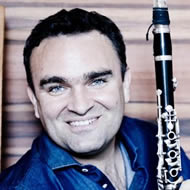
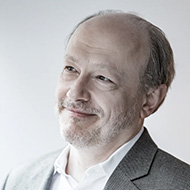
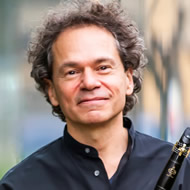
Jörg Widmann is one of the most exciting and versatile artists of his generation. He currently holds the Creative Chair at the Tonhalle Orchestra Zurich, where he serves in various capacities as a composer, soloist, chamber musician, and conductor. He also holds professorships in clarinet and composition at the Freiburg University of Music.
Classicpoint.ch: You are a clarinetist, conductor, and composer. How do these disciplines mutually influence each other?
When I compose, I think as a player. I imagine a sound physically. For me, a flung-out Bartók pizzicato is not abstract but a process involving gravity and force. Or the breath of the wind player—that naturally helps me when composing, when I know what is possible and how it works. As a player, I also constantly discover new things in music that inspire me to compose. This can happen during a rehearsal when I hear a section on its own and a sound fascinates me, or when I hear a new sound from a fellow musician during a warm-up; since my early youth, I've immediately asked about it. New sounds electrify me, but even when no music is playing, music is constantly present within me. Conversely, as a performer, I naturally pay close attention to the compositional structure.
This season you hold the position of Creative Chair with the Tonhalle Orchestra Zurich. What can we expect, and what are your hopes?
I find it to be a wonderfully mutually enriching experience. Especially at the opening concert, where I performed my Elegy for Clarinet and Orchestra with the Tonhalle Orchestra, I was thrilled by the incredibly homogeneous, mellow sound that the orchestra brought to my music. This sound, and the collaboration with the orchestra in rehearsals, was incredibly fulfilling for me. I can sense and hear from the musicians that, through the many performances on tour, my musical language is being understood ever better by the orchestra and is, so to speak, slowly becoming part of their DNA. Chamber music with the Tonhalle Orchestra musicians is also important to me in this collaboration. There are many different pieces of mine that will be performed. I am also very much looking forward to a chamber music performance of Mozart's Clarinet Concerto without a conductor. In addition, I give lectures and masterclasses at the university. I take such a residency very seriously and want to commit to it completely.
How do you feel at the premieres of your works?
I get terribly nervous. When I sit in the audience as the composer, I feel completely vulnerable. Even with the best musicians and conductors acting as midwives, I'm still hypersensitive when it comes to my own pieces. As a musician on stage, I at least have the illusion of being in control. As a composer, I relinquish the piece at the premiere; it's no longer solely mine. It's a very painful and yet wonderful process.
What have been your most rewarding experiences with your world premieres so far?
The recent world premieres of my orchestral works in Paris (the viola concerto) and in Berlin (the piano concerto) with the Berlin Philharmonic were both received so warmly and enthusiastically by the musicians. The rehearsal process was also very rewarding.
Do you still change your compositions during the first rehearsals, do you seek advice from the performers?
Of course, if something obviously isn't working, then I try to find a better solution. That's what's so exciting about it, that I can't foresee everything. I do get annoyed when I've made a mistake. But I also love a good argument and enjoy emotional reactions. I much prefer that to people being indifferent.
How does your compositional process work? How do you come up with ideas, and what is your specific approach?
My problem isn't that I have too few ideas, but rather that I have too many. My task is to organize them and give each piece a different, coherent form. Ideas can come from anywhere; they're simply there and have their place. They are naked, unprotected, even sacred in a way. And then the mind starts working. Doubts creep in. In my piece "Island of the Sirens," for example, the idea is that one only listens and works in the top two octaves, in stratospheric registers. The only thought that keeps growing stronger and louder within me is: when can I first bring out a low sound? How long can I endure without it? These are like poison darts fired inside me, aimed at the original idea. Most of the time, this inhibits me and makes me unhappy, so there's a magnetism away from the worktable because I'm not quite there yet. With every piece, there's also that not always happy, but often painful "point of no return," where I realize the magnetism pulling me towards my worktable becomes unbearably strong. Up until that point, it's my incubation period. This can last weeks, months, even years in the case of my Babylon opera. But once I reach that point, I have to put the idea down on paper. Then I can hardly sleep or do anything else.
In what way are your works political?
Not all of my works are political. My first opera, "The Face in the Mirror," is explicitly political, as is the Babylon opera, which deals with a functioning, multicultural society that has been severely attacked, and which explores the conflict between the Babylonian and Jewish peoples. After three and a half hours of opera, however, something like a possible reconciliation is hinted at.
Or my Mass, which is being performed in Zurich. I almost failed at setting the Gloria. The first line is "Gloria in excelsis Deo," which is all well and good. The second line is "et in terra pax." That is what we humans have not achieved, what we have not accomplished. And we cannot blame any deity or deities for that. We have to do it ourselves. I set that quite radically as an antiphon. The "in terra pax" comes in as a five-part piano string section and is essentially constantly underscored by the Gloria. Only at the very end do they miraculously come together, if it succeeds in a performance. Another example is the Kyrie, which lasts 25 minutes, representing the suffering human being and the invocation of a possibly absent God. That, too, is a clear statement.
Looking back at your compositions to date, how would you describe their development?
I always try to confront my weaknesses and continue to grow. As a clarinetist, I play a melodic instrument. Ironically, though, in my early years, I always struggled with melodies, with making an ensemble sing. I had to work on that step by step. Initially, I only composed for small ensembles. It was only later that I ventured into larger groups. What has remained constant, however, is my preference for a certain harmonic style.
Interview by Florian Schär | Classicpoint.ch | December 1, 2015
© Photo: Marco Borggreve
August 16, 2026 - Summer Festival: Lucerne Festival Academy 1
August 21, 2026 - Jörg Widmann (clarinet), participant in the Composer-Conductor Workshop “Ink Still Wet”, Tonkünstler Orchestra of Lower Austria, Brad Lubman (conductor)
August 29, 2026 - Summer Festival: Lucerne Festival Academy 4
August 30, 2026 - Summer Festival: Portrait Mark Andre 1
September 2, 2026 - Rihm: Tutuguri (concert performance)
September 6, 2026 - Rihm: Tutuguri
September 14, 2026 - Anniversary Concert, Cologne Philharmonic Hall
September 20, 2026 - Saxon State Orchestra Dresden, Jörg Widmann (clarinet, conductor & presenter)
November 1, 2026 - Opening Concert
November 8, 2026 - Jörg Widmann (clarinet), Berlin Radio Symphony Orchestra, Stanislav Kochanovsky (conductor)
November 13, 2026 - Members of the Giuseppe Sinopoli Academy of the Staatskapelle Dresden, Jörg Widmann (moderator)
November 20, 2026
- Forwad Festival: Schumannliebe 1 November 21, 2026 - Forwad Festival: Schumannliebe 4
November 21, 2026 - Forwad Festival: Schumannliebe 3
November 22, 2026 - Forwad Festival: Schumannliebe 2
February 21, 2027 - NDR Radiophilharmonie, Jörg Widmann (conductor), Friederike Westerhaus (moderator)



























































Do you want to attract more visitors to your concerts?
Find out more about the possibilities this portal offers.
With a concert search subscription, you will receive an email for your selected cantons/federal states as soon as a new concert is listed there. You can unsubscribe from the service at any time.
