

interview
Interview with Julia Lezhneva
August 31, 2026
“Analytical work allows for emotional freedom, while emotional discoveries…”


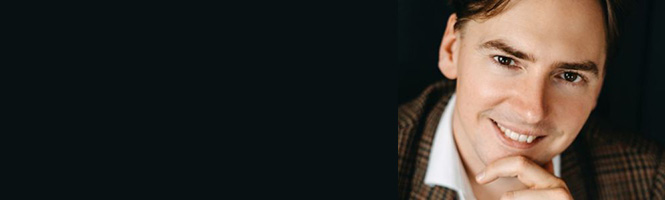



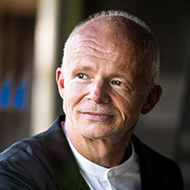
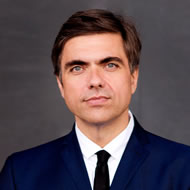
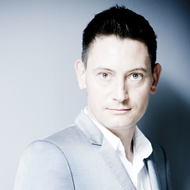
Stanley Dodds is the chief conductor of the Berlin Symphony Orchestra, which he has led in ten sold-out concerts at the Berlin Philharmonie since 2014, including the annual New Year's Concert featuring Beethoven's Ninth Symphony. Each season, he chooses a thematic focus for the series. After the music of Brahms in 2018/19 and the Romantic symphonic music of Russia in 2019/20, the 2020/21 season was to have been dedicated entirely to Beethoven's anniversary. However, due to the coronavirus pandemic, all of the orchestra's concerts had to be cancelled until the end of 2020, with the exception of one concert in September.
In February 2020, Stanley Dodds made his debut with the Vancouver Symphony Orchestra. Despite pandemic restrictions, he accepted an invitation from the Halle State Orchestra in October 2020 and conducted three symphony concerts on the Saale River, performing works by Beethoven. He also appeared in Berlin as part of the Musikfest, where he conducted musicians of the Berlin Philharmonic in a program dedicated to Wolfgang Rihm, with Tabea Zimmermann, Christian Gerhaher, Jörg Widmann , and Tamara Stefanovich as soloists. Since the program's revival as part of the Musica Viva series at Munich's Prinzregententheater could not take place in front of a live audience due to the pandemic, Stanley Dodds conducted the musicians of the Bavarian Radio Symphony Orchestra in a live-streamed concert and a radio broadcast.
You were born in Canada, grew up in Australia, studied in Austria and Switzerland, and now work in Germany. Where do you feel at home?
I've lived in Berlin for almost 30 years now, and it's the place I call home. My children all grew up here; it's a true capital of the arts, and the Philharmonie is the center of my artistic activities. Today, I can't imagine living anywhere else. The city has changed dramatically over the years and continues to evolve, making it a very exciting place to live. As you can see, I love Berlin!
You were accepted into the Berlin Philharmonic immediately after your studies. Did you never consider a solo career?
I studied at the Lucerne School of Music for over five years. During that time, I had wonderful experiences performing worldwide, including as a soloist, with the Festival Strings Lucerne. (My brother, Daniel Dodds, is now the artistic director of the Festival Strings.) After my studies in Lucerne, I looked to Germany to continue my studies. I was made aware of the Karajan Academy of the Berlin Philharmonic, where I auditioned and was accepted. It seemed like the ideal place to continue my studies, with weekly lessons from the orchestra's chief conductors, a focus on chamber music, and regular work with the orchestra. When I graduated, I didn't have much experience with professional symphony orchestras and wasn't yet aware of the wonderful universe I was about to enter.
At the Berlin Philharmonic, you are also responsible for media rights and the development of digital platforms. What are your current projects there?
I am a member of the board of the Berlin Philharmonic Foundation, which is responsible for the management of the orchestra and the Philharmonie. Within the board, as media director, I am specifically responsible for managing the orchestra's media rights for all forms of communication and exploitation. The orchestra has a decades-long tradition of managing these rights itself. I have witnessed how the focus shifted from physical media in the 1990s to today's streaming services, a change that meant the implosion of the existing business model and a complete transformation of the entire industry. The Berlin Philharmonic recognized these developments early on and, as one of the pioneers of live event streaming, began building a high-quality digital streaming platform. Our Digital Concert Hall platform is now in its third generation, streaming in 4K HDR with numerous state-of-the-art features and boasting an archive spanning the last 13 years with hundreds of hours of performances. Furthermore, the orchestra has established its own label, Berliner Philharmoniker Recordings. Current projects include planning new releases with our chief conductor, Kirill Petrenko, and the ongoing technical development of the streaming platform.
Where do you see the future?
While the closure of concert halls was a catastrophe for the arts, I am grateful for the clear and profound conviction it left me with about the importance of live music performances. The phenomenon of uniting performers and audience in a world-class concert hall is unique and irreplaceable, no matter how advanced the technology may be. This is both a relief and a challenge, because I also believe that the digital distribution of our art must play an extremely important role. This is especially true for those who don't have direct access to the live experience, but also as a complement for those who want to delve deeper and explore their curiosity about live performance. The digital sphere is indispensable when it comes to staying in touch with like-minded people around the world who are passionate about music.
You also work as a conductor, both with various ensembles of the Berlin Philharmonic and as chief conductor of the Berlin Symphony Orchestra. How well do you manage to combine all of these roles?
As I mentioned, the Philharmonie is indeed the center of my artistic activity. The Berlin Symphony Orchestra has played exclusively at the Philharmonie for over 60 years, so there are no scheduling conflicts. It is a great privilege and a great relief to be able to pursue such diverse activities in such an iconic building. In addition to my guest appearances with other orchestras, working with young musicians is also very important to me. It is always a great pleasure to work with the current scholarship recipients of the Karajan Academy, and for the past 10 years I have been conducting the Mecklenburg-Vorpommern State Youth Orchestra.
What is important to you as a conductor?
I came to conducting by playing in an orchestra. From the orchestra, I observed the conductor and what was happening around me, asking myself many questions about how and why things worked or didn't work, and sometimes wondering if there wasn't another way to do it. These experiences still shape me today when I stand before an orchestra, and through years of switching between the two roles, I've also learned the fundamental differences. I see my role as a conductor as bringing out the best possible performance from the orchestra within the available time, by drawing on my experience as a player and conductor, my technical skills acquired over the years, and my understanding of orchestras in general.
What is important to you as a violinist?
For me, it's important to remain an active player. As much as conducting challenges me and gives me great joy, there's no substitute for the immediate and sensual satisfaction of producing the sound myself. As a player, you remain honest and, accordingly, humble. Everyone can hear what you play, whereas conducting is a mysterious and often misunderstood profession. It's essentially a paradox—a musician who doesn't make a sound!
Is it more difficult or easier to conduct your colleagues in the Berlin Philharmonic than a "foreign orchestra"?
Conducting my colleagues is both familiar and unfamiliar to me. Musically, we connect very quickly, but it might be somewhat unusual for them to be conducted by a fellow musician, and I'm sensitive to that. A certain personal distance is always necessary in the relationship between conductor and musicians, mainly due to the hierarchy of the situation. The musicians are more accustomed to being first among equals, and I try to take that into account in our work together. In contrast, every new orchestra needs a period in which we get to know each other, and that doesn't always go smoothly. But that's the daily grind of a conductor. The profession rarely offers the advantage of being universally loved.
You regularly lead concert projects with children, teenagers, and amateur musicians. Why is this particularly important to you?
I believe that young musicians and amateurs are a very important part of our audience, one that we as professionals depend on. Amateurs appreciate what we do from the perspective of being active musicians themselves. Their unadulterated love of music is likely passed on to the next generation, as it is often their children who learn a musical instrument. And besides, I love being regularly swept up in their boundless enthusiasm.
What are your passions besides music?
I love the sea and the mountains. My only criticism of Berlin would be that it's too far from the Alps for skiing in winter and hiking in summer. I'm also a passionate sailor and always dream of my next cruise.
Interview by Florian Schär | Classicpoint.net | September 1, 2021





























































Do you want to attract more visitors to your concerts?
Find out more about the possibilities this portal offers.
With a concert search subscription, you will receive an email for your selected cantons/federal states as soon as a new concert is listed there. You can unsubscribe from the service at any time.
