
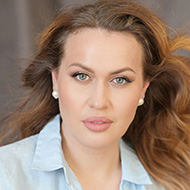
interview
Interview with Elena Stikhina
June 1, 2026
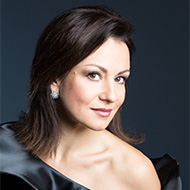
“The Zurich Opera House has a very special meaning for me.” Elena Stikhina is…


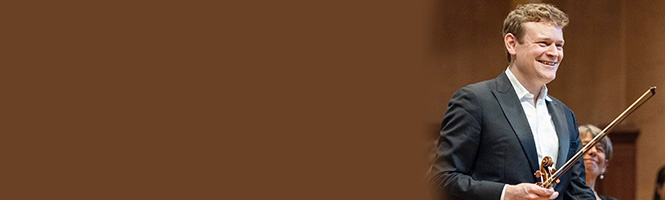


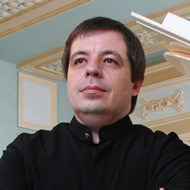
Pianist Herbert Schuch has established himself as one of the most interesting musicians of his generation with his dramatically conceived concert programs and CD recordings. In 2013, he received the ECHO Klassik award for his recording of Viktor Ullmann's Piano Concerto and Beethoven's Piano Concerto No. 3 with the WDR Symphony Orchestra under the direction of Olari Elts. As early as 2012, Herbert Schuch had been awarded an ECHO Klassik in the category "Chamber Music Recording of the Year" for his recording of the quintets for piano and wind instruments by Mozart and Beethoven.
Classicpoint.ch: You were born in Romania and moved to Germany after your first piano lessons in your hometown. Where is your home today? What still connects you to Romania?
My home is definitely Germany. Since I was born in Romania to a German family and German is my mother tongue, arriving in Nuremberg in 1988, in this country that was actually foreign to me, felt like coming home. Finally, everyone spoke the same language as me! My family wasn't purely German, though. My cousins were raised speaking Hungarian because my uncle had married a Hungarian woman. My mother's maiden name was Draskovic, a Serbian name. So, it was all multicultural, if you will. The Romanian state was relatively tolerant of minorities. For example, there was a German school that my brother attended. This, of course, also had historical reasons. Until the beginning of the 20th century, the population in the so-called Banat was predominantly German and Hungarian. They became Romanians virtually overnight after this part of the country was ceded to Romania following the First World War. However, the influence of the old Austro-Hungarian Monarchy was still evident linguistically. My grandmother still used to say "Paradeiser" when she meant tomatoes… Incidentally, I only spoke Romanian in kindergarten and the first two years of school, but nothing of that remains. The only connection I still have to Romania is my first piano teacher, Professor Maria Bodo. She laid the foundation for my technique; I owe her a great deal.
All your teachers were over 50. Did you choose them deliberately?
No, not deliberately! Mr. Kurt Hantsch, with whom I continued my lessons in Germany, more precisely in Rosenheim, was simply the best and strictest teacher there. He had even studied with Edwin Fischer. His apartment is still practically empty, as it's filled with books, sheet music, and thousands of CDs. Karl-Heinz Kämmerling in Salzburg was the first teacher my father could find for me in the region when I was 12. So, while still attending high school, I studied with him in Salzburg and began to grasp how important the Central European repertoire is for us pianists! Along with Brendel, they were the teachers who influenced me the most. All three were born around 1930! I am truly fortunate that I was able to absorb something from that distant era through these individuals.
You also worked with Alfred Brendel in recent years. Can you tell us something about that?
One can certainly describe the lessons with Alfred Brendel, but that will never convey the intensity that our collaborations always had. Despite all the differences that naturally exist regarding details, I have never met a musician who thinks, experiences, and lives music with such every fiber of his being. His famous sense of humor is also nowhere to be found in his teaching. He is serious, incredibly precise, and always searching for the right character in conjunction with sound, agogics, and articulation. I feel a little helpless now, though, because written down like this, it all sounds like platitudes. To really learn something about how lessons with Alfred Brendel are structured, I would have to play something and explain, based on the sound, which thought processes arose in Brendel and then, over time, in me as well. If I am nevertheless to try to pick something out from the wealth of information, it should be noted that Brendel, as a pianist, always tried not to be "a pianist," but rather to represent an orchestra, a string quartet, or a singer on stage. This actually applies to almost all German-Austrian music! From Bach to Schoenberg, the piano is merely a brilliant yet simultaneously impoverished medium for expressing thoughts directly. That's why, as a pianist, you always have to think: How is this supposed to sound? Are there 4 or 80 people playing? This question never arises with Chopin. There's always a pianist who accompanies himself on the piano while singing.
You seek out surprising combinations in your CD and concert programs. How do you approach putting together your programs, what's important to you, and how do you find these combinations?
It varies greatly. The Schubert-Janacek cycle, in which I combine Schubert's great piano works with Janacek's far too little-known piano pieces and performed in six concerts in Salzburg, came about through a sudden inspiration in my sleep. With my "Invocation" program, it was a phone call from Nike Wagner, who requested a piano recital on the theme of "Invocation" for the Weimar Arts Festival. So, I simply started compiling music on this theme.
Schumann has always been one of my favorite composers. I compiled my album "Sehnsuchtswalzer" (Longing Waltzes) in the Schumann Year of 2010 to celebrate his early dance cycles and to reveal the hidden connection between Carnaval, Op. 9, and a waltz by Schubert. Many ideas arise from conversations with other musicians and artists. Creativity thrives on exchange!
When you won three major competitions in one year, you caused an international sensation. Did you enjoy playing in competitions? What was your key to success? Did you play differently in a competition than in a concert?
My last competition was over ten years ago; that time seems incredibly distant. At the time, I thought that competitions were the only way for me to have a career. That, of course, had a lot to do with my teacher, Karl-Heinz Kämmerling, who more or less gently persuaded all his students to play in competitions. I was lucky, in a way. I quickly won several major competitions and, of course, enjoyed those successes. Besides the competitive aspect, however, the competitions taught me above all how important it is to be truly thoroughly prepared. I also took the competitive element as an incentive to engage with the pieces as well and as intensively as possible. I never played Schubert sonatas in competitions, except in concerts. However, after a few less-than-successful competitions, I realized it was best to avoid them. The judges' opinions were too divergent, and I probably wasn't up to the task of playing that music at the time. But growth comes only with experience, and that's best gained in concerts, not competitions.
You're still young. Looking back, where do you see your main developmental milestones?
I see several major themes. On the one hand, my school years were certainly very sheltered, during which I practiced a lot but didn't perform publicly much. I went to school like everyone else and graduated from high school. So, it was all rather relaxed. Then came the intensive period of study in Salzburg with many unforgettable concert experiences! There's a very exciting musical scene outside of the festival season, also for new music. I really listened to a lot and made many discoveries. Lachenmann, Klaus Huber, and Toshio Hosokawa were all in Salzburg in person and presented their works. There was an unforgettable evening with Nikolaus Harnoncourt and the Hagen Quartet, where a Mozart quartet was performed, and afterwards Harnoncourt worked on the music with the Hagen Quartet using the autograph.
Then came the phase in which I participated in competitions, and afterwards a certain amount of uncertainty – I had won the competitions, but how should my musical development continue? At that moment, Alfred Brendel came into my life and showed me what things a musician can and must work on throughout his life if it is to be a fulfilling musical life.
In November, you made your debut with Valery Gergiev and the Mariinsky Orchestra in Munich. Did you choose Prokofiev's Piano Concerto No. 1?
Valery Gergiev performed all five Prokofiev concertos in Munich and wanted a German soloist for the first concerto. I was, of course, delighted that he wanted me as soloist. Prokofiev isn't really my usual repertoire. But I absolutely love this music! It's so witty, so refreshingly different from the music I normally play! Prokofiev with the Mariinsky and Gergiev—that combination is like Christmas and Easter all rolled into one! It was also an intense experience, and very interesting to see how he can create the entire atmosphere in the orchestra with just two or three details in rehearsals. Incidentally, I played Prokofiev's Piano Sonata No. 8 in my Zurich debut at the Tonhalle many years ago. That, in turn, is a gigantic, profound work that one probably never truly finishes.
Where do you want to go, what are your goals?
There are always two possible answers to such a question: Where is your career headed, or what's happening with your musical development? Ideally, both paths can be pursued simultaneously. Unfortunately, the fact that you play with increasingly better orchestras doesn't automatically mean that you become more profound as a musician! Sometimes the development even goes in the opposite direction. I definitely want to avoid that! To balance both, I need periods where I can focus on a piece in peace and quiet. Chamber music is incredibly important to me! Being on stage with wonderful musicians and dear friends, cultivating this form of musical communication, makes me happy, and I want to do it as often as possible. And every now and then I listen to my old recordings. It's fascinating to see how my music has changed over the years and what I still want to change. You're never really finished with music.
Interview by Florian Schär | Classicpoint.ch | February 3, 2016
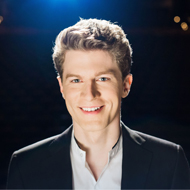
© Photo: Felix Broede
June 27, 2026 - Boswil Summer - Devilish Caprices
June 28, 2026 - Boswil Summer - Matinee: Slavic Soundscapes
June 28, 2026 - Boswil Summer - Musical Souvenirs
- Boswil Summer - Request Concert
July 2, 2026 - Boswil Summer - Boundless Imagination
August 5, 2026 - Widely Stretched



























































Do you want to attract more visitors to your concerts?
Find out more about the possibilities this portal offers.
With a concert search subscription, you will receive an email for your selected cantons/federal states as soon as a new concert is listed there. You can unsubscribe from the service at any time.
