
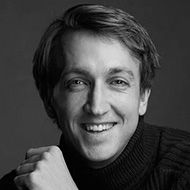
interview
Interview with Fabian Müller
September 30, 2026
"I like to practice at night in the dark, without turning on the light. The silence sounds..."




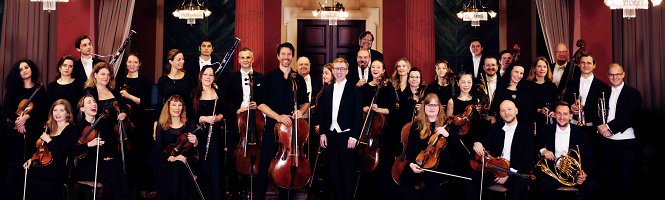



It wasn't until he was 14 that he began his formal piano studies at the Detmold University of Music. An age at which other talented musicians have already competed in their first piano competitions. "I jumped on the very last train for a career as a pianist," he says. Matthias Kirschnereit had previously lived in Namibia for five years – where a proper piano education was out of the question. Despite the international acclaim Matthias Kirschnereit enjoys on his extensive tours, he remains completely free of any star attitude. He gives around 50-60 concerts a year and has also been a professor at the Rostock University of Music and Theatre since 1997.
Classicpoint.net: You only began formal piano studies at the age of 14. Before that, you lived in Namibia for five years. Can you tell us about your time in Namibia?
When I was nine years old, our family emigrated to Namibia. My father was a pastor and eventually became the regional provost of the German community in Windhoek. For me, it was an incredibly exciting journey, traveling by ocean liner from Trieste to Walvis Bay, including a symbolic equator crossing ceremony! Initially, I was disappointed by the starkness of the Namibian desert, having grown up in the forest near the Großer Plöner See in Schleswig-Holstein. But over the years, I fell in love with the timeless, endless expanse of the country and its untamed nature.
Like my older siblings, I attended the German Higher Private School in Windhoek. At the time, I found wearing the school uniform and having my haircut length checked (!!!) extremely annoying!
Not much happened on the piano front: the newly founded Conservatory of Music was waiting for a prodigy pianist from Europe. I think it was Josef Bulva. He appeared and didn't appear, like waiting for Godot. Finally, after a three-year break, I resumed my piano lessons with a wonderful teacher at the conservatory: Ernst van Biljon, who would later sell real estate... I practiced little, but soon became one of the best in my year and was allowed to participate in student concerts. I enjoyed it all, and somehow the idea of becoming a pianist began to take root. However, in the Namibian isolation, I was incredibly naive. There's a sentence that perfectly captures my attitude at the time: "I want to become a great concert pianist and I practice for 20 minutes every day!" Looking back, that's pretty hair-raising!
As the years passed and puberty gradually set in, I became increasingly aware of the incredibly unjust political circumstances of apartheid. I had two friends; we called ourselves the "Namibia Trio" back then. We planned to start a rock band modeled after Deep Purple and tried to "save" the world.
At some point, I realized that I could only pursue my dream of becoming a pianist back in Germany. I left Windhoek alone at the age of 14, without my parents...
What is your connection to Namibia today?
Namibia is a part of me; I spent an important and formative period of my life there. During numerous visits in the following years, I played several concerts in Windhoek and Swakopmund, and I would like to give something back to the country and its wonderful people. I still ponder what a workshop like "Mozart Goes Desert" or something similar might look like.
Without knowing too much about the current political and social situation in the country, Namibia strikes me as a proud, warm, and exceptionally dignified African nation.
I was last there two years ago, and it was a joy to hear that enthusiastic "Welcome to Namibia" right at the airport and to admire the beautiful diversity of the people on Independence Avenue in Windhoek. I would like to visit this dreamlike country again with my family as soon as possible. I wish the people and the country all the best from the bottom of my heart – and always plenty of rain!
After moving to Africa with your parents at the age of nine, you decided to return to Germany alone at fourteen. What was that adjustment like for you?
Looking back, I have to say that fourteen is REALLY young, and leaving your parents 11,000 km away and moving in with your older brother certainly entails a risk. But at the time, I felt "mature" and ready enough to manage my life on my own – I was certainly quite naive, precocious, and probably rather well-behaved, which, in retrospect, was a form of self-protection. Overall, I was extremely fortunate to have found a wonderful person in my teacher, Professor Renate Kretschmar Fischer, at the Detmold University of Music, who provided me with such caring support.
At 16, you even left school to catch up on what you'd missed. What were the reactions from those around you?
Yes, leaving the Christian Dietrich Grabbe Gymnasium in Detmold early caused a scandal at my school. Everyone—the teachers, the classmates, the headmaster—showed absolutely no understanding and apparently thought I was completely crazy and extremely unreasonable. "What if you get tendonitis when you're 30? What if you don't feel like playing the piano anymore when you're 30? What will happen to your retirement savings?" I remember questions like that from my classmates very well. One day, I was summoned straight from class to the headmaster's office. An audience! He made it clear to me: "We know people like you; you'll end up being a piano teacher in Barntrup!" That stung! Even though, as he told me years later, he only wanted to warn me about my own whims and ensure I received a literary and humanistic education, I've never quite forgotten those words. Of course, in retrospect, it's a funny anecdote. But seriously: Barntrup is a beautiful village in East Westphalia; would teaching there really be such a downfall? No, teaching is important and worthwhile everywhere!
So, the only support I received for my decision to leave school before graduating was from my family and my teacher.
What would have become of you if you had stayed in Namibia?
That's hard to say. My friend from the Namibia Trio later became heavily involved in the liberation and independence of the country and even ended up in prison for a time. I certainly would never have become a farmer, and running a restaurant specializing in crocodile dishes is rather unlikely. Music is my greatest passion – perhaps I would have gone to Cape Town to further my studies otherwise. But these are all idle considerations…
In your Portrait Vita, you write that you are “on the trail of the richness of feeling, the breath, and the human qualities of music.” Could you explain that in a little more detail?
The Portrait Vita was written by a journalist; he formulated those sentences. But I haven't retracted them. It is indeed very important to me to listen to the composers and their thoughts and visions through music and to tell stories with their language. Stories that are sometimes inspired by life, stories that also give voice to things that cannot be named with words. Take Mozart, for example: an opera composer through and through, but even in an instrumental sonata, the mood ranges from lighthearted to dramatic, from seductive to doubting, from death-longing to trivial. To sense and experience this, to suffer with the composer, and to express what one hears inwardly in music is a truly timeless, pleasurable, and vital endeavor.
You are the artistic director of the "Gezeitenkonzerte Ostfriesland" (East Frisian Tidal Concerts). What makes this festival so special?
First and foremost: truly wonderful artists in a unique, magical setting, mostly in the picturesque little churches of East Frisia. Where else can you experience artists like Maria João Pires, Christian Tetzlaff, Grigory Sokolov, Sabine Meyer, Angelika Kirchschlager, Daniel Hope , or Elisabeth Leonskaja in such an intimate setting? East Frisia is not just a stopover. Artists and audiences alike slow down, creating unforgettable artistic experiences in a captivating environment.
Our program is broad, ranging from composer portraits, for which Jörg Widmann, Wolfgang Rihm, Helmut Lachenmann, and Peter Ruzicka, among others, have been personally present at the Emden Art Gallery, to our "heart," classical chamber music, and on to popular orchestral concerts à la Proms and jazz and world music evenings.
A very important concern of mine is the promotion of young musical talent, our "peak climbers." Intensive collaborations with TONALi Hamburg and Rhapsody in School underline our activities to ignite a passion for classical music in young audiences.
You are also a professor at the Rostock University of Music and Theatre. Would you accept a student today who only started practicing seriously at 16?
Well, starting at 16 is really late. It's rather unlikely that someone would only begin serious lessons at that age in order to then pursue a degree. But there are occasionally students who only really get going more intensively at 11 or 12, and if they are talented, work very diligently, and above all, are passionate about music, then that can be a very interesting path. Certainly not if winning the Warsaw Chopin Competition is the ultimate goal, but the musical world is incredibly diverse. And in my opinion, there should be a place for the good, dedicated, and creative ones. I'm always saddened when I sense that everything other than a major solo career, even high-caliber chamber music or song interpretation, is considered inferior. Let alone teaching. Especially for pianists, the professional profile will always be a patchwork of individual fields of activity. This can be very exciting and fulfilling.
How do you assess the current training situation at German music academies: few musician positions, studies mostly geared towards soloists – most students become music school teachers?
As I've already said: you have to be good, creative, and also flexible. Tragically, the profession of music teacher in Germany is not nearly as respected or compensated as would be appropriate for such an important and responsible task. It's common knowledge that musical education positively influences young people in a variety of ways, inspiring them, challenging them, fostering community, and much more. Unfortunately, however, music education is often treated very neglectfully in general education schools, and anyone wanting to secure a place at the youth music school in Hamburg, for example, can expect a waiting time of about five years.
This is where politics really needs to step in. I always say that the world would be a better place if more Schubert were played. Of course, that's naive; Schubert, as is well known, only appeals to a very small segment of our society, I'm well aware of that. However, I am absolutely convinced that one cannot listen to and love Schubert and at the same time indulge in extreme right-wing ideology – because Schubert presupposes empathy, not least.
Where do you see the potential in the current classical music scene?
I see many positive developments striving to "give voice to the future" —to quote TONALi's motto. TONALi, as well as "Rhapsody in School," founded by Lars Vogt, are two initiatives I have always been happy to actively support. I also very much welcome the many talent development programs established at universities to foster young musical talent.
Indeed, the "concept" seems increasingly important these days. That one puts together a program that doesn't just consist of personal favorites but also builds connections and bridges. Music education is undoubtedly becoming ever more important as well. There are many exciting new festivals establishing themselves, while the traditional chamber music series seems to be in decline. But with all this, one must NEVER lose sight of the performer's true task: "Bring the work to life without doing violence to it!" I try my best to heed this motto of Edwin Fischer's! There is nothing like a gripping, moving, beautiful and even shocking musical experience.
Interview by Florian Schär | Classicpoint.net | July 1, 2019
© Image: Neda Navaee
November 20, 2026 - Matthias Kirschnereit (piano), The Philharmonic Orchestra, Alexander Merzyn (conductor)
November 28, 2026 - Matthias Kirschnereit (piano), members of the Philharmonic Orchestra
April 9, 2027 - Anniversary Concert – 15 Years of Villa Papendorf
May 9, 2027 - Matthias Kirschnereit (piano), Trio Così
May 17, 2027 - Matthias Kirschnereit (piano), Northwest German Philharmonic, Frank Beermann (conductor)






























































Do you want to attract more visitors to your concerts?
Find out more about the possibilities this portal offers.
With a concert search subscription, you will receive an email for your selected cantons/federal states as soon as a new concert is listed there. You can unsubscribe from the service at any time.
