

interview
Interview with Julia Lezhneva
August 31, 2026
“Analytical work allows for emotional freedom, while emotional discoveries…”


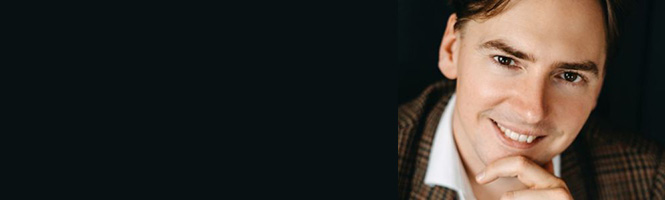
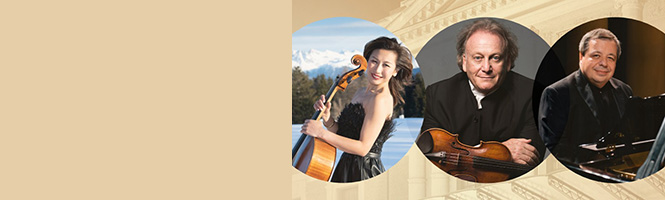


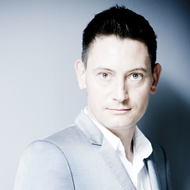
He is one of the great pianists of our time: Sergei Babayan, who in 1989 became the first Soviet artist to win a competition in the West without state support, is today one of the most influential musicians internationally, having shaped generations of younger pianists with his great technical brilliance and infectious joy of playing. The London Times praised him as a "delightfully inventive virtuoso," Le Figaro lauded his "unparalleled touch, perfect phrasing, and breathtaking virtuosity," and Le Devoir from Montreal simply stated: "Sergei Babayan is a genius. Period."
Sergei Babayan was born in Armenia and studied at the Moscow Conservatory with Mikhail Pletnev, Vera Gornostayeva, and Lev Naumov. After his first international tour in 1989, he won first prizes at several international competitions, including the Cleveland International Piano Competition, the Hamamatsu Piano Competition, and the Scottish International Piano Competition. He lives in New York as an American citizen.
You were born and raised in Armenia, the former Soviet Union. Now you live in America. What was your childhood like, and why did you move to America?
My path was shaped by the artists I encountered. Leaving the USSR was an act of liberation for me. I've always had conflicting feelings about the Soviet Union. On the one hand, the Soviet Union gave me an education, made me a pianist. I feel absolute love and devotion to my teachers and think of them every day when I play the piano. But I went through some very difficult times because there were some pretty unbearable things. I'm allergic to anything to do with communism; the concept is something I have a strong intolerance for. On that day in 1989 when the plane took off in Moscow and my next stop was New York, I could finally breathe a sigh of relief. It was the first time I truly felt free.
How and where do you get your inspiration?
What an interesting question, and seemingly so simple, but I can't answer it because it's indirect. I live my life, and at certain times, some things are more important than others. I choose my repertoire according to the deep connection I feel with a piece, and this love arises from the moments in my life. I draw inspiration from books, actors, writers, musicians, composers, and our greatest thinkers. So I can't say anything concrete because I don't know. It's a summary of what I see and feel, and it emerges in moments of inspiration. The greatest masters would say that inspiration comes to those who work; that is, if you don't practice and are unfocused, uncommitted, or disciplined, you won't be able to do much with the inspiration that comes to you. However, if you are in excellent musical form, remain disciplined, and focus on the beauty of life, inspiration will come to you and can bring about significant changes in your music. You have to prepare yourself for inspiration to come to you in order to use it.
Which works are particularly close to your heart and why?
There are composers who have accompanied me throughout my life. There are composers who come closer and then fade away. Bach, Beethoven, Mozart, and Schubert are some of the constants. And Schumann. And of course, Rachmaninoff, always. And then, naturally, the French: Debussy, Ravel, Fauré. That's not a short list! I'm particularly fond of pieces that have a great human impact—pieces that inspire me to be a better person. I find that very strong in the composers mentioned above. I feel that I grow and become a better person through this music, which is very important to me.
What do you think of current new compositions?
As I've already said, music doesn't have to be overly complicated as long as it touches us as human beings, makes us better. A lot of new music can have innovative structures, but it might not touch us if its only intention is to create innovation. For me, new music must continue to evoke important, deep human emotions like love, warmth, and forgiveness to have the same value as the pieces that are already dear to our hearts. That's why, among living composers, Arvo Pärt is the one closest to my heart. His music is unique and has its own unmistakable style; it's not complex and so-called modernist, but rather expresses the most important feelings and ideas of being human.
You often perform as a duo partner with Martha Argerich. What is it like to make music with her and work on pieces together?
Well, Martha is the most important teacher in my life. I was 13 when I discovered her recordings of Chopin and Liszt concertos—you have to understand how rare that was in the Soviet school where I was trained. Only Martha understands how to awaken such a warm joy and freedom in me through music. Behind what is performed effortlessly and with childlike ease lies a profound pianistic intelligence, stemming from the Italian school inherited from Scaramuzza. That is the genius of Martha's playing, a rare combination of gifted intuition and incredible work ethic. I have yet to meet a pianist whose dedication to her work I respect more than her.
What are your next projects?
This season I will be performing a new program entitled SONGS, a tribute to the most beautiful melodies in the history of art song. The program aims to emulate the colors, phrasing, and dynamics of the human voice without using words.
Interview by Florian Schär | Classicpoint.net | September 1, 2024
January 24, 2027 - Martha Argerich (piano), Sergei Babayan (piano)






























































Do you want to attract more visitors to your concerts?
Find out more about the possibilities this portal offers.
With a concert search subscription, you will receive an email for your selected cantons/federal states as soon as a new concert is listed there. You can unsubscribe from the service at any time.
