

interview
Interview with Julia Lezhneva
August 31, 2026
“Analytical work allows for emotional freedom, while emotional discoveries…”






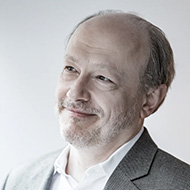
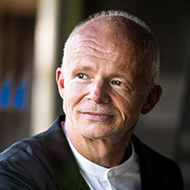
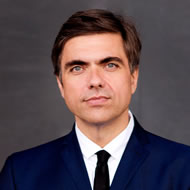
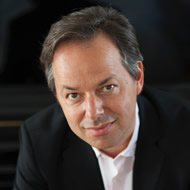
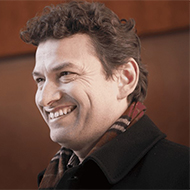
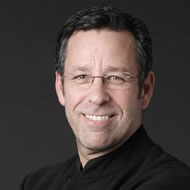
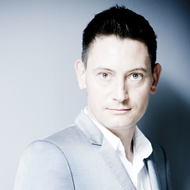
Intelligent clarity and a profound, ever-curious musicality characterize the work of Markus Stenz. He has conducted, among others, the Berlin Philharmonic, the Leipzig Gewandhaus Orchestra, the Munich Philharmonic, the Tonhalle Orchestra Zurich, the Vienna Symphony Orchestra, the Hallé Orchestra Manchester, the BBC Scottish Symphony Orchestra, the NHK Symphony Orchestra, the Orchestre Philharmonique de Radio France, the Staatskapelle and the Konzerthausorchester Berlin, the Orchestre de la Suisse Romande, the Bamberg Symphony, the Dresden Philharmonic, the Hamburg Philharmonic State Orchestra, and the radio orchestras of BR, HR, WDR, NDR, and MDR. In the USA, he has worked with, among others, the symphony orchestras of Boston, Chicago, Cincinnati, Los Angeles, Dallas, and Houston.
In the following interview, Markus Stenz talks about his relationship to Haydn and Mendelssohn, his ideal sound, and his visions.
Classicpoint.net: What is your earliest musical childhood memory?
I'm lying under the grand piano in our living room, listening to my father play. My memories of church music are even more vivid; my father is a choirmaster and organist. My mother is a passionate amateur singer with a wonderfully clear alto voice, and still is—at almost 80!
When did you decide to become a conductor and why?
My key experience was the "Harvard Lectures" broadcast on German television – six lectures given by the American conductor and composer Leonard Bernstein at Harvard University. As a 13-year-old, they struck me with tremendous force and, in my eyes, remain unsurpassed to this day as a path deep into the secrets of music.
Can you describe your ideal sound?
Grand chamber music – music where listening to one another leads to freedom of phrasing, to vibrant transitions, subtly felt delicacy, and overwhelmingly rich, surging sounds. And: it must be PERSONAL. Created in the here and now.
What are your visions?
If the listener gets the feeling that the music is being created anew, right before their ears, in this moment, irresistibly, as if the composer had invented it just for this moment – that is my vision for the concert experience.
What can music, in your opinion, contribute to human development today?
Music is irrational and, in our digitized world, it provides the perfect counterweight to the reduction to facts, the state of affairs, and the burden of facts. Music is unfathomable, cannot be digitized, and precisely for that reason, it is profoundly human and indispensable.
What role does music play in your private life?
It's indispensable, pure life energy!
You were scheduled to conduct Schumann's Spring Symphony in Klagenfurt on May 20, 2020 (Addendum: unfortunately, this performance was cancelled due to the coronavirus pandemic). Could you tell us a little about this work and your thoughts on it?
Schumann's music is always a wonder to me. It is music very close to feeling and emotion. Even the most thorough analysis cannot grasp certain passages that touch the soul. The richness of imagination, the freedom of the melodic lines, and the swing in Schumann's symphony are outstanding. Rarely have the awakening life and feelings of spring been captured more beautifully than in this music.
The same concert will also feature works by Haydn and Mendelssohn. What is your relationship to these two composers?
Haydn's music is a treasure trove; you never know what idea will come next. It's much more unpredictable than, say, Mozart or Beethoven. The playful element in music, everything that evokes joy in the performer and wonder in the listener, can be found in his music. Music as a momentary art form. Bold and unfiltered. This immediacy is what fascinates me about every Haydn score. And Mendelssohn is, formally speaking, the opposite of Haydn: all the transitions are effortlessly organic. The imaginative flourishes are seamlessly integrated into perfectly coherent overall structures. What interests me about our program is precisely this contrast: the "wild" Haydn in contrast to the "formally elegant" Mendelssohn. And both creative and sensual paths lead to the profound and soulful music of Schumann. As you can tell, I'm really looking forward to the concert.
What are your interests besides music?
Family, nature, hiking, swimming, playing chess. Incidentally, I'm particularly fond of the lakes in Austria. What could be better in summer...?
Interview by Florian Schär | Classicpoint.net | April 1, 2020 |
Photography: © Kaupo Kikkas




























































Do you want to attract more visitors to your concerts?
Find out more about the possibilities this portal offers.
With a concert search subscription, you will receive an email for your selected cantons/federal states as soon as a new concert is listed there. You can unsubscribe from the service at any time.
