







Dresden Philharmonic
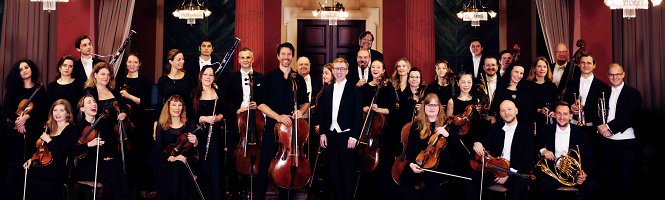
The Dresden Philharmonic, the orchestra of the state capital of Dresden, looks back on a 150-year history. With the opening of the so-called Gewerbehaus Hall on November 29, 1870, the city's residents gained the opportunity to organize large orchestral concerts. From 1885 onward, Philharmonic concerts were held regularly until the orchestra adopted its current name in 1923. In its early decades, composers such as Brahms, Tchaikovsky, Dvořák, and Strauss conducted their own works with the Dresden Philharmonic. The orchestra boasted outstanding concertmasters such as Stefan Frenkel and Simon Goldberg, as well as cellists Stefan Auber and Enrico Mainardi. Carl Schuricht and Paul van Kempen led the orchestra from 1934 onward; van Kempen, in particular, brought the Dresden Philharmonic to its highest levels of performance. His strong focus on the music of Anton Bruckner in his programs earned the orchestra the reputation of a "Bruckner Orchestra." Among the renowned guest conductors who joined the Philharmonic at that time were Hermann Abendroth, Eduard van Beinum, Fritz Busch, Eugen Jochum, Joseph Keilberth, Erich Kleiber, Hans Knappertsbusch, and Franz Konwitschny.
From 1945 until the 1990s, Heinz Bongartz, Horst Förster, Kurt Masur (who became honorary conductor in 1994), Günther Herbig, Herbert Kegel, Jörg-Peter Weigle, and Michel Plasson served as chief conductors. More recently, conductors such as Marek Janowski, Rafael Frühbeck de Burgos, and Michael Sanderling have shaped the orchestra. With the start of the 2019/2020 season, Marek Janowski returned to the Dresden Philharmonic as chief conductor and artistic director.
Its home is the state-of-the-art concert hall in the Kulturpalast (Palace of Culture) in the heart of the old town, which opened in April 2017. In the Romantic repertoire, the orchestra has preserved its distinctive "Dresden sound." Furthermore, it is characterized by its tonal and stylistic flexibility, equally adept at Baroque and Viennese Classical music as well as modern works.
World premieres continue to play a significant role in the orchestra's programming. Performances in major concert halls worldwide attest to the high regard the Dresden Philharmonic enjoys in the classical music world. High-caliber educational and family programs complement the offerings for young people; even the youngest concertgoers are introduced to the world of classical music through open rehearsals and school concerts. The orchestra fosters exceptional young musical talent through the Kurt Masur Academy.
From 1945 until the 1990s, Heinz Bongartz, Horst Förster, Kurt Masur (who became honorary conductor in 1994), Günther Herbig, Herbert Kegel, Jörg-Peter Weigle, and Michel Plasson served as chief conductors. More recently, conductors such as Marek Janowski, Rafael Frühbeck de Burgos, and Michael Sanderling have shaped the orchestra. With the start of the 2019/2020 season, Marek Janowski returned to the Dresden Philharmonic as chief conductor and artistic director.
Its home is the state-of-the-art concert hall in the Kulturpalast (Palace of Culture) in the heart of the old town, which opened in April 2017. In the Romantic repertoire, the orchestra has preserved its distinctive "Dresden sound." Furthermore, it is characterized by its tonal and stylistic flexibility, equally adept at Baroque and Viennese Classical music as well as modern works.
World premieres continue to play a significant role in the orchestra's programming. Performances in major concert halls worldwide attest to the high regard the Dresden Philharmonic enjoys in the classical music world. High-caliber educational and family programs complement the offerings for young people; even the youngest concertgoers are introduced to the world of classical music through open rehearsals and school concerts. The orchestra fosters exceptional young musical talent through the Kurt Masur Academy.
