
interview
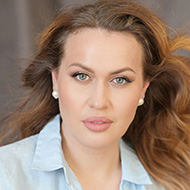
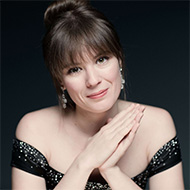
Interview with Elena Stikhina
June 1, 2026
“The Zurich Opera House has a very special meaning for me.” Elena Stikhina is…




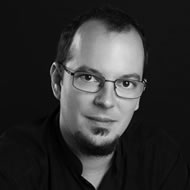
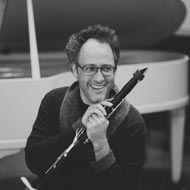
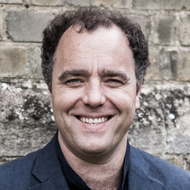
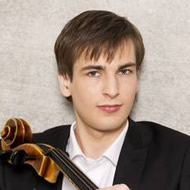
The composer and cellist Martin Jaggi lives and works in Singapore and Basel. His works have been performed in numerous European and Asian countries, as well as in the USA, Canada, Mexico, Argentina, and South Africa, and recorded by various radio stations. His orchestral work "Trieb" and his string quartet "Gharra" were included in the CD documentary "Grammont Sélection," featuring outstanding Swiss premieres. A portrait CD was released in 2015 by the label Musiques Suisses/Grammont Portrait. Since 2016, he has taught contemporary music interpretation at the Yong Siew Toh Conservatory of Music (National University of Singapore).
Classicpoint.ch: You've been living in Singapore for some time now. What brought you there?
It was for family reasons. My wife is from Singapore, and I'd always wanted to live in Asia. It's also easier for us here to balance family (we have two children) and work. Since I've needed far more time for composing than for performing with the cello lately, this move to Singapore made sense. However, I still regularly travel to Switzerland and Europe, where I play cello with ensembles such as Phoenix Basel and the Basel Sinfonietta. Here in Singapore, I have a small position at the music academy.
Has your composing style changed since you moved from Switzerland to Singapore?
I don't think it's had a direct impact on my music.
What are the differences in the classical music scene between Singapore and Switzerland?
The concert life here consists almost entirely of orchestral concerts. There are two magnificent concert halls, and the orchestra is quite good. Many international stars perform here. But therein lies the problem. There's hardly any independent scene. Chamber music and contemporary music take place almost exclusively within educational institutions. And if something does emerge from the campus, it's difficult to find funding. In Switzerland, of course, there's infinitely more going on – freer, more exciting, and more vibrant!
But things are slowly changing; there's even a new ensemble for contemporary music! And with the pace at which things are changing here? Ten years ago, when I first came to Singapore, it was a relatively monotonous, boring city. Now it's dynamic and exciting. If I'm away for a month and come back, there's guaranteed to be something new. All of this is slowly starting to seep into the music scene here as well.
You studied cello and composition. When did you first begin composing?
When my grandfather died, I wrote a requiem for choir a cappella based on Mozart's work. I just started writing without any rules. Since then, I've never stopped writing. I was 12 at the time.
Your father had already studied composition. He also taught you composition when you were 16. How did he influence your composing?
I had theory lessons with my father right after the Requiem. I think he wanted to bring a little order to my anarchic approach. This was incredibly valuable to me! At 16, I became a junior student of Rudolf Kelterborn. Now things got serious. After a year, I switched to Detlev Müller-Siemens, as Kelterborn had retired. These two teachers had a profound influence on me! I inherited my love of music from my father and my mother (she was a violinist in the Basel Symphony Orchestra); it was constantly around me. I am very grateful to them for that.
You originally wanted to study paleontology (the science that deals with the development and spread of life on Earth). Do you still engage with these topics today?
Not really. But my older son is now interested in dinosaurs. So I started to read up a bit on what's happened in paleontology in the last 20 years. It's been a groundbreaking discovery! I'm still interested in it, though.
The titles of your works are strikingly often taken from geology: Megalith, Atakor, Acheb, Shebka, Nunatak, Moloch, or Gharra. Do you draw your compositional ideas from nature?
From nature, archaeology, the history of civilization, ethnology… I am extremely interested in everything raw and archaic.
You've been working with a "new tonality" for over 15 years. Can you describe it for us?
I've developed a harmonic system that allows me to work almost as if with "conventional" tonality. It's based on complex chords that almost always include microtones. Lately, however, I only use it peripherally, if at all. At the moment, I'm more interested in the horizontal than the vertical. Lines, polyphony, heterophony…
In his essay on your music, Michael Kunkel suggested that many of your compositions are based on the following question: How do I deform time? More precisely: How do I articulate musical forms in time in a way that runs counter to the goal-oriented, linear mode of orientation as much as possible? Is he right?
To some extent, yes. I always try to surprise, to integrate unexpected turns and cuts. We listen to music strongly with expectations. I want to break these. This also means that the cut, the break, sometimes doesn't happen. I often proceed very intuitively with the form. It has to feel right to me. Preconceived structures can sometimes be significantly bent.
Most of your pieces are single-movement, why?
Is this perhaps a current trend? Most pieces these days are single-movement. Why? I don't know. Lately, I mostly write and plan in cycles. The pieces can be played individually or cyclically, where they then essentially form individual movements.
How does your composition process work?
At home at my desk, surrounded by a mountain of papers. And while walking! Most of the time, I only sit down when the ideas have already developed quite a bit in my head.
Interview by Florian Schär | Classicpoint.ch | August 2, 2016




























































Do you want to attract more visitors to your concerts?
Find out more about the possibilities this portal offers.
With a concert search subscription, you will receive an email for your selected cantons/federal states as soon as a new concert is listed there. You can unsubscribe from the service at any time.
