interview
Interview with Jacques Forestier
November 1, 2026
“I want to share the music I love most with as many people as possible…”







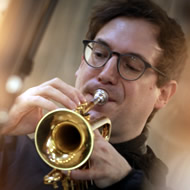
The trumpet's brilliant sound and versatility fascinated Andre Schoch from the very beginning. At the age of eight, he received his first trumpet lessons from Ansgar Dümchen. From 2004 to 2007, he was a junior student of Reinhold Friedrich and Klaus Bräker at the Karlsruhe University of Music. Later, he studied with Matthias Höfs at the Hamburg University of Music and Theatre, where he also taught from 2015 to 2017.
Even at a young age, he gained orchestral experience in the Baden-Württemberg State Youth Orchestra, the Young German Philharmonic, and the Schleswig-Holstein Music FestivalOrchestra. His first professional engagement was with the Leipzig Gewandhaus Orchestra, where he served as assistant principal trumpet from 2009 to 2011. He then received a scholarship to the Karajan Academy of the Berlin Philharmonic, where he studied under Gábor Tarkövi. The musician found his time at this institution invaluable. "Experiencing the style and sound of the orchestra and integrating myself into it is extremely fulfilling and motivating." After positions as principal trumpet at the Deutsche Oper Berlin and the Hamburg Philharmonic State Orchestra, Andre Schoch became a member of the Berlin Philharmonic.
The multiple prize-winner of renowned competitions is also active in chamber music. He is a permanent member of the ensemble 10forBrass and a founding member of the SchwarzGoldTrio. He also regularly performs as a guest with German Brass.
You've just recorded your first solo album with a demanding repertoire of Baroque and early Classical trumpet concertos. Have these works been with you since childhood?
Yes, these works have been with me for a very long time. I started playing the trumpet at the age of eight, and as a child, I always asked for recordings of famous trumpeters for Christmas and my birthday. Even back then, I listened to these very pieces a lot and set myself the goal of being able to play them myself someday. A great motivation! During my studies, I actually played the pieces for the first time and gradually developed my own interpretation.
You perform the works on modern piccolo trumpets from the Bremen-based company Thein Brass, whose development you yourself helped to shape. What is so special about these instruments?
For me, these piccolo trumpets have a particularly warm, yet brilliant and richly colored sound. Furthermore, the quality of the instruments is exceptional; the intonation is excellent, and the playing feel is very free. The collaboration with Thein is very important to me because, as an artist, I can contribute my personal wishes and ideas, which are then implemented by Thein with great passion for music and craftsmanship. In this way, the instruments are individually tailored to each player.
You were principal trumpet at the Deutsche Oper Berlin and the Hamburg Philharmonic State Orchestra and are now second trumpet with the Berlin Philharmonic. How did you experience this change?
First of all, I am very grateful to have had the opportunity to play in different orchestras and experience different ensembles, both in the symphonic realm and in opera and ballet. I also feel fortunate to have had the chance to play both solo positions and now the second trumpet position. Of course, the role is different: as a second trumpet, you have to adapt and integrate more, whereas as a principal trumpet, you have to lead and guide the entire brass section. I'm glad to know both, because it allows me to convey this better when teaching.
The Berlin Philharmonic is such a magnificent orchestra that it is very inspiring to play there, regardless of the position.
You also teach; what are the biggest problems your students face?
The competition and the technical level are incredibly high these days, and of course, there are always a huge number of applicants for orchestra auditions. I think social media, YouTube, and streaming services also increase the pressure on young musicians enormously compared to the past. Therefore, it's all the more important that young musicians are mentally well-prepared, stable, and have a broad skill set in all areas. As a teacher, I try to support them, motivate them to keep working, and not give up if something doesn't go as planned.
Is there a certain type of person who is best suited to playing the trumpet?
It's impossible to generalize. However, a love for the instrument is paramount. And for us trumpet players, a certain amount of courage and determination is perhaps necessary when we perform on stage, as the trumpet is a very "honest" instrument, and every now and then the so-called famous "squeak" can happen, which everyone then hears. The important thing is to learn not to let it unsettle you and to quickly shake it off.
Singers are known for always trying to protect their voices and sometimes even wear a scarf all the time. What's important for trumpet players?
For us trumpet players, it's important to take care of our lips, meaning we shouldn't let them dry out, especially when it's very cold outside in winter. Otherwise, it's just important to take care of your teeth, as their alignment plays a big role for us.
Are there any special moments from your career on stage that you will never forget?
I once played a concert for orphans in Madagascar with a brass ensemble. I had never experienced such emotion and enthusiasm from these children when they reacted to music. It was incredibly moving to see and will always stay with me.
How much do you still practice daily?
I spend several hours a day with my instrument and with music. I don't time it, but it's certainly a few hours every day…
Do you have any further projects planned for the future?
First, I'm looking forward to presenting the CD's program even more frequently on the concert stage.
I also have regular chamber music projects, other projects with orchestra as a soloist, and also with the organ.
Several projects are also planned, including recording works by some almost forgotten composers, as well as projects with contemporary composers.
What are your interests besides music?
Besides music, I enjoy spending time with my family, watching good movies, and I love good food.
Interview by Florian Schär | Classicpoint.net | December 1, 2023
Photo: Yoél Culiner





























































Do you want to attract more visitors to your concerts?
Find out more about the possibilities this portal offers.
With a concert search subscription, you will receive an email for your selected cantons/federal states as soon as a new concert is listed there. You can unsubscribe from the service at any time.
